Engineered Storage & Handling Equipment Showcase
Certified warehouse storage components and automated shuttle system integration
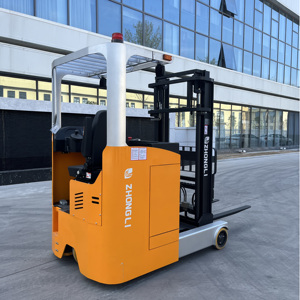
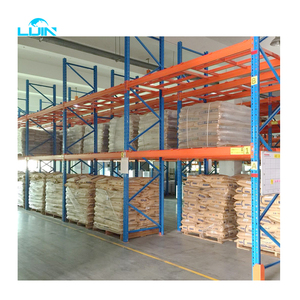
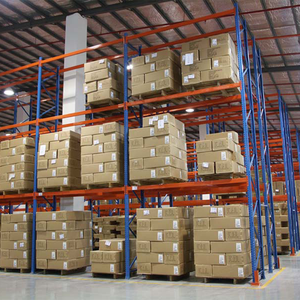
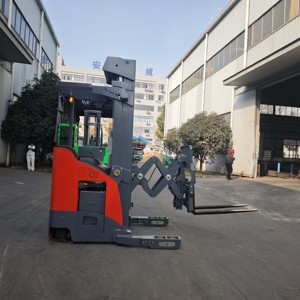
Executive Industry Overview: Radio Shuttle Storage Systems in New Zealand
As logistics real estate costs in major New Zealand urban hubs—such as Auckland, Christchurch, Wellington, and Tauranga—reach historical highs, warehouse directors and supply chain engineers are aggressively transitioning toward high-density semi-automated storage infrastructure. Among available space-optimisation strategies, Radio Shuttle Racking Systems have emerged as the gold standard for high-throughput, bulk SKU operations across Aotearoa New Zealand.
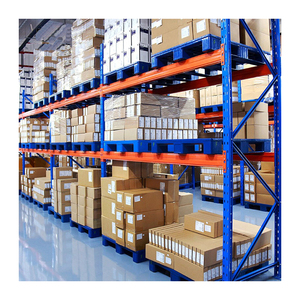
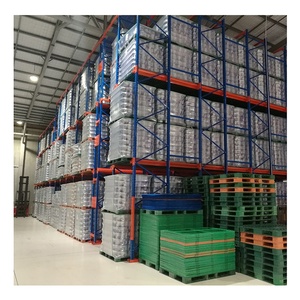
Unlike conventional selective pallet racking or passive drive-in systems, radio shuttle pallet racking integrates heavy-duty cold-formed structural steel frame matrices with autonomous, battery-powered shuttle vehicles. Controlled wirelessly via radio frequency (RF) remotes or integrated Warehouse Management System (WMS) software, these shuttles automatically traverse customized guide rails beneath stored pallets, elevating and transferring loads deep within the rack lanes without requiring forklifts to enter the racking structure.
Technical Compliance Insight for NZ Buyers: All heavy-duty racking installed within New Zealand must strictly comply with AS/NZS 4084:2023 (Steel Storage Racking code). Given New Zealand's unique seismic environment (ranging from Zone 1 low-risk areas up to Zone 4 active fault lines near Wellington and Canterbury), engineered shuttle racking systems require custom dynamic seismic bracing, high-tensile anchor bolting, and specialized upright frame geometry to absorb horizontal shear stresses without structural buckling.
System Engineering & Mechanical Architecture
A high-performance radio shuttle pallet rack system relies on precise tolerance manufacturing to ensure long-term mechanical reliability, smooth shuttle vehicle transitions, and structural safety during seismic displacement events.
Key Structural & Electronic Components
High-Tensile Cold-Rolled Steel Rails
Manufactured from Q235B or Q355B structural steel, the custom-rolled shuttle guide rails perform dual duties: supporting heavy pallet loads (up to 1,500 kg per position) while serving as precision tracks for shuttle wheel assemblies.
Autonomous Shuttle Cart
Powered by high-capacity Lithium Iron Phosphate ($LiFePO_4$) battery modules, our radio shuttles feature optical sensors, laser distance finders, and obstacle-detection bumpers, capable of travel speeds reaching 1.1 m/s (unloaded) and 0.8 m/s (fully loaded).
Flexible FIFO / LIFO Operations
Software configuration allows effortless switching between First-In, First-Out (FIFO)—crucial for date-sensitive dairy, fruit, and meat processing—and Last-In, First-Out (LIFO) mode for deep-lane non-perishable inventory bulk storage.
Seismic Anti-Displacement Locks
Designed to comply with New Zealand building code requirements (NZBC Clause B1 Structure), our upright frames incorporate seismic base plates, heavy floor anchors, and safety stoppers along every shuttle lane level.
For New Zealand operators managing high pallet turnover, radio shuttle systems effectively eliminate the structural damage risks typical of drive-in racking. Because forklifts operate strictly outside the rack structure at the face of the aisle, column impact hazards are reduced by more than 85%, significantly lowering annual maintenance costs and enhancing workplace health and safety compliance under WorkSafe NZ standards.
Localized Application Scenarios in New Zealand
New Zealand's export-driven economy places intense demands on cold chain integrity, agricultural produce handling, and regional logistics distribution. Here is how specialized Radio Shuttle Racking addresses the specific operational challenges faced by NZ enterprise logistics:
1. Dairy & Cold-Chain Export Logistics (Waikato, Taranaki & Canterbury)
As the world’s largest dairy exporter, New Zealand requires massive cold-storage capacity operating at temperatures ranging from +4°C down to deep-freeze environments at -28°C. Running powered equipment in cold environments incurs high electricity consumption per cubic meter. Radio shuttle racking allows maximum volumetric footprint utilization (up to 90% floor cube utilization), drastically reducing refrigeration power costs per pallet position. Specialized thermal-insulated shuttle electronics and moisture-resistant sensors ensure seamless operation without condensation shorts or battery drain.
2. Horticultural & Fruit Export Cold Stores (Bay of Plenty & Hawke's Bay)
Kiwifruit, apple, and stone-fruit packing operations experience extreme seasonal volume spikes between March and July. Facilities require rapid pallet placement and retrieval to maintain strict cool-chain compliance before sea-freight export through Port of Tauranga or Napier Port. Radio shuttles operated via FIFO mode ensure rapid rotation of seasonal fruit trays, automatically retrieving pallets from lanes up to 40 meters deep directly to outbound staging zones.
3. Beverage & Winery Storage (Marlborough, Hawke’s Bay & Otago)
New Zealand’s premium wine sector relies on high-density storage for barrel aging, bottled stock maturation, and export carton staging. Pallets containing fragile glass bottles require smooth acceleration and decelerated braking curves during internal transport. Our radio shuttles feature intelligent soft-start and soft-stop motor controllers to prevent load shift, bottle breakage, or pallet tipping during transport inside deep racking channels.
4. FMCG & 3PL Distribution Hubs (Auckland & Christchurch Logistics Parks)
In high-rent industrial zones like South Auckland (Wiri, Airport Oaks, Highbrook) and Christchurch (Hornby, Wigram), expanding physical warehouse square footage is often cost-prohibitive. Implementing high-density shuttle racking enables 3PL service providers to double their pallet slot capacity within existing building envelopes, avoiding expensive facility relocations while meeting strict order-fulfillment SLAs.
Comparative Analysis: Racking Technologies for NZ Warehouses
To assist New Zealand procurement managers and warehouse engineers in selecting the most cost-effective storage architecture, the table below provides a side-by-side engineering comparison across key storage methods:
| Storage System Type | Volumetric Space Utilization | Forklift Damage Risk | Seismic Resilience (AS/NZS 4084) | Operation Mode | Cost per Pallet Position |
|---|---|---|---|---|---|
| Radio Shuttle Racking | Very High (85%–90%) | Extremely Low | High (Engineered Bracing) | FIFO or LIFO Automated | Medium–High (Fastest ROI) |
| Selective Pallet Racks | Standard (40%–50%) | Moderate | Standard | 100% Direct Access (FIFO) | Lowest Initial Investment |
| Drive-In Racking | High (65%–75%) | High (Forklift Enters Frame) | Requires Heavy Bracing | LIFO Only | Low–Medium |
| Push Back Racking | Medium-High (60%–70%) | Low–Moderate | Moderate | LIFO (Gravity Cart) | Medium |
| Automated AS/RS Crane | Maximum (90%+ ) | Zero | Specialized High-Bay Design | Full Automated WMS | Highest Capital Outlay |
Emerging Trends in the New Zealand Supply Chain Market
Understanding local market dynamics is essential when investing in long-term capital assets like warehouse racking. Key structural shifts impacting NZ supply chains include:
1. Accelerated Automation & Labor Shortages
New Zealand faces persistent labor constraints across logistics and warehousing sectors. Transitioning from manual forklift handling to semi-automated shuttle racking reduces operator headcount requirements per thousand pallet moves, offsetting high regional wage rates.
2. Decarbonization & Energy Efficiency
With New Zealand's commitment to net-zero carbon emissions, industrial energy management is under scrutiny. Compact shuttle storage cuts down cold room footprint sizes, directly reducing HVAC electrical consumption and carbon taxes for major food processors.
3. Stringent WorkSafe & Structural Enforcement
Following updated structural guidelines, territorial authorities across NZ mandate rigorous building consent applications for high-bay racking systems exceeding 2.4 meters. Compliance with verified structural engineering calculations (Producer Statements PS1/PS2) is now a non-negotiable prerequisite.
Why Overseas Buyers Partner with Our Manufacturing Base
As a global leader in industrial racking systems since 2006, PrimeBay Heavy Duty Racking Co., Ltd. operates a modern 40,000 m² automated manufacturing facility in Nanjing, Jiangsu, supplying structural storage solutions to clients in over 85 countries worldwide.
20+ Years Racking R&D
Over two decades of dedicated structural engineering experience, holding 100+ structural design and automation patents.
International Certifications
Fully certified quality management systems operating under ISO 9001, ISO 14001, CE certificates, and independent TUV product testing.
Full Custom OEM / ODM
Custom profile rolling, specific RAL powder coating finishes, custom packaging, and tailored engineering drawing packages for project distributors.
10-Year Warranty Coverage
Comprehensive 10-year structural guarantee on steel framing and rails when installed under approved engineering specifications and load ratings.
Frequently Asked Questions (NZ Procurement & Engineering)
How do PrimeBay radio shuttle racking systems meet NZ building code seismic standards (AS/NZS 4084:2023)?
What pallet formats are supported by your Radio Shuttle vehicles?
What is the shipping lead time and customs clearance process for delivery to NZ ports?
Can the Radio Shuttle operate reliably in deep-freeze cold storage environments?
What layout information is required to receive a full CAD design and quote?
Do you supply spare parts and technical support in New Zealand?
Ready to Optimize Your New Zealand Warehouse Footprint?
Contact our senior structural engineering team today for a complimentary CAD floor plan design, AS/NZS 4084 compliance evaluation, and factory-direct quotation.