Optimizing Cold Chain Economics with Drive Through Racking
In global cold storage logistics, every cubic meter of refrigerated air represents an ongoing operational expense. Traditional selective pallet racking layouts require substantial aisle space for forklift maneuvering, reducing volumetric space efficiency to as low as 40–45%. For high-density, low-temperature environments storing homogenous or bulk fast-moving consumer goods (FMCG), frozen proteins, seafood, and pharmaceuticals, maximized cube utilization is non-negotiable.
Drive Through Cold Storage Racking offers an engineered structural bridge between ultra-high storage density and strict inventory control. Unlike conventional Drive-In racking—which operates on a single-access Last-In, First-Out (LIFO) structure—Drive-Through systems feature separate entry and exit faces on opposite sides of the racking block. Forklifts deposit pallets at the entry aisle and retrieve them from the exit aisle on continuous cantilevered support rails. This dual-access architecture enables seamless First-In, First-Out (FIFO) stock movement, ensuring batch-tracked perishable goods move efficiently through the supply chain without cold-room stagnation.
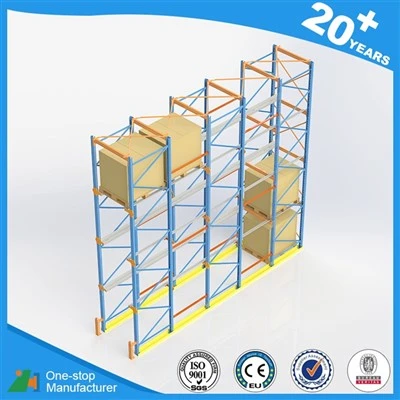
Key Information Gain for Cold Chain Procurement Officers:
Standard carbon steel becomes susceptible to hydrogen embrittlement and brittle fracture below zero degrees Celsius. PrimeBay Heavy Duty Racking Co., Ltd. builds cold-room structural components exclusively with high-ductility Q355B hot-rolled structural steel, tested via Charpy V-Notch impact resistance protocols down to -30°C. Furthermore, our thermosetting epoxy powder coatings undergo multi-stage surface pretreatment to prevent moisture entrapment during routine defrost cycles.
High-Performance Product Recommendations & System Configurations
Selecting the optimal Drive Through Cold Storage Racking configuration depends on warehouse clear height, pallet dimensions, total unit weight, and handling equipment capabilities. PrimeBay Heavy Duty Racking Co., Ltd. provides engineered layouts designed to meet stringent global standards including EN 15512, FEM 10.2.02, and RMI compliance.
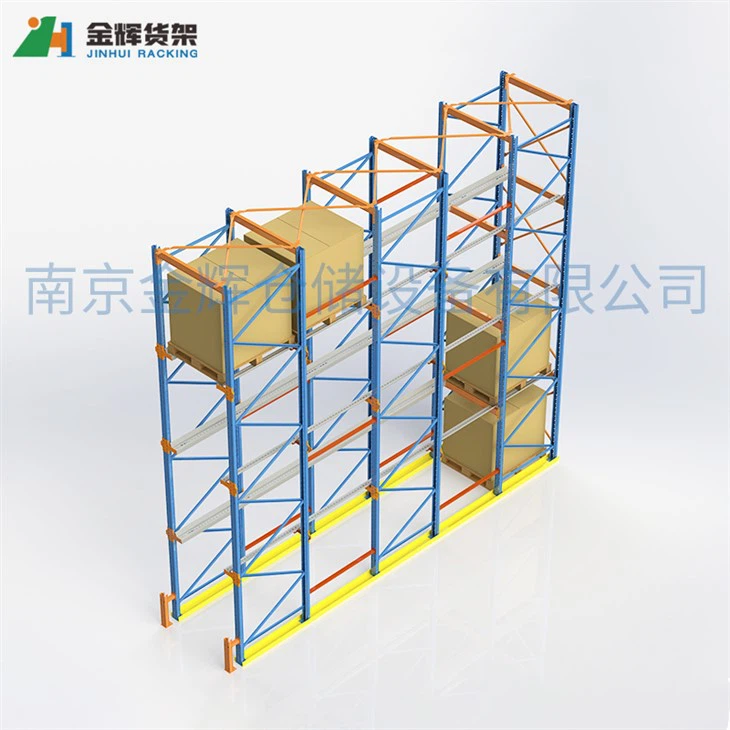
1. Heavy-Duty Dual-Access Drive-Through System
Designed for multi-tier freezer vaults with storage heights exceeding 10 meters. Features reinforced column profiles, heavy-gauge floor anchor assemblies, and continuous cold-drawn structural support rails capable of sustaining loads up to 1,500 kg per pallet position.
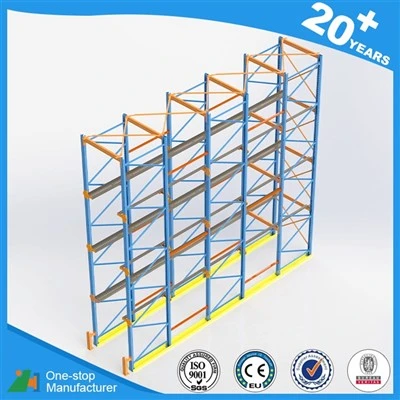
2. Guided Drive-Through System for Cold Stores
Integrates heavy-duty floor-mounted angle iron guide rails (100mm x 50mm x 5mm) to guide reach trucks safely into narrow storage channels. Eliminates vehicle collision risks in low-visibility or frosted sub-zero aisles.
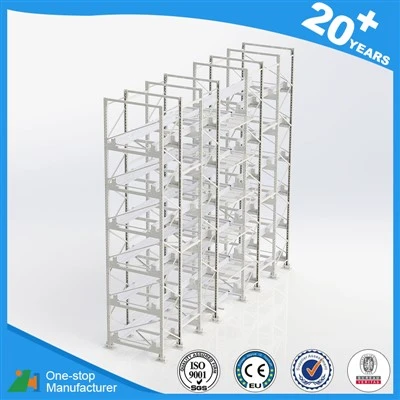
3. Semi-Automated Shuttle Drive-Through Hybrid
Combines drive-through structure with radio shuttle carts to eliminate the need for forklifts to enter deep channels. Provides maximum operator safety, rapid pallet retrieval cycles, and optimal energy retention inside cold rooms.
Future Procurement Trends in Cold Storage Warehousing (2025–2030)
As global cold chain supply chains adapt to rising energy costs, urban logistics space constraints, and stringent food safety regulations, procurement trends for industrial racking systems are shifting dramatically:
- 1. Shift Toward Energy-Dense Storage Footprints: Facility managers are actively retrofitting selective racking with high-density Drive Through and Radio Shuttle systems. Reducing unutilized air gaps directly cuts compressor electricity consumption by 25% to 35%.
- 2. Integration with Automated Guided Vehicles (AGVs) and Autonomous Forklifts: High-density drive-through channels are increasingly being engineered with millimeter-level precision tolerances to support autonomous reach trucks equipped with LiDAR and thermal imaging guidance.
- 3. Advanced Corrosion Prevention and Hybrid Surface Finishes: Environmental humidity spikes during refrigeration maintenance cause condensation on rack frames. Global procurement contracts now mandate hot-dip galvanizing (HDG) or specialized anti-bacterial epoxy powder coating for all floor-level column bases.
- 4. Lifecycle Carbon Footprint & Steel Traceability: Tier-1 international buyers require mill test certificates (MTC) proving low-carbon manufacturing processes and full material traceability for structural steel components.
Industry Development Trends: Engineering for Extreme Low Temperatures
Engineering racking structures for sub-zero operations requires rigorous material science and structural dynamics. The table below outlines how technological advancements in Drive Through Cold Storage Racking address common operational vulnerabilities in cold chain environments:
| Operational Vulnerability | Traditional Racking Limitations | PrimeBay Advanced Drive-Through Engineering Solution |
|---|---|---|
| Steel Structural Embrittlement | Standard mild steel (Q235) loses impact toughness below 0°C, risking catastrophic structural failure. | High-ductility Q355B structural steel with verified Charpy V-notch low-temperature toughness down to -30°C. |
| Forklift Impact in Slick Aisles | Unprotected uprights are prone to severe damage from skidding forklifts on icy concrete slabs. | Heavy-gauge ground guide rails, tapered entrance funnels, and reinforced base plate anchor assemblies. |
| Inventory Expiry Risk (LIFO Limitation) | Standard Drive-In racking traps older pallets behind newer stock, leading to product spoilage. | Dual-aisle access design enabling true First-In, First-Out (FIFO) stock rotation across all channels. |
| Moisture Ingress & Coating Flaking | Standard spray paint cracks under thermal expansion and contraction cycles, leading to rust. | Multi-stage automatic shot blasting followed by 80–100µm electrostatic thermosetting powder coating. |
Why Global Importers Partner with PrimeBay Heavy Duty Racking Co., Ltd.
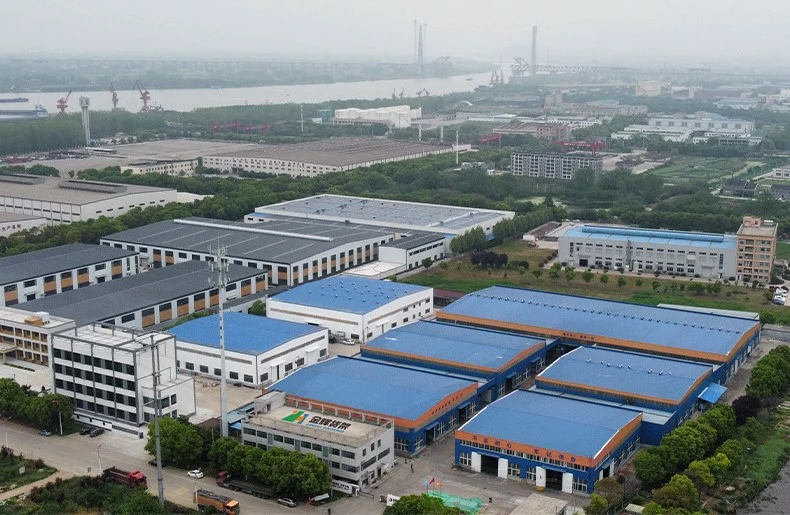
Founded in 2006, PrimeBay Heavy Duty Racking Co., Ltd. has grown into a premier designer, manufacturer, and exporter of heavy-duty industrial storage systems. Operating from our modern 40,000 m² manufacturing plant in Nanjing, Jiangsu, China, we deliver end-to-end racking solutions for warehouse operators, 3PL logistics hubs, and racking distributors in more than 85 countries across Europe, the Americas, Asia, and Africa.
Our commitment to structural safety, manufacturing precision, and engineering transparency forms the backbone of our operation:
- CE, ISO 9001, ISO 14001 & TUV Certified: Full international compliance with third-party testing verification.
- In-House Production Base: Cold roll-forming, automatic robotic welding, and powder coating lines controlled under strict ISO protocols.
- 10-Year Structural Warranty: Complete confidence backed by detailed engineering load ratings and structural documentation.
- OEM & ODM Capabilities: Tailored upright profiles, custom beam connections, colors, and branding for global racking distributors.
Frequently Asked Questions by Global Racking Buyers
Technical guidance and answers to common queries regarding Drive Through Cold Storage Racking projects.