Technical Procurement Guide · Engineering Excellence Since 2006
Optimizing Drive In Pallet Storage System Engineering: The Complete B2B Buyer’s Architectural, Trend & ROI Analysis
As global warehouse footprint costs climb and cold storage energy efficiency becomes paramount, procurement directors and logistics architects face a central challenge: how to maximize cubic space utilization without inflating capital expenditure. A professionally engineered Drive In Pallet Storage System eliminates operational aisles, increasing warehouse storage density by up to 75% to 85% compared to conventional selective pallet racking.
Designed for high-density, low-SKU, high-volume operations, modern drive-in racking leverages Last-In, First-Out (LIFO) or First-In, First-Out (FIFO drive-through) logistics protocols. At PrimeBay Heavy Duty Racking Co., Ltd., we combine advanced FEA structural modeling, high-yield Q355B cold-rolled steel, and certified manufacturing to deliver industrial storage solutions engineered for real-world forklift impacts, seismic requirements, and cold chain demands across 85+ export destinations.
Custom EngineeringCAD, 3D BIM, and bespoke guide-rail integration
Structural Integrity & Information Gain
Anatomy of a High-Performance Drive In Pallet Storage System
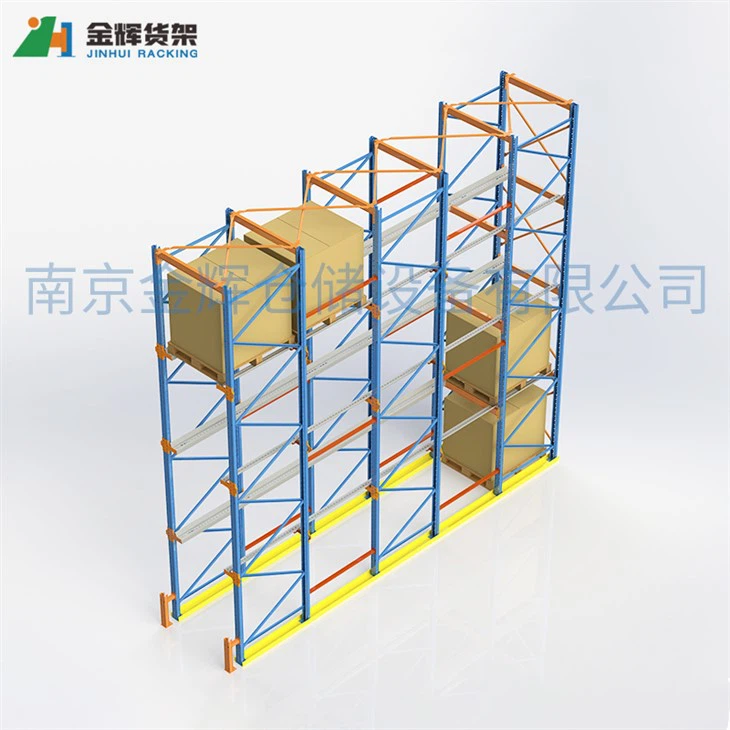
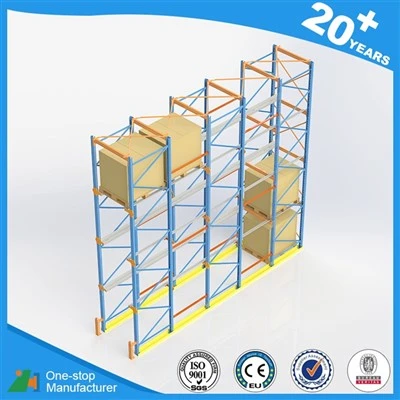
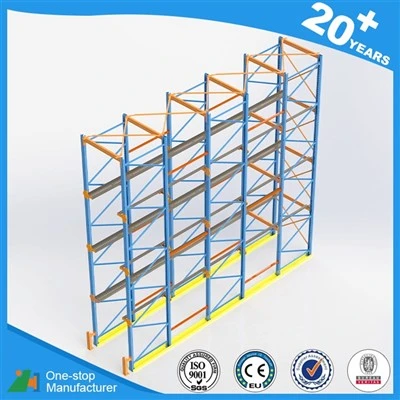
To make an informed procurement decision when comparing high-density warehouse storage systems, international buyers must understand the structural components that dictate safety, deflection tolerances, and operational longevity. Unlike standard selective racking where beams connect upright frames horizontally across every bay, a Drive In Pallet Storage System relies on continuous cantilevered pallet support rails running deep into each storage lane. Forklifts physically drive inside the structural matrix to deposit or retrieve unit loads directly onto heavy-gauge side rails.
Engineering Insight: Why Overhead & Back Bracing Define Frame Rigidity
Because drive-in lanes eliminate cross-beams within the driving channel, horizontal shear forces and torsional sway are transferred entirely to the top bracing beams, back vertical bracing panels (in LIFO systems), and anchor connections. PrimeBay Heavy Duty Racking Co., Ltd. utilizes custom-engineered 90mm, 100mm, and 120mm upright profiles rolled from Q355B structural steel, combined with top portal bracing towers to guarantee zero rack sway during full-load elevation.
85%Cubic Volume Utilization
Key Structural Components & Specs
Every Drive In Pallet Storage System manufactured in our Nanjing facility is tailored to exact unit load specs, forklift dimensions, and floor slab load ratings:
Upright Frames: Cold-rolled 11-fold or 13-fold profile sections designed for superior torsional resistance.
Corbel Bracket / Rail Support Arms: Stamped heavy-duty steel brackets hot-riveted or bolted to uprights for unyielding rail attachment.
Continuous Pallet Rails: One-piece cold-formed support rails featuring flared entrance leads to smoothly center incoming pallets.
Floor Protection & Guide Rails: Heavy-gauge angle iron or structural C-channel floor rails that guide forklift drivers safely through narrow lanes.
Recommended Drive In Pallet Storage Configurations by Industry
Select the optimal drive-in layout designed specifically for your warehouse temperature, inventory turnover rate, and pallet footprint.
Cold Storage (-30°C) Heavy-Duty Drive In System
Optimized for frozen food distribution and meat processing hubs. Features high-tensile steel designed to withstand extreme thermal contraction, finished with electrostatic powder coating or hot-dip galvanization.
Designed with access aisles on both sides, allowing forklifts to enter from one end to load and from the opposite end to unload. Ideal for batch-manufactured goods requiring strict FIFO inventory control.
Engineered for high-bay logistics warehouses in active seismic zones. Equipped with heavy-duty structural floor guide channels, widened entrance funnels, and reinforced base plate anchor clusters.
Compare how a Drive In Pallet Storage System evaluates against other high-density warehouse storage options to determine the best return on investment for your footprint:
Storage System Type
Volumetric Density
Relative CapEx / Pallet
Access Protocol
Forklift Clearance Requirement
Maintenance Complexity
Drive In Pallet Storage System
Very High (75%–85%)
Lowest (Baseline)
LIFO
Enters Rack Lane
Low (Purely Structural)
Drive Through Racking
Very High (70%–80%)
Low
FIFO
Enters Rack Lane
Low (Purely Structural)
Push Back Pallet Rack
Medium-High (65%–75%)
Moderate
LIFO (2–5 Deep)
Stays in Aisle
Low-Medium (Cart Wheels)
Radio Shuttle Racking
Maximum (85%–90%)
High
FIFO or LIFO
Stays in Aisle
Medium-High (Robotics & Batteries)
Selective Pallet Racking
Standard (40%–50%)
Low
100% Selective
Stays in Aisle
Very Low
Industry Insights & Market Intelligence
Future Procurement & Technological Trends in Drive-In Storage
How smart warehousing, robotic handling, and global sustainability standards are transforming drive-in racking specifications.
1. Integration with Narrow-Aisle AGV & Automated Forklifts
Traditional drive-in racking relied entirely on manual forklift operators navigating tight lanes, which introduced risks of upright damage over long operational shifts. Modern global procurement trends show a rapid transition toward Autonomous Guided Vehicles (AGVs) and automated reach trucks equipped with LiDAR and ultrasonic sensors. Today’s Drive In Pallet Storage System designs from PrimeBay Heavy Duty Racking Co., Ltd. incorporate precision laser-guided floor channels, ultra-tight profile manufacturing tolerances (±0.5mm), and retroreflective optical targets to support seamless robotic vehicle entry.
2. Energy-Centric Cold Chain Warehouse Design
With global electricity costs escalating, cold storage logistics operators are re-evaluating building footprints. Refrigerating empty aisle air is financially inefficient. Drive-in systems allow operators to pack frozen goods into compact structural blocks, reducing cold room volume requirements by up to 40%. PrimeBay is seeing a rising demand for hybrid drive-in systems featuring stainless steel lower wear-plates and specialized low-temperature epoxy powder coatings certified for non-gassing performance down to -30°C.
ESG compliance is now a mandatory standard in European and North American B2B procurement tenders. Modern drive-in rack designs are abandoning thick, heavy low-grade mild steels in favor of advanced high-strength thermo-mechanically rolled steels such as Q355B and Q460. This enables thinner wall profiles with higher load-bearing capacities—reducing total steel tonnage, lowering international freight carbon emissions, and supporting closed-loop recycling programs without compromising frame rigidity.
4. IoT-Enabled Structural Health & Impact Monitoring
Preventing warehouse structural failures starts with immediate detection. The newest generation of industrial drive-in installations features IoT impact sensors installed on critical entry uprights and top portal frames. These sensors measure real-time G-force shocks from forklift contact, transmitting instant alerts to facility managers before minor frame deflections escalate into structural collapse hazards.
Driven by two decades of industrial structural R&D, automated roll-forming technology, and strict quality control.
0+
Patented Racking Technologies
0+
Structural Engineers & Technicians
0+
Completed Drive-In & Heavy Racking Projects
0m²
State-of-the-Art Production Base
Manufacturing & Engineering Rigor
Customized Technical Engineering for Complex Storage Needs
From structural calculation software to specialized floor anchors, we deliver end-to-end support for international importers and logistics contractors.
Click each engineering focus to explore PrimeBay’s manufacturing execution:
Search Intent & Technical Procurement FAQ
Frequently Asked Questions on Drive In Pallet Storage Systems
Get clear, authoritative engineering answers to common technical queries raised by global logistics buyers, warehouse managers, and structural engineers when evaluating drive-in pallet racking solutions.
Need a custom layout or engineering load calculation? [email protected]
What is the maximum practical lane depth for a Drive In Pallet Storage System without compromising safety?
For standard forklift operations, a drive-in lane depth of 6 to 10 pallets is recommended for optimal balance between speed and safety. Deep lanes up to 12-15 pallets are engineered by PrimeBay Heavy Duty Racking Co., Ltd. with integrated floor guide rails, heavy-duty column protectors, and specialized entrance top bracing to ensure structural integrity and minimize forklift maneuver errors.
How does PrimeBay mitigate forklift collision risks inside drive-in racking lanes?
Forklift contact is the primary operational risk in drive-in racking. PrimeBay mitigates this through a three-tier protection design:
Heavy-Duty Ground Rails: Floor-anchored structural steel angle rails (e.g., 75×50×6mm or 100×75×8mm) guide forklift wheels precisely through the channel.
Widened Entrance Lead-ins: Flared entry funnels on both floor rails and overhead pallet rails assist drivers in aligning pallets upon entering the lane.
Heavy-Gauge Column Protectors: Reinforced wrap-around or independent steel upright guards anchored directly to the concrete slab protect the vulnerable front entrance columns.
What is the cost comparison between a Drive In Pallet Storage System and a Radio Shuttle Racking System?
A Drive In Pallet Storage System offers the lowest initial capital expenditure (CapEx) per pallet position among high-density storage solutions because it requires no motorized shuttles or electrical automation infrastructure. While Radio Shuttle racking achieves faster pallet handling cycles by keeping forklifts outside the rack, Drive In racking yields maximum Return on Investment (ROI) for low-SKU, high-volume operations with moderate throughput requirements.
Is a Drive In Racking System suitable for cold storage freezer environments?
Absolutely. Drive-in racking is one of the most effective solutions for cold storage facilities operating at -20°C to -30°C. By eliminating unnecessary operating aisles, it reduces the total refrigerated air volume required, drastically lowering operational energy costs. PrimeBay applies cold-resistant epoxy powder coatings and hot-dip galvanization to prevent low-temperature steel embrittlement and surface oxidation.
What structural steel grades and design codes does PrimeBay use?
All racking systems manufactured by PrimeBay Heavy Duty Racking Co., Ltd. utilize high-yield cold-rolled structural steel (Q235B and Q355B equivalent to SS400 / S355). Our engineering design calculations follow European FEM 10.2.07 standards, EN 15512 specifications, American ANSI/RMI MH16.1 guidelines, and Australian AS4084-2023 safety codes.
Can a Drive In Racking System be converted into a Drive Through or Radio Shuttle layout later?
Yes. PrimeBay modular upright frame patterns and standardized hole pitch (75mm or 50mm) allow facilities to reconfigure a LIFO Drive In Pallet Storage System into a FIFO Drive Through layout by removing rear vertical bracing frames (provided building space permits access). Additionally, lanes can be retrofitted with custom shuttle rails to convert the structure into an automated Radio Shuttle system as throughput demands grow.
What warranty and certification documents accompany PrimeBay shipments?
Every installation is covered by a 10-year structural warranty. All international orders are delivered with official CE compliance certificates, ISO 9001 / ISO 14001 quality system documentation, TUV material test reports, mill test certificates (MTC), and detailed step-by-step CAD installation assemblies.
Enterprise Advantage & E-E-A-T Authority
Why Global Importers & Contractors Partner with PrimeBay
Delivering uncompromised structural quality, direct factory pricing, and full-service engineering support since 2006.
20+Years of Manufacturing Excellence
Factory-Direct Structural Manufacturing Base
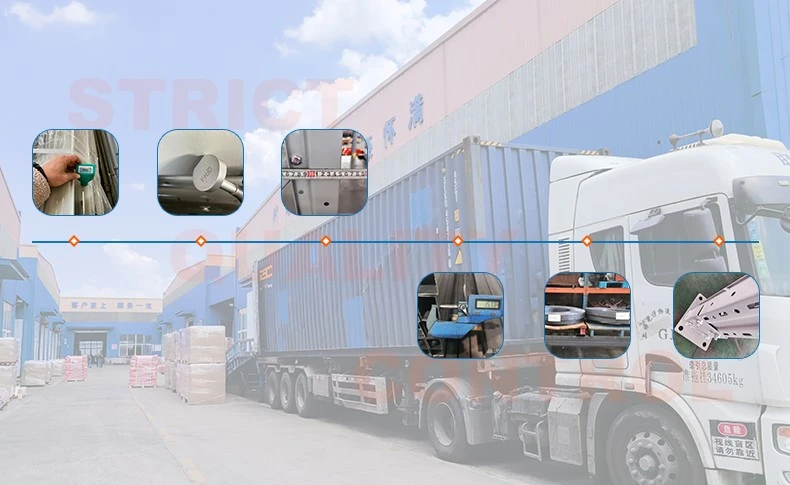
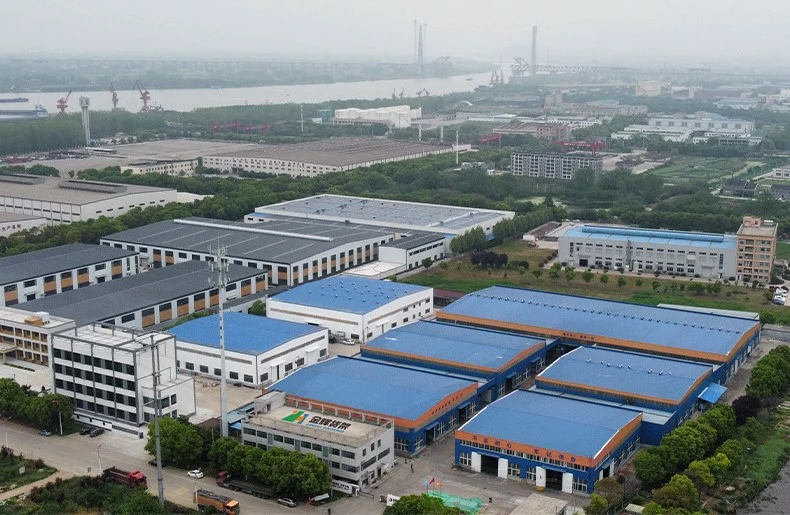
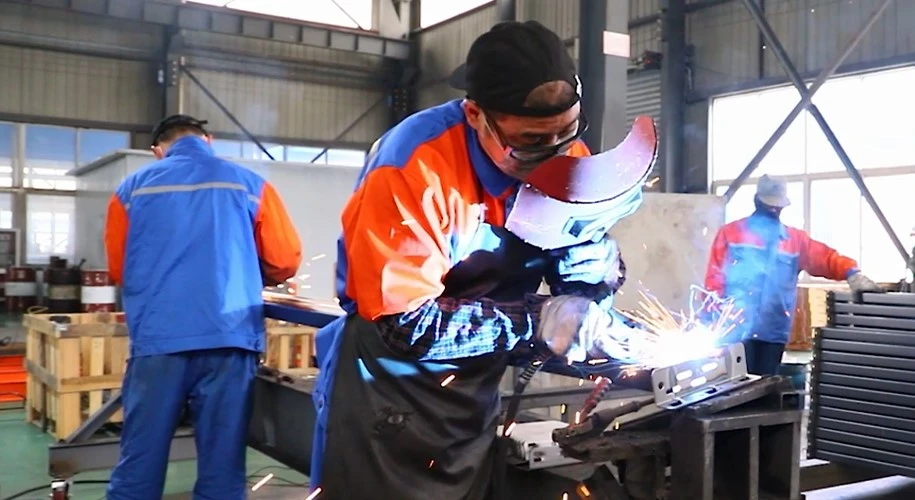
Located in the Guli Industry District of Nanjing, Jiangsu, PrimeBay Heavy Duty Racking Co., Ltd. operates a modernized 40,000 m² manufacturing plant equipped with continuous automatic cold roll-forming machines, robotic welding stations, automated steel shot-blasting units, and dual electrostatic powder coating production lines. Controlling every stage from raw steel coil inspection to final powder curing allows us to maintain strict dimensional tolerances, uniform coating thickness (>65μm), and reliable export delivery schedules.
Our experienced engineering team works directly with warehouse managers, system integrators, and racking distributors to turn complex storage requirements into clear, buildable, safe, and cost-effective racking designs.
Full ISO 9001, ISO 14001, CE, and TUV factory certifications
Complete OEM/ODM customization of upright profiles, colors, and branding
Engineering consultation and fast 24-hour CAD layout design
Proven track record supplying warehouse projects across 85+ countries