[email protected] Exporting racking systems to 85+ countries
CE · ISO 9001 · ISO 14001 · TUV English

Pallet Accumulation Racking Manufacturers & Factories for Seattle

High-Density Storage Engineering, Seismic-Certified Frame Manufacturing, and Custom Logistics Optimization for the Pacific Northwest Supply Chain Corridor.

Industrial Grade Catalogue

High-Density Accumulation Racking Systems

Engineered for maximum volumetric efficiency, structural compliance, and heavy-duty load handling in Seattle logistics hubs.

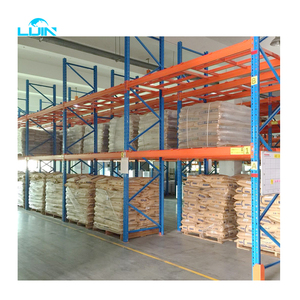
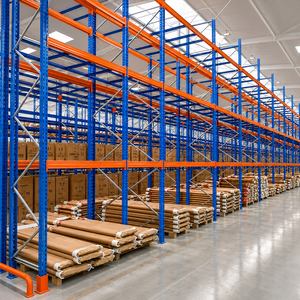
1 Ton Warehouse Storage Adjustable Pallet Racking Shelf Unit

1 Ton Warehouse Storage Adjustable Pallet Racking Shelf Unit Forklift Assemble Manufacturer Steel Rack

Get a Quote
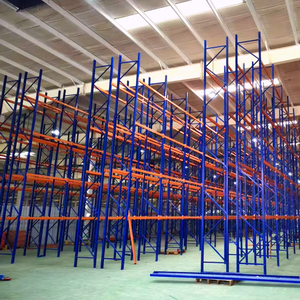
2-5 Tier Wide Aisle Heavy Load Pallet Racking

2-5 Tier Wide Aisle Heavy Load Pallet Racking for Automated Warehouse Online Order Fulfillment Hub

Get a Quote
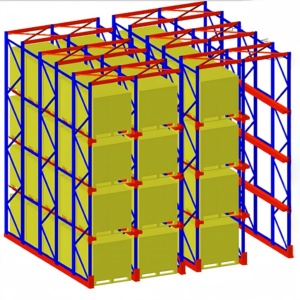
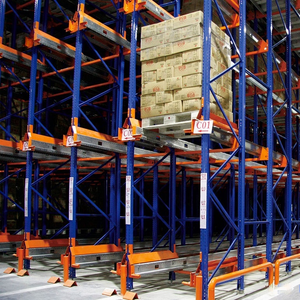
High-Density Heavy Duty Steel Pallet Rack Durable FIFO Drive-in

High-Density Heavy Duty Steel Pallet Rack Durable FIFO Drive-in Warehouse Storage ODM & OEM Supplier

Get a Quote
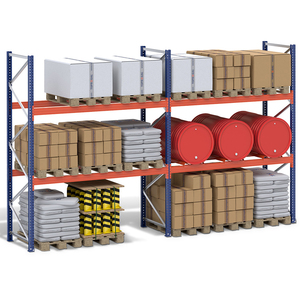
Corrosion Protection Pallet Rack Heavy Duty Warehouse Storage

For Industry Corrosion Protection Pallet Rack China Racking Heavy Duty Warehouse Storage Pallet Rack System Shelf for Racks

Get a Quote
Radio Shuttle Pallet Racking Fully Automated Operation

Radio Shuttle Pallet Racking Fully Automated Operation Heavy Duty Construction Capable Handling 40m Deep Lane Configurations

Get a Quote
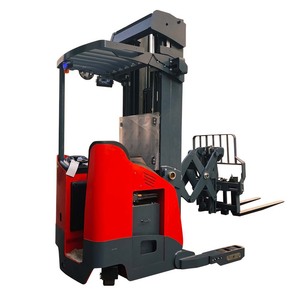
Double Deep Pallet Racking System

High Efficiency Double Deep Pallet Racking System Eco Friendly Electric Reach Truck Compatible

Get a Quote
High Density Porta Pallet 1000kg Q235B Cold Rolled Steel Heavy Duty

Warehouse Storage Rack System High Density Porta Pallet 1000kg Q235B Cold Rolled Steel Heavy Duty Pallet Rack Warehouse

Get a Quote
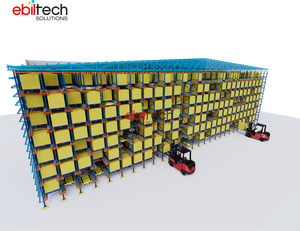
CE Certified Two Way Shuttle Clad Racking Warehouse Integrated Rack

EBILTECH CE Certified Two Way Shuttle Clad Racking Warehouse Integrated Rack for Deep Lane Storage

Get a Quote
20+
Years Racking Engineering
85+
Global Export Markets
40,000m²
Intelligent Production Base
100+
Patented Racking Tech
Technical Industry Whitepaper

Executive Summary: Optimizing Greater Seattle’s High-Cost Industrial Real Estate

The Greater Seattle logistics corridor—spanning the Port of Seattle, the Port of Tacoma, Kent Valley, Renton, and Everett—represents one of North America's most dynamic yet land-constrained industrial supply chain hubs. Driven by rapid growth in e-commerce fulfillment, cold-chain food distribution, maritime logistics, and aerospace manufacturing, industrial real estate lease rates in King County and Pierce County have climbed to historic highs. Warehouse operators face a structural challenge: how to scale storage throughput and pallet capacity without expanding physical building footprints or committing to exorbitant structural real estate additions.

Pallet Accumulation Racking Systems (encompassing Push Back Racking, Radio Shuttle Racking, and Dynamic Pallet Flow Accumulation) provide the definitive engineering response. By eliminating internal forklift travel aisles and consolidating pallet channels into multi-deep accumulation lanes, enterprise facilities achieve up to an 85% increase in storage density over conventional selective pallet racks. This technical whitepaper analyzes the structural engineering considerations, seismic compliance standards (RMI / ANSI MH16.1), automation integrations, and factory-direct procurement pathways for enterprise buyers seeking certified Pallet Accumulation Racking manufacturers for Seattle installations.

Core Efficiency Insight: Transitioning a standard 50,000 sq. ft. Kent Valley distribution facility from standard selective layout to a 4-deep Push Back or Radio Shuttle accumulation rack increases usable pallet positions from 4,200 to over 7,800 unit loads while preserving 100% SKU batch traceability and compliance with Washington State Building Code seismic design categories.

Engineering Taxonomy: Mechanics of Pallet Accumulation Technologies

Pallet accumulation relies on gravity or electro-mechanical energy to move palletized loads along designated structural channels. Selecting the optimal accumulation methodology depends on SKU volume, batch rotation principles (LIFO vs. FIFO), unit load weights, and throughput speed requirements.

1. Push Back Accumulation Racking (2 to 6 Pallets Deep)

Push Back racking utilizes a series of nested, telescoping steel carts that ride on inclined structural steel rails anchored to heavy-duty cross beams. The system operates on a Last-In, First-Out (LIFO) inventory pattern. When a forklift loads the first pallet onto the top cart, the operator uses the second pallet to push the first cart back, exposing the nested cart beneath.

Technical Specs & Load Dynamics: Heavy-duty push back systems engineered by PrimeBay feature a precise 3/8-inch per foot inclination gradient. Low-profile structural carts are fitted with sealed stainless steel bearing wheels to eliminate binding, engineered to carry unit loads up to 3,000 lbs (1,360 kg) per cart position. This offers immediate accessibility to individual lane SKUs without forcing forklifts to enter structural rack frames.

2. Radio Shuttle High-Density Accumulation Systems

Radio Shuttle racking represents the pinnacle of semi-automated deep-lane pallet accumulation. A self-propelled, battery-powered robotic shuttle cart travels along guidance rails within deep storage channels (up to 40+ pallets deep). Forklifts deposit pallets at the channel entry; the radio shuttle automatically lifts the pallet and transports it down the lane, depositing it tightly against the previous load.

Operational Versatility: Unlike mechanical gravity systems, Radio Shuttle racking can be programmed via RF remote control or integrated Warehouse Management Systems (WMS) to operate under either LIFO or FIFO (First-In, First-Out) modes. Fueled by heavy-duty Lithium Iron Phosphate ($LiFePO_4$) battery modules, these shuttles execute continuous 8-to-10 hour duty cycles under ambient or sub-zero cold storage conditions down to -25°C.

3. Dynamic Gravity Pallet Flow Accumulation (FIFO)

Pallet Flow racking leverages full-width or twin-track heavy-duty steel roller beds set at a controlled pitch (typically 7/16-inch per foot). Pallets loaded at the high charge end automatically roll toward the discharge end under gravity. Integrated centrifugal speed controllers (brake rollers) restrict travel speeds to a safe 0.3 m/s, preventing runaway loads. At the pick face, mechanical pallet separators disengage the front pallet from trailing line pressure, allowing safe lift-truck extraction.

Comparative Engineering Matrix: Accumulation Systems vs. Selective Racks

Racking Architecture Volumetric Storage Density Inventory Rotation Lane Storage Depth Forklift Risk Exposure Ideal Seattle Industry Sector
Push Back Racking 70% - 80% (High) LIFO 2 to 6 Pallets Deep Very Low (Outside Frame) E-commerce, Beverage, Consumer Goods
Radio Shuttle System 85% - 90% (Maximum) LIFO or FIFO 10 to 40+ Pallets Deep Zero (Automated Shuttle) Port Cold Storage, Seafood, FMCG
Pallet Flow Racking 75% - 85% (Very High) Strict FIFO 4 to 20 Pallets Deep Very Low (Separate Loading) Perishable Foods, Pharmaceuticals
Drive-In Racking 65% - 75% (Medium-High) LIFO 5 to 10 Pallets Deep High (Forklift Enters Frame) Bulk Raw Materials, Seasonal Items
Standard Selective Rack 35% - 45% (Baseline) 100% Direct Access 1 to 2 Pallets Deep Moderate (High Aisle Traffic) High-SKU Spare Parts Distribution

Seismic Engineering & Structural Compliance for King & Pierce Counties

Seattle and the surrounding Puget Sound region are designated under High Seismic Design Categories (SDC D, E, and F) due to proximity to the Cascadia Subduction Zone and Seattle Fault line. Installing high-density pallet accumulation racking in Seattle requires rigorous compliance with the International Building Code (IBC 2021/2024), ASCE 7 structural design provisions, and RMI (Rack Manufacturers Institute) ANSI MH16.1 specifications.

As a global manufacturer engineered for high-seismic zones, PrimeBay fabricates heavy-duty racking components using certified Q235B and Q355 high-tensile cold-rolled steel. Structural features tailored for Seattle building permit approvals include:

  • Enlarged Seismic Footplates: Heavy-gauge, laser-cut steel baseplates designed to distribute uplift and overturning forces directly into high-psi reinforced concrete slabs.
  • Anchor Bolt Engineering: Pre-calculated wedge or epoxy anchor embedment configurations rated for dynamic horizontal shear forces.
  • Heavy-Duty Column Upright Profiles: Open or closed-tube upright designs with 5-hook heavy beam connector locks and safety pins preventing accidental beam dislodgement during seismic movement.
  • Structural Bracing & Row Spacers: Rigid horizontal and diagonal frame bracing engineered using finite element analysis (FEA) to minimize sway displacement under heavy structural vibration.

Localized Seattle Application Scenarios & Industry Use Cases

Tailoring pallet accumulation rack engineering to the specific industrial profiles of Greater Seattle sub-markets ensures maximum operational ROI.

Kent Valley & Auburn Logistics Hubs

E-Commerce & 3PL Buffer Storage: High-velocity order fulfillment centers along I-5 and SR-167 rely on 4-deep Push Back racking to stage fast-moving consumer packaged goods (CPG). Accumulation lanes allow rapid staging of incoming container freight from the ports before sorting into regional distribution queues.

Port of Seattle Cold Storage & Maritime

Sub-Zero Seafood & Produce Accumulation: Operating refrigerated space ($0^\circ\text{F}$ to $-15^\circ\text{F}$) carries extreme energy costs. Radio Shuttle accumulation racking maximizes cubic refrigeration space at harbor-adjacent facilities, protecting Alaskan seafood shipments and Washington agricultural exports with automated, sub-zero ready runners.

Everett & Eastside Advanced Manufacturing

Aerospace & Tech Components Staging: Supporting industrial clusters around Snohomish County, heavy-duty accumulation flow racks handle dense raw metal stock, sub-assemblies, and heavy tooling dies with 1,500kg per pallet structural capacity and anti-corrosive powder coatings.

Pacific Northwest Market Trends: Automation & Sustainability Integration

Transition to Automation-Ready Racking Structures

As labor availability fluctuates across the Puget Sound, warehouse enterprise managers are increasingly procuring accumulation racking systems engineered for seamless retrofitting into Automated Storage and Retrieval Systems (ASRS) or Automated Guided Vehicle (AGV) interfaces. PrimeBay’s Radio Shuttle infrastructure features precision-punched structural uprights and optical sensor reflector targets compatible with standard AGV laser positioning modules.

Decarbonization & LEED Energy Reduction Impact

Washington State’s Clean Buildings Performance Standard imposes strict energy intensity metrics ($EUI$) on commercial and industrial facilities. High-density accumulation racks actively contribute to facility decarbonization. By consolidating 10,000 pallets into 40% less total building volume, facilities drastically lower building lighting, heating, and cooling energy loads per pallet position stored. Furthermore, PrimeBay utilizes eco-friendly, zero-VOC electrostatic powder coat baking processes and recyclable Q235B/Q355 structural steel.

PrimeBay Enterprise Advantage: Factory-Direct OEM & ODM Capabilities

PrimeBay Heavy Duty Racking Co., Ltd. brings over 20 years of dedicated storage manufacturing mastery to Seattle contractors, system integrators, and facility owners. Operating out of a state-of-the-art 40,000 m² production complex in Nanjing, Jiangsu, we maintain total quality control over every stage of steel rack fabrication.

Certified Global Standards

Fully certified to CE, ISO 9001 (Quality Management), ISO 14001 (Environmental Management), and TUV safety standards, guaranteeing compliance with global quality guidelines.

Complete OEM/ODM Customization

Custom upright profiles, beam box dimensions, structural paint hues (RAL color matching), brand labeling, and specialized packaging engineered for direct ocean transit.

10-Year Structural Warranty

All PrimeBay accumulation systems are backed by an industry-leading 10-year structural warranty, engineered load signage placards, and complete CAD approval drawings.

Our dedicated engineering desk assists Seattle clients from initial CAD space planning, structural column grid integration, and dynamic load testing, to seamless customs-cleared container freight arrival at the Port of Seattle or Port of Tacoma.

Buyer Knowledge Base

Frequently Asked Questions for Seattle Buyers

Addressing structural engineering, building permits, freight logistics, and technical selection for Pacific Northwest storage projects.

Why is Pallet Accumulation Racking preferred over standard selective racking in Seattle warehouses?
Industrial real estate in King County and Pierce County carries premium rental rates. Standard selective racking requires 10 to 12-foot forklift aisles, wasting up to 60% of floor area on access paths. Pallet Accumulation systems (such as Push Back and Radio Shuttle racking) eliminate interior aisles, allowing enterprise warehouses to store up to 85% more pallets within the same physical footprint while preserving high-speed SKU lane access.
How do PrimeBay racking systems comply with Seattle seismic code requirements?
Seattle is situated in a high seismic risk zone (Seismic Design Category D/E). PrimeBay engineers custom rack structures adhering strictly to RMI (Rack Manufacturers Institute) ANSI MH16.1 and IBC standards. We utilize certified Q235B/Q355 high-strength cold-rolled steel, heavy-duty seismic baseplates, anchor bolt patterns engineered for specific slab thickness/psi, and reinforced frame bracing to pass local King County and City of Seattle building permit inspections.
What is the difference between Push Back and Radio Shuttle accumulation racking?
Push Back racking relies on mechanical nested carts on an inclined rail and is ideal for medium-density storage (2 to 6 pallets deep per lane) under LIFO rotation. Radio Shuttle racking uses a battery-powered automated cart running on channels up to 40+ pallets deep, capable of both LIFO and FIFO inventory management. Shuttle racking is highly recommended for cold storage and high-volume, low-SKU operations.
Can PrimeBay supply custom dimensions, beam profiles, and OEM color matching?
Yes. As a direct factory manufacturer, we provide complete OEM and ODM customization. We adjust frame depths, column height profiles, beam gauges, dynamic cart capacities, and powder coat finishes to match your exact corporate branding or existing warehouse infrastructure.
What lead time can Seattle enterprise customers expect for factory-direct ocean shipments?
Production typically takes 14 to 21 days following CAD drawing approval. Direct ocean container transit from our facilities to the Port of Seattle or Port of Tacoma generally requires 16 to 22 days at sea. Overall door-to-door project delivery averages 5 to 7 weeks, delivering substantial cost savings over domestic distributors.
Are your Radio Shuttle carts certified for sub-zero cold storage facilities near the Port of Seattle?
Yes. PrimeBay Radio Shuttle systems are specifically manufactured with low-temperature electronics, specialized lubricants, moisture-sealed PLC control modules, and cold-resistant Lithium Iron Phosphate ($LiFePO_4$) battery packs designed for reliable performance down to -25°C (-13°F).
What engineering drawings and documentation do you provide for local permit applications?
We supply comprehensive CAD site installation plans, elevation drawings, structural load calculation reports, component material test certificates, and structural capacity warning plaques required by local building departments and OSHA/WISHA inspectors.

Optimize Your Seattle Warehouse Storage Density Today

Contact PrimeBay’s senior engineering team to request a complimentary warehouse CAD storage analysis, seismic load calculation, and factory-direct quotation.

Get a Quote