High-Performance Storage Equipment for German Logistics Operations
Engineered for high load-bearing structural integrity, seamless cold-chain throughput, and compliance with European safety guidelines.
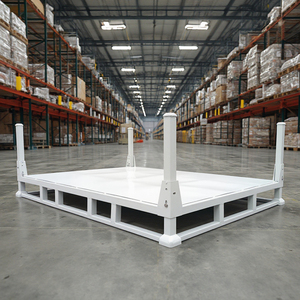
CASE CARTER MX-10 Heavy Duty Foldable Powder Coated Q235 Steel Stackable 4 High Storage Pallets
Get Catalog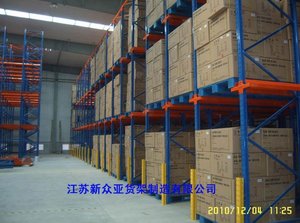
Customized Heavy Duty Drive In Pallet Rack Q235 Steel, High Capacity Storage Racking Solution
Get Catalog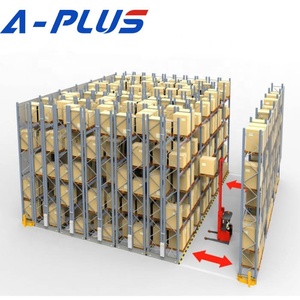
Automatic Warehouse Storage Shelving System / Mobile Shelving System
Get Catalog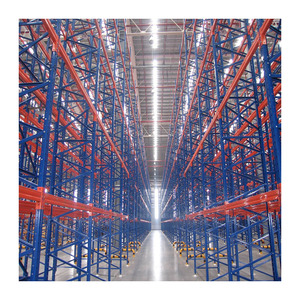
Mracking Heavy Duty Industrial Palletized Racking (Capacity 1000-4000kg)
Get Catalog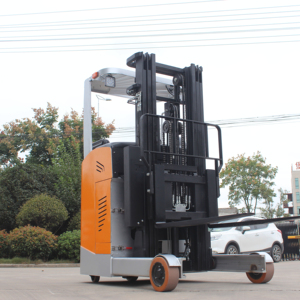
High Bay Racking Storage Solution Seated Reach Truck for Narrow Aisle Pallet Stacking
Get Catalog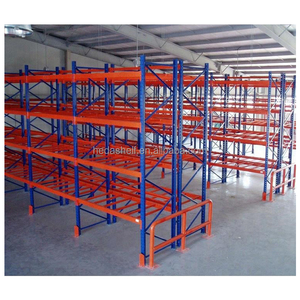
Wide Aisle Pallet Racking Heavy Duty Metal Rack Double Deep Warehouse System
Get Catalog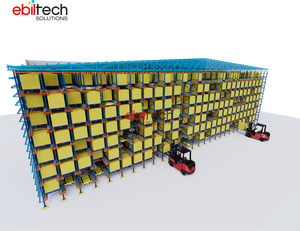
CE Certified Two Way Shuttle Clad Racking Warehouse Integrated Rack for Deep Lane Storage
Get Catalog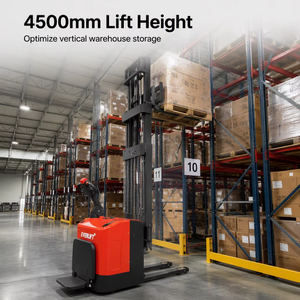
2000kgs Walkie Pallet Stacker Full Electric Advanced DC Drive System Lift Truck
Get CatalogExecutive Strategic Overview: German Food & Beverage Intralogistics
Germany stands as the central logistical powerhouse of the European Union, operating under stringent structural, hygiene, and energy efficiency directives. Modern food and beverage (F&B) logistics facilities located in regional distribution nodes—such as the Port of Hamburg hinterland, North Rhine-Westphalia (NRW), Bavaria, and Baden-Württemberg—face unprecedented demands. Facilities must balance high inventory turn rates, strict temperature control compliance, and strict adherence to European norms including DIN EN 15635 (Steel static storage systems - Application and maintenance of storage equipment) and DGUV Regel 108-007 safety regulations.
Selecting an OEM/ODM manufacturer for heavy-duty food and beverage storage systems requires careful evaluation of structural resilience, cold-room steel metallurgy, surface anti-corrosion treatments, and seamless automated integration (WMS/WCS compatibility). PrimeBay Heavy Duty Racking Co., Ltd. brings over 20 years of dedicated racking design expertise, manufacturing certified pallet racking, radio shuttle systems, drive-in racking, and automated storage platforms engineered specifically to master Central European operating conditions.
Key Information Gain: Structural Metallurgy & Cold Chain Performance
In deep-freeze logistics environments (-25°C to -30°C) common in German frozen food distribution centers, standard carbon steel experiences ductile-to-brittle transition, significantly increasing structural fracture risks. Engineered systems utilize high-yield strength Q355B structural steel certified for low-temperature toughness, combined with specialized epoxy-powder coating processes (60–80µm thickness) or hot-dip galvanizing per ISO 1461 to eliminate micro-cracking and prevent moisture-induced corrosion.
Structural Compliance with German Standards (Baustatik & Standards)
German warehouse operators are legally bound to enforce rigorous structural auditing. Storage systems deployed in Germany must satisfy Eurocode 3 (EN 1993) structural steel design parameters. This mandates exact dynamic deflection modeling, seismic load resistance calculations, and strict safety factors regarding upright column impact protections.
- DIN EN 15512: Racking structural design guidelines enforcing finite element analysis (FEA) under maximum loaded beam conditions.
- DIN EN 15635: Mandates systematic inspection regimes, clear load sign notices (TRGS 510), and strict tolerances for beam deflections limited to L/200.
- HACCP & IFS Food Standard 7 Integrity: Smooth profile finishes preventing organic accumulation, washable galvanized wire decking, and non-toxic food-grade epoxy coatings.
Localized Storage System Applications Across Germany
Tailored intralogistics architectures solving specific operational bottlenecks across major German industrial clusters.
Deep-Freeze Cold Storage Hubs
Primary Regions: Lower Saxony (Bremerhaven/Hamburg corridor) & Bavaria.
System Solution: Automated Radio Shuttle & 4-Way Shuttle Racking Systems.
Operational Impact: Maximize cubic volumetric space utilization by up to 85%. Reduces refrigeration footprint energy overheads by replacing manual forklift travel aisles with battery-powered shuttles capable of continuous operating cycles down to -30°C.
Brewery & Beverage Logistics
Primary Regions: Munich, Franconia, and North Rhine-Westphalia (NRW).
System Solution: Heavy-Duty FIFO Pallet Flow & Gravity Roller Systems.
Operational Impact: Designed to withstand heavy dynamic point loads (up to 1,500 kg per pallet position for liquid barrels/bottles). Gravity brake rollers control descent velocity, ensuring strict First-In, First-Out (FIFO) stock rotation for time-sensitive batches.
High-Throughput Fresh FMCG & Dairy
Primary Regions: Baden-Württemberg & Greater Frankfurt (Hesse).
System Solution: Very Narrow Aisle (VNA) & Automated ASRS Systems.
Operational Impact: Elevates vertical storage capacity up to 15+ meters while optimizing aisle widths down to 1,600mm. Integrated with guided reach trucks or automated cranes, ensuring rapid picking velocity for fresh produce subject to tight EU expiration windows.
Food & Beverage Storage Racking Selection Guide
Quantitative trade-off analysis evaluating volumetric density, operational access, and capital expenditure (CapEx).
| Racking Technology System | Volumetric Density Efficiency | Pallet Selectivity | Stock Rotation (FIFO/LIFO) | Cold Room (-25°C) Suitability | Primary F&B Category Application |
|---|---|---|---|---|---|
| Radio Shuttle Racking | Very High (80%–88%) | Lane Dependent | FIFO or LIFO Choice | Optimal | Frozen Meats, Vegetables, Packaged Ice Cream |
| Selective Pallet Rack | Standard (40%–50%) | 100% Direct Access | Flexible FIFO / LIFO | Moderate | Mixed SKU Distribution, Dry Grocery Distribution |
| Drive-In Pallet System | High (65%–75%) | Low (Lane-Restricted) | LIFO Only | Good | Bulk Seasonal Beverages, Raw Ingredients |
| FIFO Gravity Flow Rack | High (70%–80%) | Lane Dedicated | Strict Automatic FIFO | Good | Short Shelf-Life Dairy, Bakery, Processed Juices |
| Push-Back Cart Racking | Medium-High (60%–70%) | 2 to 5 Deep per Lane | LIFO | Good | Medium-Volume SKU Fast-Moving Groceries |
| VNA (Very Narrow Aisle) | High Vertical (65%–75%) | 100% Direct Access | Flexible FIFO / LIFO | Good | High-Bay E-Commerce Grocery Fulfillment |
Key Industry Trends: German F&B Intralogistics (2025–2030)
Driven by rising electricity tariffs in Central Europe (reaching upwards of €0.20–€0.30/kWh for industrial consumers), ESG decarbonization mandates, and severe warehouse labor shortages across Germany, the storage equipment paradigm is rapidly transforming.
1. The Shift to Dark Warehouses (Fully Automated Intralogistics)
To eliminate interior heating caused by human operator movement and ambient lighting, major German logistics hubs are migrating towards "dark cold stores." These operations rely on Automated Storage and Retrieval Systems (ASRS) paired with self-charging 4-Way Shuttle fleets. These systems communicate directly with SAP/Siemens WMS platforms via industrial IoT protocols, running continuously without human intervention in sub-zero environments.
2. CO2 Footprint Reduction & Steel Lifecycle Tracking
Under the EU Corporate Sustainability Reporting Directive (CSRD), German enterprise buyers demand environmental product declarations (EPDs) for installed steel infrastructure. Upstream steel processing must utilize green-hydrogen steel melting techniques or high-recycled content electric arc furnace (EAF) steel, minimizing Scope 3 emissions for the facility.
3. Modular Rack-Supported Clad Buildings (Silobau)
In regions where land prices remain premium—such as Munich, Stuttgart, and Frankfurt—enterprises are bypassing traditional building construction in favor of Rack-Supported Structures (Silobau). In these high-bay facilities (up to 40 meters high), the racking frames themselves form the primary structural skeleton holding the wall cladding and roof panels, dramatically reducing civil construction timelines and capital investment.
Years Engineering Expertise
State-of-the-Art Production Base
Export Countries & Regions
Structural Warranty Guarantee
PrimeBay Enterprise Manufacturing Capabilities
Precision cold-roll forming, automated robotic welding, and rigorous certified testing for global suppliers and system integrators.
Rigorous International Certification
Production facility and products hold verified certifications for CE Mark, ISO 9001 (Quality Management), ISO 14001 (Environmental Standards), and TÜV Rheinland inspection compliance. Full material mill certificates (MTC) are supplied with every shipment.
Custom OEM & ODM System Engineering
Full support for OEM/ODM customization. We engineer tailored upright profiles, custom beam connections, specific RAL color powder coatings, and branded packaging designed for warehouse contractors, distributors, and integrators in Central Europe.
End-to-End Quality Assurance
Every batch of high-yield steel undergoes tensile testing, weld seam ultrasonic testing, and automated powder coating thickness checks. Backed by an industry-leading 10-year structural warranty, assuring absolute operational safety.
Frequently Asked Questions for German Warehouse Operators
Addressing structural compliance, customs logistics, cold-chain specifications, and engineering workflows.
How do PrimeBay racking systems comply with DIN EN 15635 and German statutory accident insurance (DGUV Regel 108-007)?
Our structural engineering design team utilizes Finite Element Analysis (FEA) compliant with DIN EN 15512 standards to calculate stress distributions, deflection limits (L/200), and buckling factors under full capacity. All systems are supplied complete with standardized European load warning notices (Belastungsetiketten) displaying permissible shelf and bay loads per DGUV regulations, ensuring smooth sign-off during annual safety inspections (Regalprüfung).
What steel grade and surface finish are used for deep-freeze storage (-25°C to -30°C)?
For sub-zero cold room environments, we utilize high-tensile Q355B structural steel certified for low-temperature notch toughness. Surface treatment options include heavy-duty electrostatic thermosetting epoxy powder coating (60–80 microns thick) or hot-dip galvanizing per ISO 1461. This prevents cold embrittlement, atmospheric oxidation, and structural scaling caused by condensation cycles.
What is the standard lead time and logistics procedure for delivering to German industrial ports (Hamburg/Bremerhaven)?
Manufacturing lead time typically ranges between 20 to 30 days depending on project order volume. Ocean freight transit from our plant via Nanjing/Shanghai port to Hamburg or Bremerhaven takes approximately 30 to 35 days. We provide full container loading (FCL) packing plans, customs HS classification documentation, and detailed assembly drawings to streamline import customs clearance and site erection.
Can PrimeBay provide custom structural calculations to support local German architectural CAD drawings?
Yes. Our in-house engineering team works directly with your warehouse architectural CAD files, forklift specification sheets (reach truck aisle requirements), and local floor slab load capacities (kN/m²). We deliver comprehensive structural calculation books, 2D floor plans, 3D BIM models, and bill of materials (BOM) prior to production authorization.
How do radio shuttle systems perform inside high-humidity or cold beverage distribution facilities?
PrimeBay radio shuttles feature IP65-rated sealed electronic control boxes, low-temperature lithium iron phosphate (LiFePO4) battery packs equipped with internal thermal management, and thermal insulation barriers. This prevents electronic condensation issues when shuttles transition between ambient staging zones and controlled cold storage aisles.
Optimize Your Warehouse Storage Density & Efficiency
Partner with a trusted manufacturer with 20+ years of industrial excellence. Contact our engineering team today to receive CAD layouts, static calculations, and factory-direct pricing for your German logistics facility.
Get Catalog