Featured Industrial Storage & Handling Systems
Engineered for high load-bearing efficiency, safety compliance, and maximum warehouse throughput
Engineering Heavy-Duty Chemical Racks for Greater Boston's Industrial Facilities
A comprehensive white paper on compliance, structural integrity, and environmental resistance in chemical logistics
Chemical warehousing in Greater Boston, Massachusetts, presents a unique confluence of strict municipal building safety standards, environmental hazard mitigation regulations, and demanding operational environments. Facilities operating along the Route 128 / I-95 industrial belt, Cambridge biotech corridors, and Maritime Boston port logistics hubs handle raw chemical materials, active pharmaceutical ingredients (APIs), corrosive solvents, and flammable drummed goods. Designing heavy-duty pallet racking systems for these specialized applications requires far more than basic structural steel assembly—it demands precise material science, rigorous seismic calculations, anti-corrosion surface engineering, and full integration with hazardous material storage safety codes (NFPA 30, NFPA 400, and Massachusetts State Building Code 780 CMR).
As a leading tier-1 chemical warehouse racking system manufacturer in China, PrimeBay Heavy Duty Racking Co., Ltd. delivers engineered racking solutions tailor-made for Boston chemical storage operators, 3PL distributors, and industrial project contractors. By controlling every stage of production—from cold-roll forming high-tensile Q235B and Q355B structural steel to applying specialized thermosetting epoxy-polyester coatings—we provide Boston businesses with certified, highly resilient storage infrastructure direct from our 40,000 m² manufacturing plant.
Q355B Cold-Rolled Steel
High yield strength steel sections designed to absorb heavy impacts, sloshing liquid weight dynamics, and multi-tier overhead pallet loads exceeding 4,000 kg per beam level.
NFPA 30 & 400 Compliant
Optimized beam spacing and open wire mesh decking engineering to ensure unimpeded operation of in-rack ESFR sprinkler fire suppression systems for chemical drums.
Anti-Corrosive Coatings
Dual-layer electrostatic powder coating and Hot-Dip Galvanizing (HDG) rated to resist acid vapors,alkaline leaks, high humidity, and coastal salt exposure in New England.
1. Structural Physics and Seismic Engineering for Chemical Racking in New England
Unlike standard dry-goods logistics, liquid chemical storage introduces complex dynamic loads. When forklifts transport IBC (Intermediate Bulk Container) totes or 55-gallon steel chemical drums onto high-bay storage racks, liquid movement creates dynamic sloshing forces that impart lateral horizontal stress onto upright frames. In the event of minor seismic shifts—which must be accounted for according to seismic zone parameters in Massachusetts—these lateral forces can trigger rack instability if structural stiffness is insufficient.
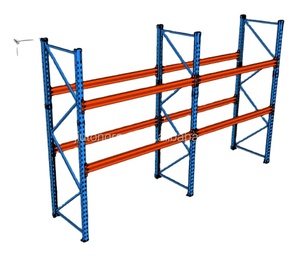
PrimeBay’s structural engineers utilize Finite Element Analysis (FEA) software to model exact stress distribution across beam-to-column connections. Our heavy-duty racking columns feature continuous cold-formed 11-fold or 13-fold profile cross-sections, providing exceptional torsional rigidity. Heavy-duty heavy-gauge baseplates with dual anchor bolts tie directly into reinforced concrete floor slabs, ensuring compliance with ANSI/RMI MH16.1 specifications and local Massachusetts structural engineering standards.
Information Gain Insight: Calculating Dynamic Liquid Load Safety Factors
Standard racking calculation formulas assume static, uniformly distributed loads (UDL). For liquid chemical storage, PrimeBay applies a dynamic amplification factor ($K_d = 1.15 \text{ to } 1.25$) on all load beam deflection calculations. This limits beam deflection to $L/240$ (stricter than the standard $L/180$), preventing localized stress concentrations and preventing pallet displacement caused by liquid motion during loading.
2. Hazardous Material Fire Safety Integration: In-Rack Sprinklers & Spill Containment
Permitting a chemical storage warehouse through the Boston Fire Department (BFD) or local municipal fire prevention bureaus requires strict adherence to fire protection codes. Storing flammable liquids (Class IA, IB, IC) or combustible liquids (Class II, IIIA) in racking systems triggers mandatory integration with overhead and in-rack fire suppression systems.
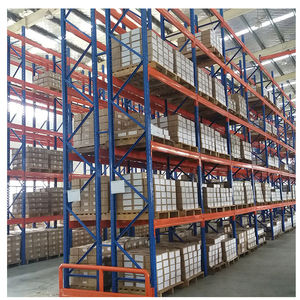
- Flue Space Maintenance: Our selective and double-deep racking frameworks feature mechanical heavy-duty back-stops and pallet positioning indicators to preserve a mandatory 6-inch vertical longitudinal and transverse flue space. This allows thermal updrafts to rapidly actuate ceiling sprinklers while enabling water penetration directly down through all rack levels.
- Spill Trough Tiers & Containment Integration: To prevent chemical leaks from cascading onto lower tiers or reaching the floor slab, PrimeBay chemical racks can be configured with galvanized secondary spill containment sumps or heavy-duty chemical-resistant polyethylene trays mounted beneath beam levels.
- Grating and Mesh Decking: Open-area steel wire mesh decking (minimum 70% open area) or heavy-duty punched steel grating is deployed rather than solid wooden decking, ensuring liquid fire-extinguishing agents pass freely without pooling on shelf surfaces.
Technical System Comparison for Chemical Storage
Evaluating racking configurations by density, selectivity, chemical safety, and operational speed
| Racking System Type | Storage Density | Direct Selectivity | Ideal Chemical Storage Unit | Corrosion Resistance Finish | Boston Fire Code (NFPA) Fit |
|---|---|---|---|---|---|
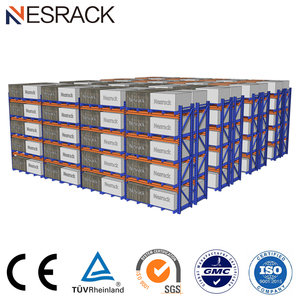
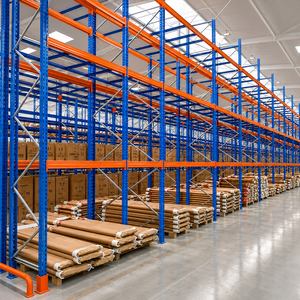
| Heavy Duty Selective Rack | Standard (100% Aisles) | 100% Immediate Access | Mixed SKUs, IBC Totes, Flammable Drums | Epoxy Powder / HDG | Excellent (Easy Flue Access) |
| Double-Deep Pallet Rack | High (+30% vs Selective) | 50% Immediate Access | Homogeneous Chemical Batches | Thermosetting Epoxy | High (Requires In-Rack Sprinklers) |
| Radio Shuttle Rack System | Ultra-High (85% Space Utilization) | By Lane / Batch (LIFO/FIFO) | Raw Chemical Materials, Bulk Resins | Hot-Dip Galvanized (HDG) | Requires Multi-Level Fire Barriers |
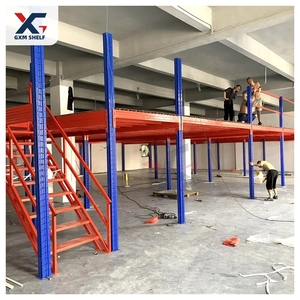
| Industrial Mezzanine Platform | Multiplies Floor Area (2x-3x) | 100% Manual / Cart Access | Small Chemical Reagents, Lab Supplies | Anti-Slip Steel Grating / Epoxy | Requires Sub-Platform Sprinklers |
Localized Application Scenarios Serving Boston Facilities
Tailored structural configurations engineered for specific regional industrial sectors
1. Route 128 / I-95 Biotech & Life Science Chemical Hubs
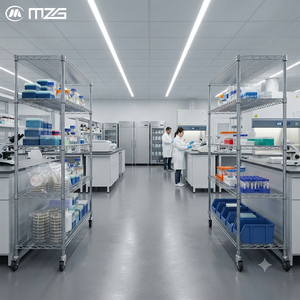
Facilities in Cambridge, Waltham, and Lexington require highly sanitary, chemical-resistant storage for analytical reagents, high-purity solvents, and biological process chemicals.
- Engineered Solution: Stainless steel (SUS304/316) or high-grade chrome wire mobile shelving and adjustable selective racking.
- Key Advantage: Smooth, non-porous surfaces prevent contamination, simplify cleanroom washdowns, and resist aggressive disinfectant vapors.
2. Port of Boston Logistics & Bulk Chemical Import/Export
Warehouse terminals surrounding Conley Terminal and Maritime Boston process high-volume freight containers carrying heavy liquid IBCs and raw polymer materials.
- Engineered Solution: High-capacity Selective and Radio Shuttle Pallet Racking with 1,500kg+ capacity per pallet position.
- Key Advantage: Heavy-duty column protectors, corner guards, and aisle guide rails absorb frequent forklift impacts in fast-paced port turnover environments.
3. Sub-Zero Cold-Chain Chemical Storage Facilities
Specialized temperature-controlled cold rooms requiring storage for temperature-sensitive reagents, specialty polymers, and hazardous catalysts at temperatures down to -30°C.
- Engineered Solution: Cold-room specific alloy steel racks finished with specialized low-temperature powder coatings or HDG.
- Key Advantage: Prevents steel embrittlement, eliminates finish flaking, and maximizes thermal density to lower cold-room utility costs.
4. Corrosive Acid & Hazardous Solvent Warehousing
Industrial chemical manufacturing plants in Worcester and North Shore Massachusetts handling bulk acids, alkaline solutions, and aggressive industrial cleaners.
- Engineered Solution: Heavy-gauge cold-rolled steel racks equipped with integrated poly spill sumps and corrosive vapor-proof powder coating.
- Key Advantage: Prevents structural failure caused by chemical splatter while complying fully with OSHA 1910.106 hazardous material rules.
Industry Trends Shaping Chemical Storage Infrastructure in Boston
Key developments driving modernization in regional chemical and warehouse logistics operations
1. Transition to Automated & Semi-Automated Hazmat Storage
Labor constraints and safety mandates across Massachusetts are pushing chemical warehouse operators toward automation. Utilizing Radio Shuttle racking and automated stacker cranes removes human forklift drivers from hazardous chemical environments, reducing human error, preventing racking strikes, and drastically increasing storage density in high-cost Boston real estate markets.
2. Strict ESG and Zero-VOC Surface Coating Mandates
Modern enterprises in New England demand environmentally responsible supply chains. PrimeBay manufactures all chemical racking components using eco-friendly, zero-VOC thermosetting powder coatings. Our automated closed-loop powder recovery system eliminates toxic emissions while producing a resilient, smooth surface finish that complies with strict environmental standards.
3. IoT Integration & Structural Health Monitoring
High-bay chemical racks are increasingly outfitted with structural impact sensors and displacement indicators. These devices alert warehouse safety directors immediately if a forklift impact compromises structural load capacity, enabling proactive maintenance before catastrophic failure occurs.
Why Boston Engineers & Buyers Trust PrimeBay Racking
Direct factory manufacturing power backed by rigorous quality assurance and global logistics capability
20+ Years Excellence
Established in 2006, delivering engineered industrial racking systems to over 85 countries worldwide.
Certified Production
Fully compliant with CE, ISO 9001 (Quality), ISO 14001 (Environmental), and TUV Rheinland testing standards.
OEM & ODM Customization
Tailor-made upright profiles, beam connections, specialized colors, and heavy-duty load configurations.
Engineering Drawings
Free CAD layout engineering, seismic load calculations, and bill of materials tailored to your floor plan.
10-Year structural Warranty
Guaranteed structural reliability under specified load capacity and approved engineering conditions.
Boston Logistics Support
Direct ocean freight shipping to Port of Boston (Conley Terminal) with complete export customs documentation.
Frequently Asked Questions by Boston Chemical Facility Buyers
Clear answers regarding structural permits, chemical safety, freight, and custom engineering
Can PrimeBay racking designs satisfy Massachusetts PE Stamp and Building Code requirements?
Yes. Our engineering team provides detailed CAD drawings, structural calculation packs, and steel material test certificates. We work directly with local US structural engineering partners to provide Massachusetts PE (Professional Engineer) stamped calculations when required for local building permits in Boston and surrounding municipalities.
What surface coating is recommended for chemical drum storage prone to minor acid vapors?
For mild acid vapors or general chemical warehousing, our heavy thermosetting epoxy-polyester powder coating (70-90 microns thick) provides excellent barrier protection. For severe corrosive environments, alkaline liquids, or humid salt-air coastal locations near Boston Harbor, we recommend Hot-Dip Galvanizing (HDG) to ISO 1461 standards, which coats both interior and exterior steel surfaces with zinc protection.
How do PrimeBay chemical racking systems integrate with secondary spill containment sumps?
We custom-engineer beam levels to accommodate spill containment trays or low-profile galvanized steel sumps beneath pallet positions. Our beam connectors are designed to leave adequate clearance for liquid drainage channels while ensuring that spill sumps can be easily cleaned or removed without compromising structural stability.
What is the typical production lead time and ocean shipping transit time to Boston?
Standard manufacturing time at our Nanjing factory takes 15 to 25 days depending on order volume and coating specifications. Ocean transit from major Chinese ports directly to the Port of Boston (Conley Terminal) generally takes 30 to 38 days. We manage container loading, seaworthy bundling, and full export documentation for seamless import customs clearance.
How do we select between Selective Pallet Racking and Radio Shuttle Racking for chemical storage?
If your warehouse handles high SKU counts with smaller pallet volumes per chemical product line, Selective Pallet Racks offer 100% direct accessibility. If your facility handles high-volume, low-SKU raw chemical materials or bulk drummed ingredients, Radio Shuttle Racking increases space utilization up to 85% while minimizing forklift entry inside storage lanes, significantly improving operational safety.
Do you supply installation support and guidance for local installation crews in Massachusetts?
Yes. Every shipped racking order includes comprehensive 3D installation assembly manuals, component labeling, load signage markers, and torque specification guidelines. We also provide remote video engineering support or can coordinate on-site installation supervisors to guide your local Boston rack installation team.
Request Your Custom Chemical Storage Layout & Pricing Today
Send your warehouse CAD floor plan, pallet dimensions, chemical load weights, and ceiling height requirements. Our engineering team will return a certified structural design, bill of materials, and direct factory quote within 24 hours.