High-Capacity Heavy Duty Pallet Racking & Handling Systems
Custom-engineered structural steel storage frameworks manufactured under ISO 9001 quality controls, specifically adapted for Nagoya's high-bay distribution facilities and industrial assembly environments.
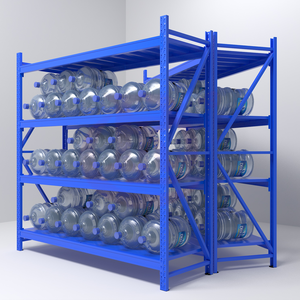
Heavy Duty Adjustable Mobile 5-Layer Cold-Rolled Steel Pallet Rack
Precision cold-rolled Q235B/Q355B steel rack with 2m load beams, carrying 300kg to 3000kg per layer. Ideal for high-density, dynamic industrial storage.
Send an Inquiry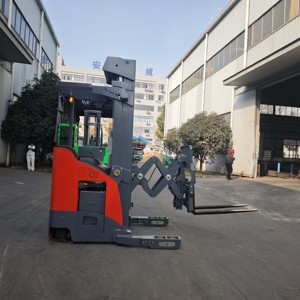
4500 Lbs High Efficiency Double Deep Pallet Racking System
Engineered for pantograph electric scissor reach trucks. Increases pallet storage density by up to 50% compared to standard selective racking.
Send an Inquiry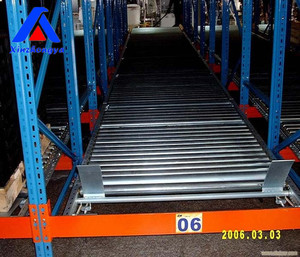
Heavy Duty Pallet Flow Gravity Gliding Racking System
First-In, First-Out (FIFO) gravity-driven roller bed racking designed for high-turnover FMCG, food distribution, and automotive part sequencing.
Send an Inquiry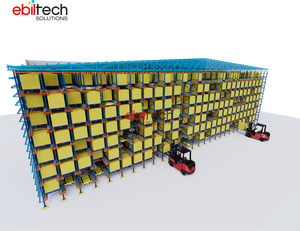
CE Certified Two-Way Radio Shuttle Deep-Lane Storage System
Semi-automated radio shuttle car system operating inside deep storage channels. Optimizes cold storage and high-volume SKU warehousing efficiency.
Send an Inquiry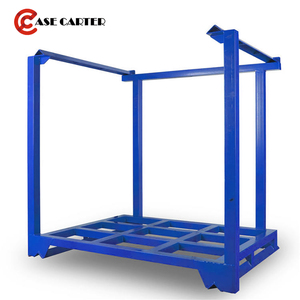
Heavy Duty Foldable Portable Stacking Steel Tire Palletainer
OEM powder-coated stackable metal containers. Modular, collapsible structural frames designed specifically for tire logistics and automotive parts.
Send an Inquiry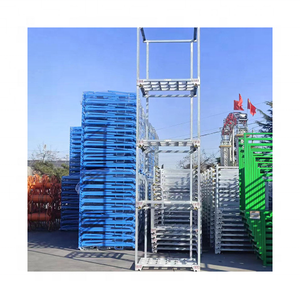
Customized Industrial Metal Stacking Racks for TBR & Fabric Rolls
Heavy-duty customized steel racking cradles designed for heavy industrial rolls, textile fabrics, and commercial truck tire storage.
Send an Inquiry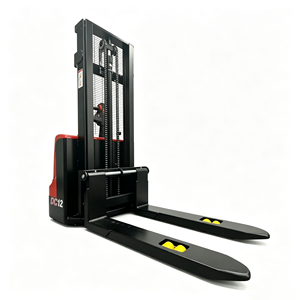
Narrow Aisle Full Electric Stacker (1200kg Capacity, 3.5m Lift)
Compact turning radius electric lift equipment designed to operate seamlessly within narrow aisle selective pallet racking configurations.
Send an Inquiry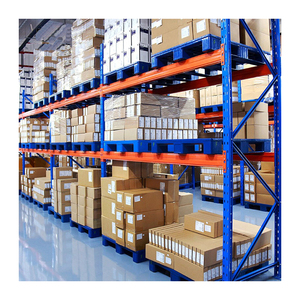
Heavy Duty 5-Ton Selective Structural Steel Pallet Racking (Q235B)
Ultra-heavy capacity 3-layer selective rack system. Built with heavy-gauge upright columns for extreme structural unit loading up to 5,000kg per level.
Send an InquiryNavigating the Greater Nagoya Industrial & Logistics Racking Ecosystem
The Greater Nagoya Metropolitan Area—encompassing Aichi, Gifu, and Mie Prefectures—serves as Japan’s indisputable industrial heartland. Home to the global headquarters and tier-1 supplier networks of automotive behemoths like Toyota Motor Corporation, heavy machinery manufacturers, aerospace giants, and the bustling Port of Nagoya (Japan's largest port by cargo throughput), the demand for high-load warehouse space is distinct from any other regional market.
Logistics operators and industrial warehouse managers in Aichi face a tri-fold operational challenge: **exorbitant warehouse land lease rates**, **strict Japanese seismic building regulations (Building Standard Law)**, and **acute labor shortages driven by Japan's changing workforce demographics**. As a result, standard pallet storage setups are rapidly giving way to high-density, engineered heavy-load pallet racking systems designed to maximize vertical cubic meter utilization while adhering to rigorous earthquake safety parameters.
Information Gain Insight: Importing factory-direct heavy-duty racking from certified Chinese manufacturers allows Nagoya logistics operators to reduce capital expenditure (CapEx) by 30%–45% compared to domestic Japanese suppliers, without compromising structural steel standards (JIS Z 0610) or seismic shear-load ratings.
Whether fitting out a logistics park near Tobishima Pier, an automotive supplier hub in Kariya or Toyota City, or a cold-chain distribution center along the Isewangan Expressway, Chinese manufacturing exporters provide custom cold-rolled Q235B and Q355B structural steel racking tailored precisely to Japanese operational specifications.
System Matrix: Matching Storage Architecture to Nagoya Operational Requirements
To optimize throughput and load-bearing safety, warehouse engineers in Aichi evaluate racking structures based on SKU diversity, forklift channel width, and seismic resistance factors:
| Racking Architecture | Storage Density | Pallet Access (FIFO/LIFO) | Seismic Stability (Nagoya Zone) | Optimal Local Application |
|---|---|---|---|---|
| Selective Heavy-Duty Pallet Rack | Standard | 100% Selectivity (FIFO) | High (With dynamic seismic baseplates) | Automotive Just-In-Time (JIT) parts assembly lines |
| Double-Deep Reach Truck Racking | High (+50%) | 50% Selectivity (LIFO) | Very High (Dual-row tied frames) | Electronics & appliance import warehouses |
| Radio Shuttle Deep Lane System | Maximum (+85%) | Flexible (FIFO or LIFO) | Maximum (Interlocked structure) | Cold storage (-25°C) & food logistics near Nagoya Port |
| Drive-In / Drive-Through Racking | Very High (+65%) | LIFO (Drive-In) / FIFO | Medium-High (Requires top tie beams) | Bulk raw material & homogeneous tire stack storage |
| Very Narrow Aisle (VNA) Racking | High (+40%) | 100% Selectivity (FIFO) | High (Anchored guide rails) | High-bay e-commerce fulfillment centers along Chuo Expy |
Seismic Structural Engineering for the Japanese Market (Nankai Trough Readiness)
Exporting industrial pallet racking to Nagoya requires advanced structural engineering. Aichi Prefecture falls under high-risk seismic zoning due to the anticipated Nankai Trough megathrust earthquake. Standard pallet racking designed for low-seismic zones will fail under the multidirectional lateral acceleration forces experienced in central Japan.
Key Engineering Considerations for China-to-Nagoya Racking Exports:
- Steel Grade Integrity (Q355B vs. Domestic Structural Steel): Premium Chinese racking manufacturers utilize high-yield strength Q355B cold-rolled steel (equivalent to Japanese SS490/SM490) for upright columns. The superior tensile strength guarantees high post-buckling resistance during horizontal ground vibrations.
- Seismic Baseplate & Anchor Bolt Design: Heavy-duty racking installed in Aichi must incorporate heavy-gauge enlarged baseplates (minimum 8mm–12mm thickness) secured with heavy-duty chemical wedge anchors into C25/C30 grade concrete slabs, ensuring moment-resisting base connections.
- Overhead Rack Frame Bracing: Top-connector beam ties, heavy diagonal framing, and back-to-back row spacers are engineered according to JIS Z 0610 (Japanese Pallet Racking Safety Standard) guidelines to dissipate horizontal sway.
- Powder Coating & Coastal Corrosion Defense: Nagoya Port area logistics hubs experience high salt air humidity. Advanced Chinese factories apply electrostatically deposited thermosetting epoxy-polyester powder coating (60–80 microns thick) following shot-blasting surface treatment to prevent rust and chemical degradation.
Where China-Manufactured Racking Excels in Nagoya
1. Automotive Tier-1 Supplier Hubs
In Toyota City, Kariya, and Anjo, suppliers handle heavy automotive components, metal stamping dies, and engine blocks. Heavy 5-ton capacity selective racking and stackable steel palletainers enable safe overhead handling with heavy forklifts while keeping inventory visible for Just-In-Time (JIT) production lines.
2. Port of Nagoya Cold Storage Logistics
Cold chain facilities near Tobishima Pier store frozen seafood and agricultural imports. Operating at sub-zero temperatures (-25°C), building footprint costs are astronomical. Automated Radio Shuttle systems maximize lane storage depth, eliminating forklift entry into cold chambers and reducing energy loss.
3. E-Commerce & 3PL Regional Parks
Modern logistics parks along the Meishin and Isewangan Expressways demand high-velocity order fulfillment. Combination setups featuring Very Narrow Aisle (VNA) racking on lower tiers and structural steel mezzanine floors above optimize vertical cube space for piece picking and parcel sorting.
Logistics Evolution & Procurement Trends in the Chubu Region
The logistics landscape in central Japan is experiencing a tectonic shift driven by regulatory changes and technological migration. Two primary drivers govern current racking procurement choices across Nagoya:
The "2024 Problem" & Shift Toward Automated Pallet Racking
With Japan implementing strict caps on truck driver overtime hours (commonly known in the industry as the "2024 Problem"), regional logistics companies must drastically reduce truck dwell times at loading docks. Warehouses can no longer afford sluggish manual pallet retrieval. High-speed Pallet Flow Gravity Racks and Electric Four-Way Radio Shuttle Systems allow rapid staging of outbound pallets directly behind loading bays, shortening driver wait times by up to 40%.
Direct Factory Sourcing from Chinese Exporters
Historically, Japanese firms relied exclusively on domestic trading companies (Shosha) for warehouse equipment, incurring steep middleman markups. Modern Nagoya procurement managers are increasingly turning to direct OEM/ODM partnerships with established Chinese manufacturers who provide end-to-end services: 3D CAD design, finite element structural analysis (FEA), customized color powder coating matching corporate branding, complete export documentation, and sea freight logistics directly to Nagoya Port.
PrimeBay Heavy Duty Racking: Engineering Strength & Global Reliability
Founded in 2006, PrimeBay Heavy Duty Racking Co., Ltd. operates a modern 40,000 m² production base in Nanjing, Jiangsu—offering direct maritime shipping routes to Nagoya Port with fast 4-to-7 day transit times.
Certified World-Class Quality
Our production facilities and structural rack systems carry international certifications including **CE, ISO 9001 (Quality Management), ISO 14001 (Environmental Management), and TUV Rheinland**. Every batch of steel undergoes strict yield strength and weld seam testing before entering roll-forming mills.
OEM & ODM Custom Engineering
We supply fully customized racking solutions tailored to client CAD layouts. From non-standard upright profile geometries and beam lengths to custom color RAL powder coatings and integrated safety mesh guards, our team supports full OEM/ODM manufacturing for distributors and project contractors.
10-Year Structural Integrity Warranty: All PrimeBay racking systems installed in compliance with approved layout engineering drawings are backed by our comprehensive 10-year product structural warranty.
Frequently Asked Questions: Purchasing Racking for Nagoya Warehouses
Clear technical and logistical answers for project engineers, supply chain directors, and warehouse managers in central Japan.
How do China-made pallet racks comply with Japanese seismic regulations in Aichi?
Our structural engineering team designs racking systems in alignment with JIS Z 0610 (Japanese Pallet Racking Standard) and local building safety codes. We utilize high-grade Q355B steel, enlarged anchor baseplates, and custom X-bracing configurations to ensure your installation withstands regional seismic acceleration requirements. Structural load calculation reports are provided for engineering approval.
What is the ocean freight shipping timeline from your factory to Nagoya Port?
Orders manufactured at our East China production base are loaded into containers and shipped directly from Shanghai or Ningbo ports to Nagoya Port. Direct maritime shipping transit typically takes only 4 to 7 days. Total turnaround time, including production (15–20 days) and customs clearance, generally ranges between 25 and 35 days.
Can you customize rack dimensions to fit Japanese standard pallets (T11 type)?
Yes, absolutely. The Japanese standard T11 pallet (1,100mm × 1,100mm) requires specific frame depth (typically 1,000mm) and beam span calculations (e.g., 2,300mm or 2,500mm clear span for 2-pallet positions). We customize all beam levels, column profiles, and wire mesh decking to fit T11, T12, or Euro-pallet footprints seamlessly.
What certifications accompany the racking components for import customs clearance?
Every shipment includes complete mill test certificates (MTC) verifying steel raw material composition, ISO 9001 and CE quality compliance certificates, TUV factory audit reports, and detailed packing lists. These documents facilitate smooth Japanese customs inspection and satisfy local facility safety audits.
How do we handle installation and assembly in Nagoya?
We supply comprehensive 3D assembly manuals, CAD component installation drawings, and step-by-step video instructions. For major distribution center projects, we can also coordinate remote engineering guidance or partner with licensed local Japanese installation crews to perform turn-key erection and ground anchoring.
How does Radio Shuttle racking perform in cold storage facilities around Nagoya Port?
Our Radio Shuttle cars and guide rails are specially manufactured for cold-temperature resilience, utilizing low-temperature hydraulic fluid, IP65-sealed electrical systems, and lithium batteries engineered to operate reliably down to -25°C without performance degradation.
Upgrade Your Nagoya Warehouse Storage Density Today
Send us your warehouse layout CAD file, clear height clearance, and pallet load specifications. Our structural engineers will return a complimentary 3D layout design, seismic calculation, and factory-direct price quotation within 24 business hours.