Featured Heavy-Duty Warehouse Racking Systems
Engineered for dynamic pallet loads, optimized aisle efficiency, and long-term industrial structural reliability. Exported directly from our Nanjing manufacturing base to 85+ countries.
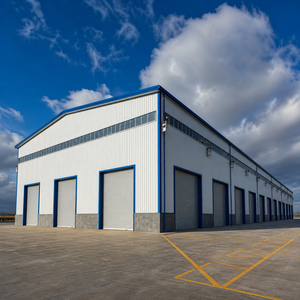
Reach Truck Aisle Steel Warehouse Building Narrow Racking High Capacity Galvanized Steel Frame System
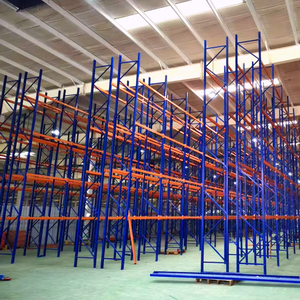
2-5 Tier Wide Aisle Heavy Load Pallet Racking for Automated Warehouse Online Order Fulfillment Hub
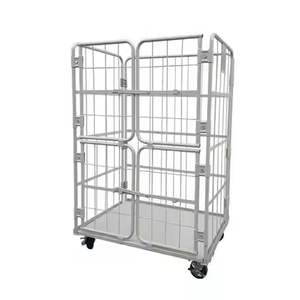
High Quality Portable Collapsible Steel Selective Pallet Rack with Corrosion Protection 1-5 Ton Capacity
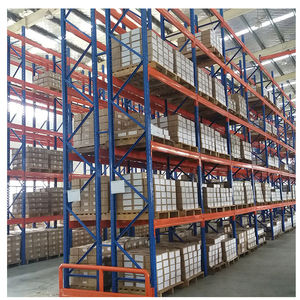
Heavy Duty Rack Storage Industrial Selective Assembly Pallet Use Rack Warehouse Storage System
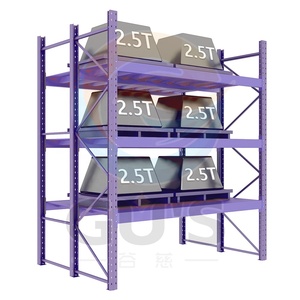
Factory Outlet Industrial Heavy-Duty Multi-Level Pallet Racking System Steel Metal Warehouse Rack
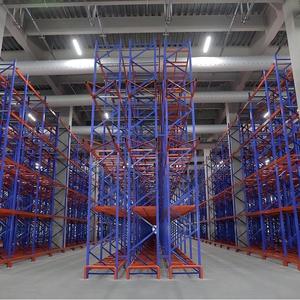
Stackable Double Deep Beam Heavy Duty Steel Pallet Racking System With Upright Protectors
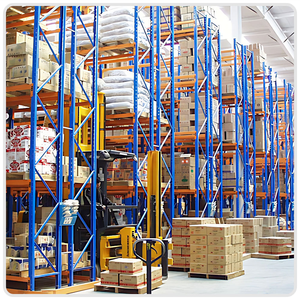
Customized Industrial Storage Racking System Selective Pallet Rack with Load Beams And Safety Clips
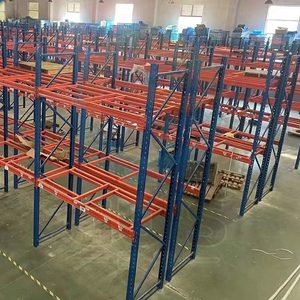
Industrial Heavy-Duty Metal Rack Adjustable Steel Pallet Racking System Durable Anti-Rust Storage
Understanding Push Back Pallet Racking Mechanics & Kinematics
Push Back Pallet Racking represents one of the most sophisticated engineered developments in high-density warehouse storage strategy. Operating on a Last-In, First-Out (LIFO) inventory management framework, push back racking systems eliminate the structural space inefficiency inherent to standard aisle-heavy selective pallet layouts. By consolidating pallets 2 to 6 deep per lane on inclined structural steel rails, facility managers can achieve up to a 75% increase in total pallet storage density compared to conventional selective configurations, without sacrificing SKU flexibility across individual lanes.
The dynamic core of a heavy-duty push back racking structure relies on a system of nested, telescoping wheeled carts that travel on inclined structural steel beams. When a forklift operator loads the first pallet onto a lane, it rests directly on the top nested cart. To load subsequent pallets, the operator gently pushes the existing pallet back into the rack lane using the incoming pallet, exposing the secondary cart beneath. This mechanical sequence repeats up to the depth rating of the system (typically 2-deep, 3-deep, 4-deep, 5-deep, or 6-deep).
During retrieval, gravity naturally drives the cart assembly forward toward the picking aisle at a strictly controlled descent speed as each pallet is removed. This eliminates the necessity for forklifts to enter the internal frame matrix of the rack—a critical safety advantage over drive-in racking that drastically reduces frame collision damage, operator hazards, and structural fatigue.
Maximum Cube Utilization
Reclaims up to 75% of wasted honeycombing space by storing unit loads 2 to 6 pallets deep in dedicated gravity-inclined structural lanes.
Accelerated Throughput
Forklifts only operate in front picking aisles. Operators save up to 40% in travel time compared to drive-in racks or deep selective setups.
Structural Safety & Durability
Prevents upright column damage by keeping forklifts out of the rack matrix. Features anti-lift safety mechanisms and heavy-duty steel bearings.
Engineering Comparison: Storage Racking Systems
Selecting the optimal industrial storage architecture requires evaluating throughput requirements, SKU density, initial capital expenditure, and forklift fleet compatibility. Below is an engineering evaluation matrix comparing Push Back Racks against alternative high-density warehouse systems:
| Racking Architecture Type | Storage Density | Pallet Access (Selectivity) | Forklift Travel Hazard | SKU Variety Capability | Typical Depth Range |
|---|---|---|---|---|---|
| Push Back Pallet Rack | Very High (70-75%) | LIFO (Per-Lane Selectivity) | Low (Aisle Only) | Moderate to High | 2 to 6 Pallets Deep |
| Selective Pallet Rack | Standard (40-50%) | 100% Direct Access | Low (Aisle Only) | Very High (High SKU) | 1 Pallet Deep |
| Drive-In Racking | High (60-70%) | Strict LIFO (Block Access) | High (Drives Into Structure) | Low (Homogeneous Goods) | 5 to 10+ Pallets Deep |
| Radio Shuttle Rack | Maximum (80-85%) | Automated LIFO / FIFO | Zero (Robot Automated) | Moderate (Bulk Batches) | 10 to 30+ Pallets Deep |
| Pallet Gravity Flow Rack | Very High (75-80%) | Strict FIFO (First-In, First-Out) | Low (Aisle Only) | Moderate (Perishables) | 2 to 12 Pallets Deep |
Q235B/Q355B Steel Quality & Precision Roll-Forming
At PrimeBay Heavy Duty Racking Co., Ltd. (Nanjing, China), our push back racking structural integrity relies on certified high-tensile structural steel profiles. We utilize Q235B cold-rolled carbon steel and Q355B high-yield strength low-alloy steel conforming to international standards including EN 15512 (European Racking Standard), FEM 10.2.02, and ANSI MH16.1 (RMI Specifications).
Each upright frame is cold-roll formed through continuous 20-station rolling mills to guarantee absolute dimensional precision and zero internal profile stress. Heavy-duty teardrop or 50mm/75mm diamond punching allows 50mm height adjustment pitch across load-bearing levels.
The cart mechanism represents the primary point of dynamic wear in push back operations. To ensure a 10+ year operational lifespan without maintenance downtime, PrimeBay engineers dynamic nested carts built with:
- Heavy-Duty Sealed Ball Bearings: Precision machined steel wheels equipped with dust-proof, grease-sealed internal ball bearings designed to perform reliably down to -30°C in cold-storage environments.
- Anti-Lift Safety Stops: Integrated mechanical hooks that lock carts to the structural rail, preventing accidental displacement or cart derailment during aggressive forklift loading operations.
- Telescoping Nested Cart Low-Profile Height: Engineered to minimize lost vertical vertical bay height, preserving clear space for upper beam levels.
- Electrostatic Powder Coating: Fully automated 12-stage pre-treatment, washing, and thermo-cured epoxy-polyester powder coating (60-80 microns thickness) for maximum impact resistance and corrosion shielding.
Why Source Direct From PrimeBay Nanjing Factory?
PrimeBay Heavy Duty Racking Co., Ltd. is a global leader in warehouse racking engineering, backed by two decades of manufacturing mastery and continuous technical innovation.
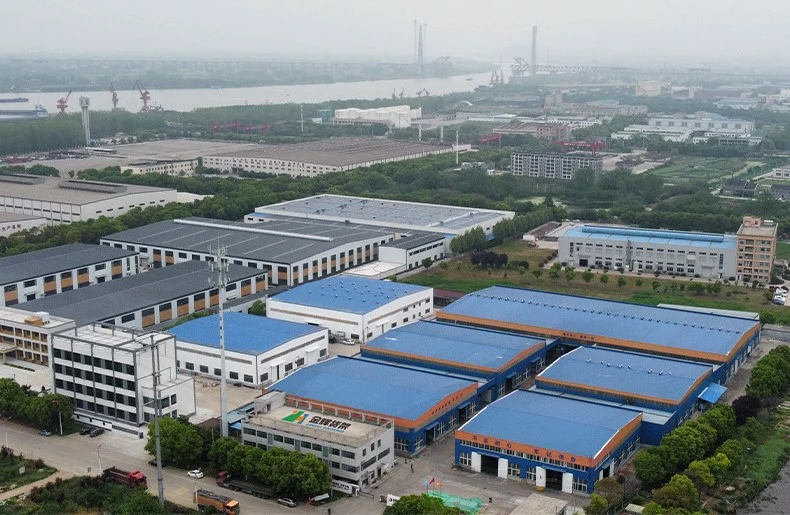
- 40,000 m² State-of-the-Art Automated Manufacturing Plant in Nanjing
- Fully Certified Quality System: CE, ISO 9001, ISO 14001 & TUV Rheinland
- Over 100 Structural & Dynamic Mechanical Racking Patents
- Comprehensive 10-Year Structural Warranty & Load Rating Certification
- Complete OEM/ODM Customization for International Distributors & 3PLs
- In-House CAD/3D Structural Finite Element Analysis (FEA) Engineering Team
Future Procurement Trends & Innovations in Push-Back Systems (2026–2030)
As global supply chains shift toward automated fulfillment, cold-chain expansion, and carbon-neutral warehouse operations, push back racking technologies are evolving beyond static steel frameworks into intelligent, hybrid structural platforms. Procurement officers and 3PL logisticians must prepare for several emerging technological trends:
1. IoT-Integrated Cart Sensing
Emerging push-back systems incorporate low-energy wireless sensors inside cart frames to monitor lane occupancy, push back velocity, and tilt alignment in real-time, feeding live telemetry into Warehouse Management Systems (WMS).
2. Cold Chain Dynamic Galvanization
With refrigerated and deep-freeze warehousing expanding rapidly, factory-applied hot-dip galvanizing (HDG) and specialized low-temperature cart lubricants are becoming standard to eliminate ice-jamming and micro-corrosion.
3. Hybrid Automated Guided Vehicle (AGV) Compatibility
Modern push back push-rail entry funnels are now re-engineered with millimeter-precision laser guides, allowing automated forklifts (AGVs / AMR reach trucks) to load push-back lanes without human operator intervention.
Frequently Asked Questions for Warehouse Engineers & Buyers
Q: What incline angle slope is used in PrimeBay Push Back Racks?
Our push back rails are precision-engineered at an inclination gradient between 1.5° and 2.2° (approximately 1.5% to 2.5% slope). This exact pitch ensures smooth gravity flow forward upon pallet removal while preventing excessive momentum impact at the front unloading stop.
Q: Can push back racking handle non-standard or damaged pallets?
Because pallets rest directly on full-width steel cart frames (rather than on open flow rollers), minor wooden pallet board damage or varied bottom runner configurations do not cause lane jamming. However, unit loads must strictly conform to approved dimension limits and structural weight ratings.
Q: What certifications accompany PrimeBay international export orders?
All PrimeBay racking shipments include full compliance documentation: CE Mark declarations, ISO 9001 quality management verification, ISO 14001 environmental compliance, TUV structural strength reports, and mill test certificates (MTC) for all raw steel profiles.
Q: How do I request a custom CAD warehouse design layout?
Simply send your facility CAD floor plan or building dimensions, clear height measurements, pallet dimensions (W x D x H), unit weight loads, and forklift specifications to our engineering team. We deliver custom 2D/3D layouts and structural load calculations within 24 business hours.
Q: What is the typical lead time for a 500-pallet position push back system?
Standard factory production lead time is 15 to 20 days from CAD design approval and deposit receipt. Our automated cold-rolling and powder-coating production lines ensure rapid turnaround for large-scale industrial projects.
Q: How does push back rack maintenance compare to pallet flow or shuttle racks?
Push back systems require minimal maintenance because they operate strictly on mechanical gravity and sealed bearings without electrical motors, lithium batteries, sensors, or complex brake rollers. Semi-annual visual inspection of cart stops and wheel bearings is typically all that is required.
Engineered Racking Systems Tailored to Your Floor Plan
Connect directly with PrimeBay senior structural engineers. Get factory-direct pricing, 2D/3D CAD layouts, and certified load calculations within 24 hours.
Contact Us