Engineering Analysis: Architectural Typologies of Deep Lane Storage Racking
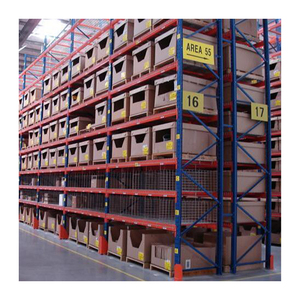
Lane storage racking systems represent the pinnacle of high-density warehouse spatial optimization. Unlike standard selective pallet racks that require a dedicated working aisle between every row, lane storage architectures store multiple pallets in depth (ranging from 2 to over 30 pallets deep per lane), eliminating up to 60% of unutilized forklift aisle floor space. As modern logistics facilities face escalating land acquisition costs and cold-chain power consumption fees, selecting the appropriate lane storage configuration is a critical engineering decision.
Drive-In / Drive-Through Systems
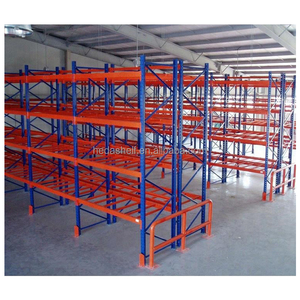
Forklifts physically enter the rack structure to load or retrieve pallets resting on continuous support rails. Ideal for low-SKU, high-volume batch inventories operating under Last-In, First-Out (LIFO) or First-In, First-Out (FIFO) logic.
Radio Shuttle Deep Lane Systems
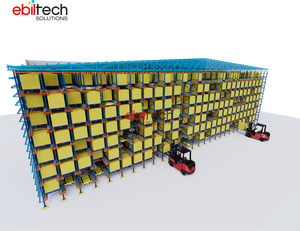
Semi-automated battery-driven shuttles transport pallets along internal channel rails. Eliminates forklift rack entry, protecting structural uprights while drastically increasing throughput speeds and safety.
Gravity Flow & Push-Back Systems
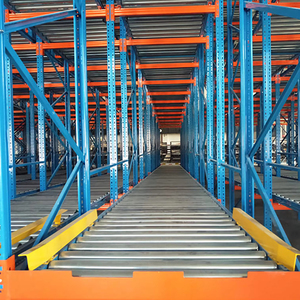
Utilizing dynamic inclined roller tracks or nested wheel carts. Gravity flow delivers flawless FIFO rotation for perishable goods, while push-back carts offer rapid 2-to-5 deep LIFO selective batch storage.
Information Gain Engineering Insight: When selecting between semi-automated Radio Shuttle systems and manual Drive-In racking, calculate the Total Operational Impact Coefficient (TOIC). While Drive-In systems offer lower upfront capital expenditure (CAPEX), Radio Shuttle systems reduce forklift damage repairs by up to 85% and cut cycle times by 40%, yielding a complete ROI payback within 14 to 18 months in high-turnover operations.
Comparative Technical Performance Matrix
The following engineering matrix compares core performance indices across primary deep-lane storage system implementations:
| Racking System Type | Volumetric Efficiency | Storage Depth | Rotation Logic | Forklift Damage Risk | Relative CAPEX / Pallet |
|---|---|---|---|---|---|
| Selective Pallet Rack | 40% - 50% | 1 Pallet Deep | 100% Selective (FIFO/LIFO) | Low | Baseline ($) |
| Double-Deep Racking | 60% - 65% | 2 Pallets Deep | LIFO | Moderate | 1.25x Baseline |
| Drive-In Racking | 75% - 85% | 4 - 10 Pallets Deep | LIFO | High (Inside Travel) | 1.40x Baseline |
| Push-Back Cart System | 70% - 75% | 2 - 6 Pallets Deep | LIFO | Low - Moderate | 2.10x Baseline |
| Gravity Pallet Flow | 80% - 85% | 4 - 12 Pallets Deep | Strict FIFO | Low | 2.80x Baseline |
| Radio Shuttle Deep Lane | 85% - 92% | 10 - 30+ Pallets Deep | Configurable FIFO / LIFO | Very Low | 2.50x Baseline |
| 4-Way Shuttle ASRS Lane | 90% - 96% | Unlimited Automation | Dynamic Software Control | Zero (Unmanned) | 4.50x Baseline |
Industry Development & Technology Trends (2025–2030)
The material handling and industrial racking sector is undergoing a profound paradigm shift driven by automation, material science innovations, and sustainability directives. Premier Chinese manufacturers like PrimeBay Heavy Duty Racking Co., Ltd. are leading this transformation through advanced R&D and manufacturing integrations.
1. Shift from 2-Way to Autonomous 4-Way Pallet Shuttle Systems
While traditional 2-way radio shuttles travel strictly back-and-forth in longitudinal lanes, next-generation 4-way pallet shuttles can travel across both storage channels and cross-aisles. Integrated with vertical lift systems (elevators) and Warehouse Control Software (WCS), 4-way shuttles transform static deep-lane racking into a fully automated, high-speed 3D grid system. This eliminates the need for expensive dedicated ASRS stacker cranes while delivering complete SKU flexibility.
2. IoT-Enabled Smart Racking Structural Monitoring
Modern warehouse safety standards are incorporating real-time structural health monitoring. High-bay lane storage systems are increasingly retrofitted or manufactured with embedded strain gauges, tilt sensors, and piezoelectric vibration monitors. These IoT sensors communicate wirelessly to warehouse asset management systems, alerting safety supervisors instantly if an upright column suffers impact deformation or exceeds structural deflection limits under extreme load combinations.
3. Extreme Environment Cold-Chain Optimization
With global demand for frozen food and biopharmaceuticals expanding rapidly, deep lane racking systems engineered specifically for cold environments (-25°C to -30°C) represent the fastest-growing sector. Steel alloys must maintain ductility without brittle transition, demanding refined chemical metallurgy such as Q355B or normalized structural steel. Furthermore, shuttle robotics utilize internal thermal heating pads and Lithium Iron Phosphate (LiFePO4) or Lithium Titanate batteries capable of fast-charging inside sub-zero chambers.
4. High-Tensile Cold-Rolled Steel & Green Powder Coatings
Sustainability and structural efficiency are driving manufacturers to utilize higher yield-strength steel profiles (e.g., upgrading from standard Q235B to micro-alloyed high-yield steels). This allows thinner wall profiles without sacrificing load capacity, resulting in lower total steel consumption and reduced carbon footprint during ocean freight transport. Coupled with zero-VOC, heavy-metal-free electrostatic powder coatings, Chinese factories are setting new environmental standards in industrial storage production.
Global Procurement & Sourcing Future Trends for B2B Importers
As international supply chains optimize capital expenditure, procurement managers and warehouse engineers are refining how they source industrial racking systems from China. Key strategic trends include:
Factory-Direct OEM/ODM Collaboration
Global buyers are moving away from regional trading intermediaries, establishing direct engineering lines with OEM manufacturers. Direct CAD exchange ensures exact custom beam profiles, teardrop or beam-to-column connectors, and precise color matching to corporate brand identity.
Compliance Certification Verification
Importers strictly vet factory quality systems against international structural standards. Rigorous procurement processes require verified third-party mill test certificates, CE compliance documents, ISO 9001 audit histories, and TUV structural static load test validation prior to order placement.
Modular "Automation-Ready" Racking
To hedge against future capital constraints, enterprises are procuring modular deep lane racking designed to operate manually as Drive-In or Push-Back today, but pre-punched and structurally aligned to accommodate automated shuttles or ASRS stacker cranes tomorrow.