Selective Racking
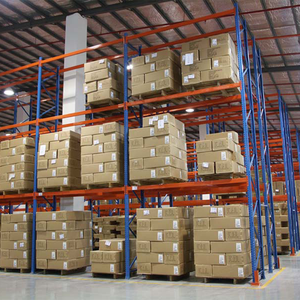
In modern logistics and global supply chain management, facility footprint optimization is paramount. High-density storage systems eliminate redundant forklift aisles, transforming unused vertical space into operational capacity. This whitepaper analyzes leading industrial suppliers, structural racking advancements, automated integration trends, and key procurement criteria for global importers.
Explore top-performing heavy-duty pallet racking configurations, automated handling vehicles, and high-density warehouse storage systems designed for demanding logistics projects.
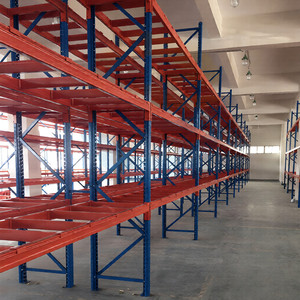
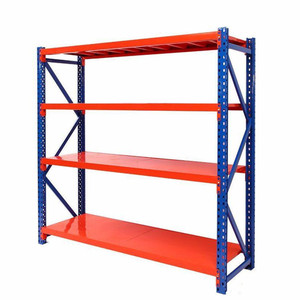
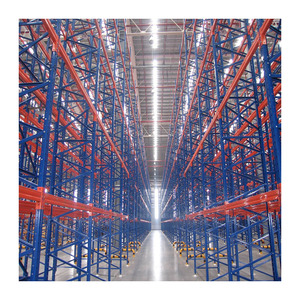
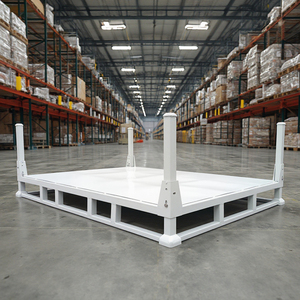
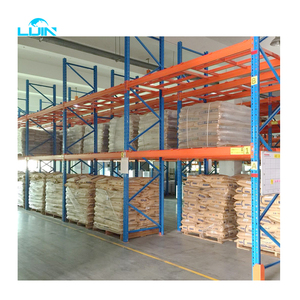
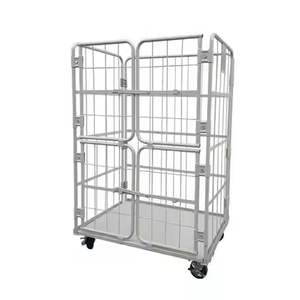
When engineering high-density storage facilities, choosing between FIFO (First-In, First-Out) and LIFO (Last-In, First-Out) inventory control directly impacts material handling speed, rack structure cost, and overall warehouse throughput. Modern high-density storage spans automated shuttle systems, drive-in structures, push-back cart arrays, and multi-tier platforms.
Radio shuttle pallet racking represents the pinnacle of semi-automated high-density storage. A battery-powered autonomous shuttle travels inside storage channels along continuous guidance rails, driven by wireless signals. This eliminates the necessity for forklifts to enter storage lanes, drastically reducing structural damage risks and accelerating cycle times.
Drive-In racking systems provide high-density LIFO storage by allowing lift trucks to drive directly into continuous racking bays to drop off or retrieve unit loads on cantilevered support rails. Drive-Through configurations utilize dual-access entry points to deliver FIFO capabilities.
Utilizing a series of nested rolling carts riding on inclined structural steel rails, Push Back racking operates on a LIFO principle. As a forklift loads a new pallet, it gently pushes back the previously loaded unit. When unloading, gravity moves remaining carts forward automatically to the aisle face.
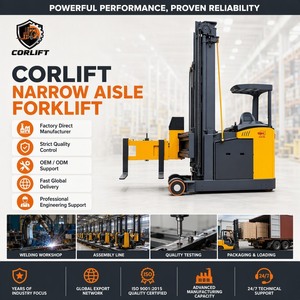
VNA racking shrinks forklift aisles down to 1.5–1.8 meters while extending vertical storage heights up to 18+ meters. When paired with Automated Storage and Retrieval Systems (AS/RS) and stacker cranes, high-density storage transitions into 24/7 fully automated operation.
Compare operational characteristics across primary high-density storage architectures:
| Storage System Type | Volume Density | Pallet Selectivity | Stock Rotation | Handling Equipment Required | Relative Cost / Position |
|---|---|---|---|---|---|
| Radio Shuttle Racking | Very High (85%) | Lane-based Selectivity | FIFO or LIFO | Standard Counterbalance / Reach Truck | Medium - High |
| Drive-In Racking | High (75%) | Low (Block Storage) | Strict LIFO | Specialized Deep-Reach Forklifts | Economy |
| Push Back Racking | Medium-High (65%) | Lane-based (2-6 Deep) | Strict LIFO | Standard Forklifts | Moderate |
| Very Narrow Aisle (VNA) | Medium (60%) | 100% Direct Access | FIFO or LIFO | VNA Turret Truck / Articulated Truck | Moderate - High |
| Automated AS/RS Crane | Maximum (90%+) | 100% Automated | FIFO / LIFO Software Controlled | Stacker Crane / AGV / Shuttle | High (Capital Investment) |
Industrial warehousing is undergoing a technological transition driven by automation, sustainability requirements, high land acquisition costs, and supply chain resilience demands.
Traditional 2-way radio shuttles are rapidly being upgraded to 4-way direction-shifting shuttles and Autonomous Mobile Robot (AMR) platforms. Modern high-density racking incorporates vertical lifts and cross-aisle transfer rails to optimize multi-level material transport dynamically.
With global cold chain logistics expanding, energy conservation in refrigerated facilities is critical. High-density shuttle racking minimizes refrigerated cubic volume waste, reducing refrigeration energy consumption by up to 35% compared to selective racking setups.
Global racking manufacturers are increasingly utilizing high-yield strength steel grades (such as Q355B and micro-alloyed cold-rolled steel). Finite Element Analysis (FEA) allows engineers to lightweight structural steel components while simultaneously enhancing seismic load resistance.
International procurement frameworks (particularly in the EU and North America) demand eco-compliant supply chains. Leading exporters now employ fully automated electrostatic powder coating lines with zero VOC emission standards and heavy metal-free pre-treatment washes.
Overseas buyers are moving away from piecemeal component procurement in favor of comprehensive EPC (Engineering, Procurement, and Construction) manufacturing partners capable of delivering custom CAD designs, certified structural engineering, and export logistics.
PrimeBay Heavy Duty Racking Co., Ltd. brings over two decades of engineering authority, advanced cold-roll manufacturing infrastructure, and international compliance to global logistics projects.
Operating high-precision continuous roll-forming lines, automated robotic welding stations, and a continuous electrostatic powder coating line located in Nanjing, Jiangsu, China.
Our production workflow is certified under ISO 9001 quality, ISO 14001 environmental, and TUV safety systems. All products comply fully with European FEM 10.2.02 and EN 15512 standards.
We work directly with distributors, project engineering firms, and 3PL contractors to supply custom upright profiles, customized beam connector hooks, tailored colorways, and custom branding.
Every racking layout designed by our engineering office undergoes load verification, seismic calculations, and material structural testing—backed by our direct 10-year product warranty.
Get immediate, expert answers regarding custom warehouse design, structural calculations, export compliance, shipping logistics, and installation support.
Our design team engineers storage systems according to European FEM 10.2.02 (Design of Static Steel Pallet Racking), EN 15512, and American RMI (Rack Manufacturers Institute) standards. Factory production processes carry CE compliance, ISO 9001 (Quality Management System), ISO 14001 (Environmental Management), and TUV inspection certificates. Formal test report documentation is provided alongside project engineering submissions.
To deliver an optimized CAD design and accurate bill of materials, please provide: (1) Warehouse architectural drawing indicating clear height, building column matrix, and door/fire-safety locations; (2) Unit load specifications including pallet dimensions (W x D x H), total weight per pallet, and overhang; (3) Operational parameters such as forklift model, minimum turning radius, maximum lift height, and target operating temperature (standard vs cold storage).
Decision criteria depend on SKU diversity and rotation requirements. Drive-In Racking yields high density for minimal cost, best for high-volume, low-SKU count LIFO storage. Push Back Racking fits 2–6 pallet deep storage per lane with higher selectivity and faster LIFO travel. Radio Shuttle Racking provides maximum structural safety, superior lane depth (over 20+ pallets deep), supports both FIFO and LIFO dispatching, and is ideal for food, beverage, FMCG, and cold storage environments.
Yes. As a direct manufacturer, we offer extensive OEM/ODM support for international distributors and storage system integrators. We support customized RAL color powder coating, private label branding badges, custom steel profiles, and specialized sea-freight bundling options (steel framing, cardboard edge guards, and plastic stretch wrapping) to ensure zero damage during sea transportation.
Standard manufacturing lead time ranges from 15 to 25 days following technical layout sign-off and deposit receipt. Products are packed securely at our factory base and shipped via container freight (40ft HQ container shipments). Detailed installation assembly manuals, 3D CAD step-by-step guides, and load signage are included with every export container shipment.