Executive Summary: The Evolution of FIFO Gravity Flow Racking
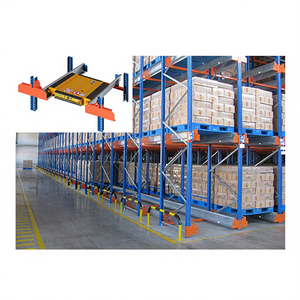
Pallet Flow Racking—commonly referred to as Gravity Flow or Dynamic Storage—represents the zenith of passive high-density material handling. Designed around strict First-In, First-Out (FIFO) stock rotation principles, these systems utilize inclined wheel or roller tracks integrated into heavy-duty structural steel frames. Pallets loaded at the high-end entry aisle slide seamlessly by gravity down a controlled pitch (typically 3.5% to 4%) to the low-end discharge aisle.
In modern industrial logistics, selecting a qualified manufacturing partner requires navigating structural engineering compliance, mechanical roller tolerances, safety braking mechanisms, and steel metallurgy standardizations (such as SS275/Q235B and Q355B high-tensile cold-rolled steel). This benchmarking whitepaper provides enterprise procurement directors, logistics engineers, and warehouse operators with an objective evaluation of the global top 10 pallet flow racking factories and exporters, highlighting technical innovations, structural reliability, and cost-efficiency parameters.
Top 10 Global Pallet Flow Racking Factories & Exporters Benchmark
Evaluating international racking suppliers involves auditing manufacturing infrastructure, load-bearing verification under FEM 10.2.02 / ANSI MH16.1 specs, inline galvanization quality, and proprietary braking roller longevity. Below is an engineering comparison matrix of top global suppliers and export-oriented Chinese manufacturing centers.
| Factory / Exporter | Primary Technical Focus | Brake System Tech | Max Lane Depth | Quality Certifications | Export Regions |
|---|---|---|---|---|---|
| PrimeBay Heavy Duty Racking | Custom FIFO Gravity Lanes, Radio Shuttle Integration | Magnetic Speed Control & Centrifugal Braking Rollers | Up to 25 Pallets | CE, ISO 9001, ISO 14001, TUV | Europe, North America, Southeast Asia, Middle East (85+ Countries) |
| SSI Schaefer | High-Velocity Automated Flow Modules | Internal Gear Centrifugal Brakes | 20+ Pallets | TUV, DIN EN 15512 | Global Footprint |
| Interroll Group | Core Roller Tracks & Dynamic Braking Elements | Magnetic Speed Controller (MSC 50) | Modular Tracks | ISO 9001, CE | Global OEM Supplier |
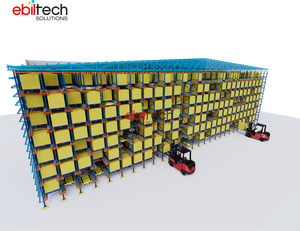
| EBILTECH Logistics | Deep-Lane Shuttle-Clad & Gravity Hybrid Racks | Mechanical Hydraulic Friction Rollers | 16+ Pallets | CE, TUV Certified | Europe, South America, Asia |
| Unarco Material Handling | Heavy-Duty Structural Steel Gravity Racks | Direct Drive Braking Wheels | 12-18 Pallets | RMI Certified | North America |
| Mecalux Racking | Selective & Gravity Combination Flow Systems | Centrifugal Dynamic Rollers | 15 Pallets | ISO 9001, ISO 14001 | Americas, Europe |
| Interlake Mecalux | High-Density Distribution Flow Modules | Progressive Speed Braking Tracks | 12 Pallets | RMI, ANSI compliant | Global Distribution |
| Jungheinrich AG | Automated Logistics & Dynamic Flow Racks | Integrated Electronic Speed Monitoring | 20 Pallets | CE, ISO 9001, GS Mark | Europe, Asia-Pacific |
| Bito Storage Systems | Carton & Pallet Flow Hybrid Storage | Speed Controllers with Rubber Sheathing | 10-15 Pallets | TUV ISO Certification | EMEA Region |
| Nedcon Storage Solutions | High-Bay Clad Building & Gravity Racks | Custom Hydraulics & Dynamic Separators | 18 Pallets | EN 15512, ISO 9001 | Global Project Execution |
Deep-Dive Engineering: Critical Components of Pallet Flow Racking
A reliable gravity flow racking installation depends on exact mechanical balances. Minor variations in pallet weight (e.g., ranging from 300 kg to 1,500 kg within the same lane) or poor-quality wooden pallets can lead to hang-ups or unsafe velocity accumulation down the incline.
Speed Controllers & Braking Rollers
Installed at calculated intervals along the lane track, centrifugal or magnetic braking rollers govern descent speed. They restrict movement to a safe terminal velocity (~0.25 m/s), preventing runaway pallets from colliding with the discharge face.
Safety Pallet Separator Latches
Positioned at the discharge end, mechanical safety separators isolate the front pallet from trailing line pressure. By withholding thousands of pounds of rearward force, unloading forklift drivers can safely extract the lead pallet without back-pressure friction binding.
Structural Steel Profile Engineering
High-grade cold-rolled steel (Q235B/Q355B) uprights and beam assemblies engineered under Finite Element Analysis (FEA) ensure dynamic lateral rigidity. Frame designs accommodate seismic forces and heavy impact loads at high-traffic entry loading faces.
Future Procurement Trends in Pallet Flow Racking (2026–2030)
As warehouse management systems (WMS) integrate deeply with IoT sensors and automated material handling equipment, procurement strategies for physical racking infrastructure are changing rapidly. Key market shifts include:
1. Hybrid Shuttle-Gravity Clad Warehouse Infrastructure
Modern distribution hubs are combining battery-powered radio shuttles with gravity flow lanes to create semi-automated deep-lane matrixes. This hybrid approach eliminates expensive ASRS stacker crane investments while retaining extreme cubic storage density for fast-moving SKU profiles.
2. Smart Magnetic Braking & Telematics Integration
Traditional mechanical centrifugal brakes are giving way to contactless eddy-current magnetic speed controllers. These wear-free components require zero maintenance and can be outfitted with vibration sensors to alert facility management when pallet descent velocity anomalies occur.
3. Eco-Friendly Surface Coatings and Cold-Chain Resilience
With cold storage facilities expanding to meet fresh food and pharmaceutical demand, racking surfaces require advanced anti-corrosion protection. Pre-galvanized components and zinc-flake epoxy powder coatings designed for ultra-low temperature operating environments (-30°C to -40°C) are becoming standard procurement requirements.
Technical Evolution of Pallet Flow Mechanics
Historical gravity flow systems suffered from pallet dynamic variance—where lightweight wooden pallets would stall, and heavy plastic pallets would over-speed. Innovation over the last decade has resolved these core operational issues:
- Full-Width Steel Rollers vs. Split-Track Wheels: Modern heavy-duty lanes utilize full-width steel rollers on precision ball bearings to support damaged pallet runners and spread load force evenly.
- Adjustable Entry Alignment Guides: Self-centering entry funnels assist forklift drivers during high-reach placement, ensuring pallets enter straight down the lane axis and preventing side-rail jamming.
- Modular Track Retrofitting: Advanced factories produce drop-in gravity tracks that mount directly onto standard selective pallet racking beams, converting existing warehouse bays into high-density FIFO lanes with minimal capital expenditure.
Frequently Asked Sourcing & Engineering Questions (FAQ)
What slope pitch angle is recommended for heavy-duty pallet flow racking?
The standard incline pitch for conventional pallet flow racking is 3.5% to 4% (approximately 7/16 inches of drop per foot). However, lightweight payloads or GMA wooden pallets with rough bottom boards may require a 4.5% pitch, whereas smooth plastic pallets carrying heavy loads perform best around 3.0% to 3.5%. Leading factories execute physical flow tests with client sample pallets prior to final production manufacturing.
Which certifications should an overseas racking exporter hold?
Enterprise procurement managers should mandate certification compliance based on regional delivery destinations:
- Europe & International: CE mark, ISO 9001 (Quality), ISO 14001 (Environmental Management), TUV Rheinland/SÜD structural audits, and EN 15512 static calculation standards.
- North America: RMI (Rack Manufacturers Institute) compliance and ANSI MH16.1 design verification.
How do dynamic speed controllers protect operators and inventory?
Speed controllers (braking rollers) use internal centrifugal gear assemblies or magnetic eddy currents to exert counter-friction against passing pallets. As pallet speed increases, the braking mechanism exerts proportional resistance, keeping linear movement steady at approximately 0.2 m/s to 0.3 m/s regardless of whether the pallet weighs 300 kg or 1,500 kg.
What is the difference between Pallet Flow Racking and Push Back Racking?
Pallet Flow operates on a First-In, First-Out (FIFO) system where loading happens at the rear (high side) and picking occurs at the front (low side). Push Back Racking operates on a Last-In, First-Out (LIFO) system where forklifts push loaded nested carts backward from a single loading/unloading aisle up a slight incline (typically 1.5% to 2%).
Can pallet flow systems be deployed inside cold storage environments?
Yes. Pallet flow racking is exceptional for cold storage because high storage density reduces the overall thermal footprint per pallet position. Key engineering modifications include cold-rated bearing lubricants, low-temperature synthetic rubber brake sleeves, and structural steel certified for notch toughness under negative 30 degree Celsius operating environments.
Enterprise Capability & Manufacturing Infrastructure
As a leading Chinese racking engineering manufacturer operating since 2006, our 40,000 m² state-of-the-art production base in Nanjing delivers world-class warehouse storage systems to distributors, 3PL providers, and industrial clients across 85+ countries.
Automated In-House Manufacturing
Equipped with continuous automated roll-forming lines, robotic welding stations, and high-capacity powder coating plants, ensuring micron-level profile precision and uniform coating thickness.
Custom Engineering & CAD/FEA Verification
Our experienced R&D team analyzes warehouse CAD layouts, floor slab capacities, and pallet characteristics to provide full load calculations, structural simulations, and custom component design.
Certified Quality & 10-Year Warranty
All structural components comply with CE, ISO 9001, ISO 14001, and TUV standards, backed by a comprehensive 10-year warranty for guaranteed long-term operational peace of mind.
Optimize Your Warehouse Storage Density & Throughput Today
Connect with our senior logistics engineers to request customized AutoCAD racking layouts, dynamic flow calculations, and competitive factory-direct pricing for your next warehouse project.
Send an Inquiry