1. Executive Overview & Structural Engineering Principles
In modern industrial logistics and high-throughput distribution hubs, selecting the appropriate OEM/ODM Pallet Racking With Forklift Access is a critical decision that influences operational efficiency, facility safety, and long-term Capital Expenditure (CAPEX). As supply chain dynamics demand higher vertical space utilization and faster cycle times, warehouse operators must balance physical storage density with immediate pallet accessibility.
Pallet racking systems engineered specifically for forklift operation rely on rigorous mechanical design, high-tensile structural steel profiles (such as Q235B and Q355B structural steel), and specialized safety components designed to withstand repeated dynamic impacts. This technical document provides procurement managers, logistics engineers, and supply chain directors with an authoritative analysis of forklift-accessible storage racking, evaluating structural engineering specifications, OEM/ODM manufacturing customization options, future automated trends, and lifecycle cost management.
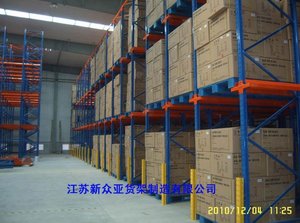
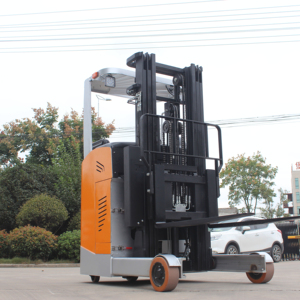
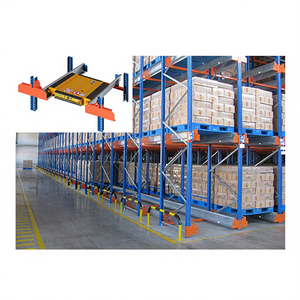
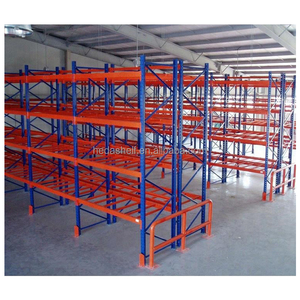
2. Recommended Forklift-Accessible Pallet Racking Systems
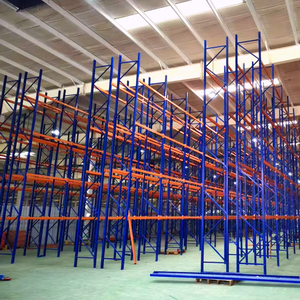
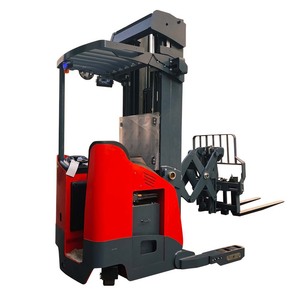
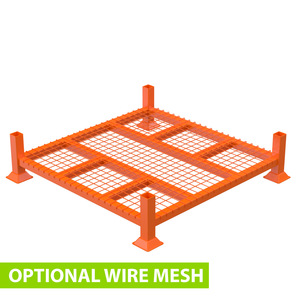
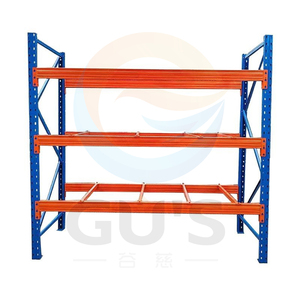
Below is our curated portfolio of heavy-duty, forklift-compatible storage solutions, customized directly for OEM/ODM factory procurement. Every system is built to international standards including CE, ISO 9001, ISO 14001, and TUV safety specs.
3. Mechanical Engineering: Structural Integrity & Material Science
Selecting reliable racking requires an understanding of cold-formed structural steel behavior under dynamic impact and static load. PrimeBay's engineering team utilizes Finite Element Analysis (FEA) software to simulate maximum load capacity, seismic stress, and sway deflection under real-world warehouse conditions.
Key Engineering Metrics for Forklift-Accessible Racking
- Steel Grade Specifications: Premium cold-rolled steel Q235B (yield strength ≥ 235 MPa) and Q355B (yield strength ≥ 355 MPa for ultra-high bay columns).
- Beam Deflection Limit: Engineered to strictly respect the L/200 standard (where deflection does not exceed 1/200th of the clear beam span under maximum safe working load).
- Perforation Geometry: Teardrop, Omega, or 75mm pitch diamond hole patterns cold-punched with high precision to prevent localized stress concentrations.
- Electrostatic Powder Coating: Automated 8-stage pre-treatment wash followed by epoxy-polyester powder coating (60–80 μm thickness) providing superior scratch and corrosion protection (salt spray resistance exceeding 500 hours ASTM B117).
System Configuration Matrix: Forklift Compatibility & Storage Parameters
| Racking Type | Forklift Compatibility | Aisle Width Required | Storage Density | Inventory Access (FIFO/LIFO) |
|---|---|---|---|---|
| Selective Pallet Rack | Counterbalance, Reach Truck | 3.5m – 4.2m | Standard (40-50%) | 100% Direct Access (FIFO) |
| Very Narrow Aisle (VNA) | Articulated, VNA Turret Truck | 1.6m – 1.9m | High (65-75%) | 100% Direct Access (FIFO) |
| Drive-In / Drive-Through | Standard Counterbalance, Reach | N/A (Drive Inside Lanes) | Very High (75-85%) | LIFO (Drive-In) / FIFO (Drive-Thru) |
| Double Deep Racking | Deep-Reach Pantograph Truck | 3.0m – 3.8m | Medium-High (55-65%) | 50% Immediate Access (LIFO) |
| Radio Shuttle Racking | Standard Forklift (Load/Unload Only) | Standard Access Aisle | Maximum (85-90%) | Flexible FIFO or LIFO |
4. PrimeBay Enterprise Advantages & OEM/ODM Manufacturing Capabilities
As a leading Chinese racking manufacturer operating from our modern 40,000 m² industrial production base in Nanjing, PrimeBay Heavy Duty Racking Co., Ltd. delivers engineered racking systems designed to withstand heavy industrial use. Since 2006, our factory-direct model has served international project contractors, system integrators, and OEM distributors in over 85 countries.
Precision Roll-Forming
Equipped with 20+ automated continuous roll-forming lines, achieving strict column profile tolerances (±0.5mm) for smooth beam locking and structural alignment.
International Certifications
Fully compliant with international quality standards. Production audited and certified to CE, ISO 9001, ISO 14001, and TUV Rheinland specifications.
Custom OEM/ODM Engineering
Custom upright punch designs, exclusive beam profile tooling, specialized brand color RAL matching, and custom hardware packaging for global distributors.
5. Future Procurement Trends in Forklift-Accessible Racking
The global material handling industry is undergoing a structural shift driven by e-commerce fulfillment requirements, land cost appreciation, and labor shortages. When specifying OEM/ODM racking for upcoming facility builds, enterprise buyers should account for these key macro trends:
A. Hybrid Human-Machine Forklift Environments
Traditional racking design assumed manual forklift operation with wide safety margins. Modern procurement trends require racking profiles capable of handling both manual reach trucks and AGVs (Automated Guided Vehicles) or AMR forklift fleets. This necessitates tighter fabrication tolerances, floor anchor precision, and integrated safety sensors within the bottom rack structure.
B. Rise of Semi-Automated Radio Shuttle Integration
While drive-in racking provides low initial capital cost for bulk LIFO inventory, maintenance costs due to forklift collision with upright columns can be substantial. Modern procurement is migrating toward Radio Shuttle Racking Systems, where the forklift remains safely in the main aisle while a battery-powered shuttle carriage navigates deep storage tunnels. This reduces forklift rack damage by up to 80% and increases operational throughput.
C. High-Bay Vertical Expansion & Material Optimization
With industrial real estate prices climbing globally, facilities are building vertically up to 12–15 meters. Procuring standard structural steel yields excessive weight at high elevations; thus, forward-looking buyers specify high-tensile Q355 cold-rolled steel profiles. This material innovation allows thinner wall profiles while maintaining dynamic column stiffness and seismic performance.
6. Enterprise FAQ: Procurement & Structural Safety
Forklift impacts represent the primary cause of rack degradation. We design heavy-duty steel column protectors (fabricated from 5mm to 8mm thick steel plates) anchored directly into the reinforced concrete floor independent of the upright column. Corner guards and frame end protectors (typically heavy-duty floor-mounted structural channels) are mandatory at aisle intersections where turning forklifts present the highest collision risk.
The floor slab must meet specific point-load capacity and flatness tolerances (typically FF/FL values or VNA Superflat standards per DIN 15185 or FEM 9.831). Anchor bolts (M10 to M16 chemical or expansion anchors) require concrete compressive strength of at least 25-30 MPa with a minimum slab thickness of 150mm to 200mm depending on total frame load.
To generate accurate CAD layouts and structural bill-of-materials (BOM), our engineering team requires: (1) Warehouse CAD building plan showing column grid, door locations, and clear height under joists; (2) Pallet dimensions (Length × Width × Height including cargo); (3) Maximum weight per pallet; (4) Forklift specifications including turn radius, mast collapsed height, and maximum lift height; and (5) Operating temperature (ambient vs cold storage).
Every batch of raw steel coil undergoes tensile testing upon mill delivery. Cold-formed profiles are continuously monitored with digital calipers and laser alignment devices. Welding is executed by robotic welding stations verified by ultrasonic weld inspection. Finished components pass through a 100% inspection line for powder coat adhesion (cross-hatch test) and thickness compliance prior to export sea-freight bundle packaging.
Optimize Your Warehouse Storage Density & Safety
Contact PrimeBay's engineering team today for custom CAD layout design, structural load calculations, and competitive OEM/ODM factory quotation.