Engineered Deep Storage Pallet Racking Series
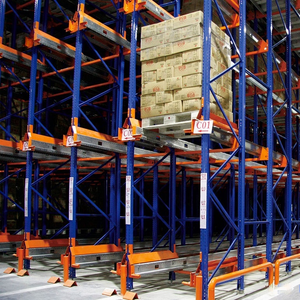
Radio Shuttle Pallet Racking Fully Automated 40m Deep System
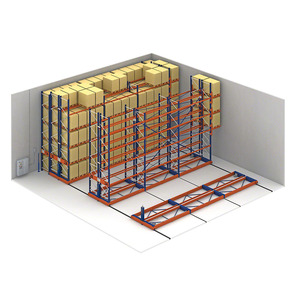
Material Rack Automated Storage Electric Mobile Warehouse Racking
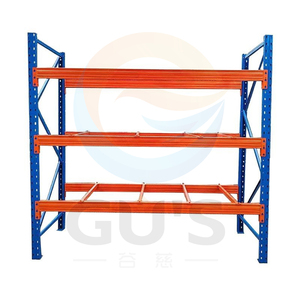
Custom Heavy-Duty Cold Rolled Steel Stacking Warehouse Rack
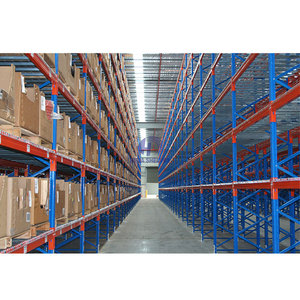
High Performance Heavy Duty Logistics Reticulated Shelf System
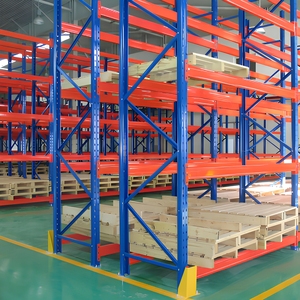
Steel Heavy Duty Double Deep 5 Pallet High Density Storage Rack
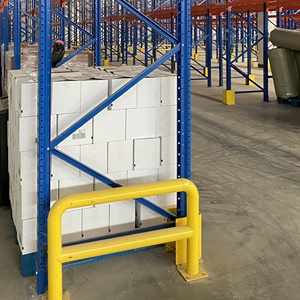
Heavy Duty Steel Pallet Rack Upright Frame Safety Guard Barrier
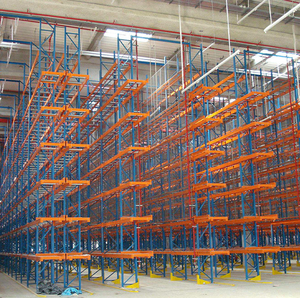
Very Narrow Aisle (VNA) High Density Guided Racking System
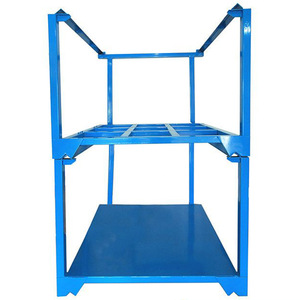
OEM Warehouse Stack Foldable Nestainer Portable Steel Frame
Volumetric Physics & Structural Architecture of Deep Storage Racking
Evaluating load dynamics, steel metallurgy, and throughput efficiency across high-density OEM/ODM storage infrastructure.
Modern logistics real estate pricing demands unprecedented volumetric efficiency. Standard selective pallet racking, while offering 100% immediate SKU accessibility, utilizes only 35% to 40% of absolute warehouse cubic volume due to wide forklift travel aisles (typically 3.2m to 4.5m). For enterprise distribution centers, cold-storage facilities, and high-volume manufacturing hubs, transitioning to Deep Storage Pallet Racking Architecture is the definitive strategy to maximize pallet density and optimize Total Cost of Ownership (TCO).
Deep storage systems—encompassing Radio Shuttle Racking (up to 40m deep lanes), Double-Deep Selective Racking, Push-Back Cart Systems (2 to 5 deep), and Drive-In / Drive-Through configurations—eliminate unnecessary operational aisles. By converting floor space into vertical and linear storage matrices, manufacturers can achieve up to 85% cubic space utilization.
Comparative Matrix: Deep Storage Racking Systems
Selecting the optimal OEM/ODM configuration requires balancing structural steel costs, pallet turnover velocity (FIFO vs. LIFO), material handling equipment (MHE) capability, and building clear height. Below is an engineering evaluation calculated under FEM 10.2.02 and ANSI MH16.1 standards:
| Racking Technology | Storage Depth | Space Utilization | Access Principle | Forklift Aisle Needed | Optimal Industry Application |
|---|---|---|---|---|---|
| Radio Shuttle System | Up to 40 Pallets Deep | Maximum (85%) | FIFO or LIFO | Standard (3.0m - 3.2m) | Cold Storage, Food & Beverage, FMCG |
| Push-Back Racking | 2 to 5 Pallets Deep | High (65%-75%) | Strict LIFO | Standard (2.8m - 3.0m) | Medium SKU Count, Buffer Storage |
| Double-Deep Selective | 2 Pallets Deep | Medium (55%-60%) | LIFO | Deep-Reach Truck (3.2m) | General Logistics, Dry Goods Manufacturing |
| Drive-In / Drive-Through | 4 to 10 Pallets Deep | Very High (75%) | LIFO (Drive-In) / FIFO | Inside-Lane Access | Homogeneous Bulk Goods, Seasonal Stock |
| VNA (Very Narrow Aisle) | 1 Pallet Deep (High Bay) | High Vertical (70%) | 100% Selective FIFO | Ultra-Narrow (1.6m - 1.8m) | E-commerce, High-Ceiling Distribution |
OEM/ODM Structural & Metallurgical Standards
How factory-direct manufacturing precision guarantees deflection resistance and long-term dynamic stability.
Q355B Cold-Rolled Steel Profiles
We utilize certified high-tensile cold-rolled steel (Q355B equivalent to EN 10025 S355JR). Continuous multi-stage cold roll-forming ensures uniform wall thickness, tight sectional tolerances, and elevated structural yield strength under intense cyclic impact loads.
Seismic & Impact Protection
Integrated frame braces, heavy-duty floor anchor plates, and 5-hook cold-formed beam connectors mitigate torsion and swaying. Heavy-duty wrap-around upright protectors prevent forklift impact damage in high-speed operating environments.
Automated Surface Powder Coating
Components undergo a 7-stage pre-treatment wash followed by thermosetting pure epoxy-polyester powder coating (60–90 μm thickness). Excellent resistance to abrasion, salt spray, moisture, and sub-zero temperatures down to -30°C in cold stores.
Future Procurement Trends in Industrial Racking Systems
As global supply chains navigate shifting economic landscapes and labor shortages, international procurement officers, warehouse system integrators, and project contractors are re-evaluating their sourcing strategies. Procurement in the 2025–2030 era is defined by three major macro-trends:
1. Integration of Automation & Telemetry-Enabled Shuttles
Traditional static storage is rapidly giving way to dynamic automated systems. B2B buyers now prioritize OEM suppliers capable of delivering integrated hardware-software ecosystems—where 4-Way Radio Shuttles and ASRS stacker cranes communicate seamlessly via WMS (Warehouse Management System) interfaces, achieving autonomous pallet retrieval without human forklift entry.
2. Green Steel Supply Chains & Decarbonized Production
ESG (Environmental, Social, and Governance) mandates in Europe and North America are forcing distributors to verify the carbon footprint of structural steel imports. Leading ODM factories in China are adopting recycled steel scrap melting, energy-efficient powder curing ovens, and zero-emission wastewater pre-treatment plants to ensure full CBAM (Carbon Border Adjustment Mechanism) compliance.
3. Modular OEM Engineering & Fast-Track Customization
Off-the-shelf racking components rarely fit modern high-bay facilities perfectly. B2B buyers require flexible OEM suppliers who offer parametric CAD/BIM modeling within 24 hours, custom upright pitch punchings (e.g., 50mm, 75mm, 76.2mm pitch), and tailored beam section profiles designed specifically for distinct pallet footprints (Euro, ISO, or GMA standards).
4. Cold Chain Resilience & Sub-Zero Metallurgical Stability
With global frozen food and pharmaceutical logistics expanding exponentially, deep storage racking specified for -25°C to -30°C environments must prevent low-temperature steel embrittlement. Modern procurement contracts stipulate impact-tested steel grades (Charpy V-notch testing at low temperatures) to avoid catastrophic structural yield failure under sustained thermal stress.
Information Gain Note for Procurement Officers
When calculating racking load ratings, standard static calculations are insufficient for deep storage lanes. Always request finite element analysis (FEA) modeling under dynamic brake loads, asymmetrical deck loading, and seismic acceleration. OEM suppliers must verify beam deflection does not exceed L/200 under maximum rated load (where L is beam span length).
Global Industry & Technological Development Trends
The engineering topology of industrial storage racks has undergone rapid evolutionary breakthroughs. Below are key technological advancements transforming OEM/ODM deep storage manufacturing:
- Advanced Cold Roll-Forming Rollers: Modern 20-station automated roll-forming lines allow complex cross-sectional geometries with multiple stiffening ribs on upright posts (e.g., 11-fold and 13-fold profile bends). This drastically increases column buckling resistance while reducing overall steel weight.
- Robotic Laser Welding: Transitioning from manual metal inert gas (MIG) welding to automated 6-axis robotic fiber laser welding guarantees 100% weld seam penetration on beam connector claws and base plates, eliminating human error in structural load distribution.
- IoT Load & Vibration Sensing: Next-generation deep storage installations are featuring embedded structural strain gauges and vibration sensors inside frame columns. These IoT nodes transmit real-time stress data to maintenance managers, warning of forklift collisions or overload conditions before failure occurs.
- Standardization of Hybrid FIFO/LIFO Mechanics: Wireless radio shuttle vehicles now utilize optical sensors, laser distance meters, and brushless DC motors to execute automatic stock rotation switches via remote control or automated central server dispatching.
Frequently Asked Procurement & Engineering Questions
Direct technical clarity for importers, project contractors, warehouse owners, and logistics integrators.
Which structural steel certifications do PrimeBay deep storage systems carry?
Can you engineer custom OEM/ODM racking according to architectural CAD drawings?
What is the structural difference between Radio Shuttle and Drive-In racking?
What is the standard production lead time and loading capacity per container?
How do you ensure surface coating durability in cold storage environments (-30°C)?
What warranty protection is provided on OEM structural racking installations?
Optimize Your Warehouse Density Today
Planning a new logistics distribution center, upgrading cold storage capacity, or searching for a trusted OEM racking supplier? Connect directly with our Senior Engineering Team for customized layout drawings, dynamic load calculations, and competitive factory quotes.