Featured OEM & ODM Industrial Racking Systems
Explore our precision-engineered heavy-duty storage configurations, certified to international ISO, CE, and TUV safety standards for global industrial distribution centers.
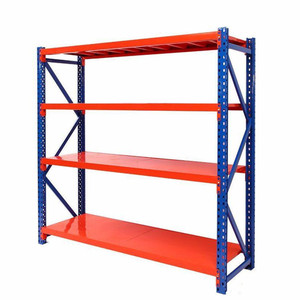
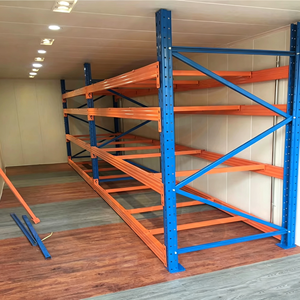
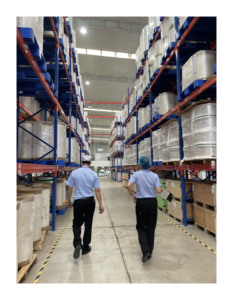
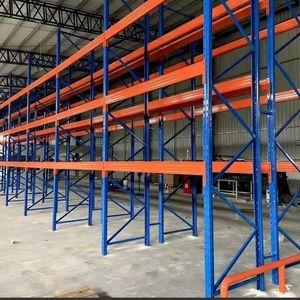
Industrial Whitepaper: Engineering Custom Selective Pallet Racking Systems
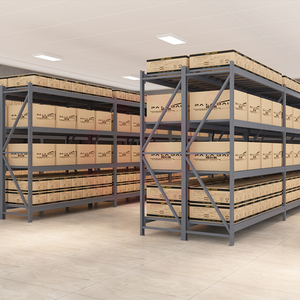
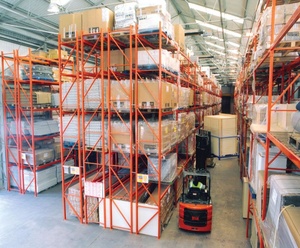
In modern industrial logistics, supply chain efficiency relies heavily on structural integrity, cubic volume optimization, and rapid SKU selectivity. Selective Pallet Racking remains the foundational standard for worldwide warehouse storage due to its 100% direct pallet accessibility, mechanical versatility, and seamless adaptation to diverse material handling equipment (MHE). As a premier OEM/ODM selective pallet racking factory headquartered in Nanjing, China, PrimeBay Heavy Duty Racking Co., Ltd. integrates advanced metallurgical selection, precision roll-forming technology, and rigorous FEM (Fédération Européenne de la Manutention) structural analysis to engineer enterprise-grade storage frameworks.
The standard selective pallet racking structural configuration consists of cold-rolled steel upright frames connected by horizontal and diagonal bracing, paired with heavy-duty load beams secured via multi-hook connector brackets. These systems are dynamically engineered to manage localized point loads, frame deflection, eccentric torsional strain, and seismic activity while optimizing warehouse floor usage.
Metallurgical Specifications & Structural Components Breakdown
Understanding the structural composition of heavy-duty racking systems is essential for logistics directors and procurement engineers evaluating direct factory suppliers:
Upright Profiles & Columns
Cold-rolled from high-strength Q355B structural steel coil. Profiles feature continuous omega-shaped geometry with 80mm to 120mm face widths, engineered for optimal buckling resistance under high vertical axial loading.
Box & Step Beams
Fabricated using twin C-section steel welded automatically to create continuous box sections. Beam heights range from 80mm to 160mm, capable of sustaining uniform loads up to 4,500 kg per level with minimal deflection (< L/200).
Safety Accessories & Baseplates
Heavy-duty floor baseplates anchor columns securely into reinforced concrete slabs via expansion bolts. Includes integrated column protectors, frame barrier guards, mesh decking, and pallet support bars.
Selective Pallet Racking Technical Specifications & Load Parameters
When customizing selective racking systems for OEM contract projects or commercial warehouse builds, precise engineering parameters ensure compliance, safety, and long-term durability:
| Engineering Parameter | Standard Technical Specification | Custom OEM Options Available |
|---|---|---|
| Structural Steel Grade | Q235B Cold-Rolled Carbon Steel | Q355B High-Tensile Steel / Custom Alloy |
| Frame Depth Range | 800mm, 900mm, 1000mm, 1100mm, 1200mm | Custom engineered (400mm - 1800mm) |
| Upright Column Height | 2,000mm to 12,000mm (Single Column) | Spliced configurations up to 22,000mm (22m) |
| Beam Length / Span | 1,350mm, 2,300mm, 2,700mm, 3,300mm, 3,900mm | Custom lengths adapted to pallet MHE radius |
| Load Capacity Per Level | 1,000 kg to 4,500 kg (Uniformly Distributed Load) | Heavy-duty reinforced beams > 5,000 kg / level |
| Pitch Adjustment Interval | 50mm, 75mm, or 76.2mm (3 inches) pattern | Custom teardrop or European hook geometry |
| Surface Protection Finish | Thermo-hardened Epoxy Powder Coating (60-80μm) | Hot-Dip Galvanized (HDG > 80μm) for cold storage |
| Quality Certifications | CE, ISO 9001:2015, ISO 14001, TUV Rheinland | AS4084-2012, RMI Compliance Certification |
Future Procurement Trends in Industrial Pallet Racking (2025–2035)
As global distribution centers transition toward Industry 4.0 automation, smart supply chains, and zero-carbon logistics, procurement managers must evaluate racking systems through a forward-looking technological lens. Over the next decade, four key trends will reshape industrial racking procurement:
1. Automation Compatibility & ASRS Integration
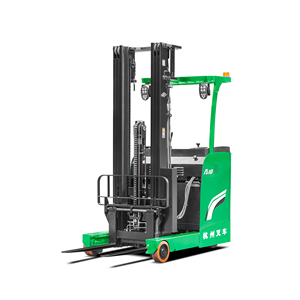
Traditional manual forklift warehouses are increasingly upgrading to hybrid automated environments. Modern selective racking frameworks are being designed to integrate seamlessly with Automated Storage and Retrieval Systems (ASRS), Autonomous Mobile Robots (AMRs), and automated reach trucks. This transition requires tighter fabrication tolerances (±1.0mm frame squareness), high-precision beam level alignment, and specialized sensor-reflective powder coating surfaces.
2. Structural Digital Twin & Load-Monitoring Sensors
Future high-bay racking systems will incorporate IoT load-cell sensors and strain gauges integrated into beam connectors and column bases. These sensors transmit real-time stress data to Warehouse Management Systems (WMS), alerting facility managers to structural overload, MHE collision impacts, or micro-seismic shifting before catastrophic failure occurs.
3. Cold-Chain Optimization & Anti-Corrosion Advances
With global demand for fresh food, pharmaceuticals, and biologics surging, cold storage facilities operating at extreme sub-zero temperatures (-30°C to -45°C) require specialized steel formulations. Traditional carbon steel becomes brittle under sub-zero conditions; future procurement prioritizes micro-alloyed fine-grain steel treated with advanced hot-dip galvanization (HDG) or zinc-aluminum-magnesium coatings that resist micro-fractures and thermal shock.
4. Carbon-Neutral Manufacturing & Circular Lifecycle Steel
Enterprise buyers are requiring Environmental Product Declarations (EPDs) from manufacturing partners. Sustainable racking procurement favors factories utilizing green electric arc furnace (EAF) steel, VOC-free powder coating recovery systems, and modular reusable frame architectures that minimize scrap during facility reconfigurations.
Why Partner with PrimeBay: Direct OEM/ODM Factory Advantage
Founded in 2006, PrimeBay Heavy Duty Racking Co., Ltd. operates a modern 40,000 square meter manufacturing base in Nanjing, Jiangsu Province, China. As a full-service racking manufacturer and international exporter to over 85 countries, we maintain strict control over every stage of production—from raw steel coil slitting and automated roll-forming to robotic welding, shot-blasting, electrostatic powder coating, and final export packing.
Certified Quality Assurance
Our production facilities and structural designs are independently audited and certified under CE, ISO 9001 quality management, ISO 14001 environmental safety, and TUV Rheinland guidelines.
Full OEM & ODM Customization
We provide tailored racking dimensions, custom upright profile dies, special beam connectors, corporate color matching (RAL palette), and client brand labeling for global engineering distributors.
Engineering CAD & Load Calculations
Our internal technical team evaluates your warehouse CAD architectural drawing, slab strength, pallet specification, and MHE turning radius to generate optimized layout drawings and bill of materials (BOM).
Frequently Asked Questions (FAQ)
Expert responses to critical engineering, manufacturing, and shipping inquiries raised by industrial racking buyers and warehouse operators.
Which international safety and quality certifications do PrimeBay racking systems carry?
Can PrimeBay design a custom racking layout from our warehouse CAD drawings?
What OEM and ODM customization services are available for distributors?
What warranty coverage is included with PrimeBay industrial racking systems?
How do I choose between Selective, Double Deep, Drive-In, and Radio Shuttle Racking?
- Selective Racking: 100% SKU selectivity; best for high SKU counts and standard turnover.
- Double Deep Racking: 50% selectivity; increases storage density by 26% using specialized pantograph reach trucks.
- Drive-In Racking: Low SKU diversity, high volume; LIFO operation providing high density at low initial cost per pallet.
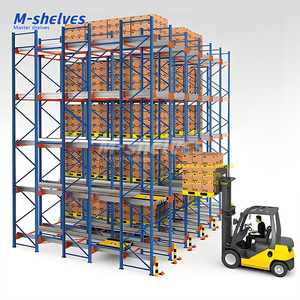
- Radio Shuttle Racking: High density, automated FIFO or LIFO operation; ideal for cold storage, FMCG, and high-throughput warehouses requiring minimal forklift travel inside racking lanes.