Precision-Engineered Very Narrow Aisle Systems & Industrial Racking
Explore our export-grade heavy-duty warehouse storage racking series designed for maximum volumetric density and rapid pallet throughput.
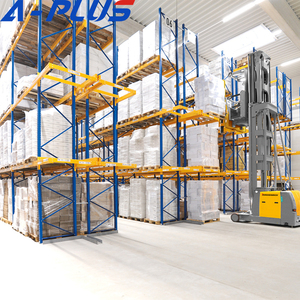
OEM Very Narrow Aisle Metal Storage Rack Steel Warehouse Racking System
Contact Us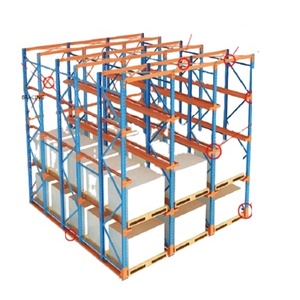
Industrial Steel Products VNA Very Narrow Aisle Selective Pallet Racks Steel Shelves Rack
Contact Us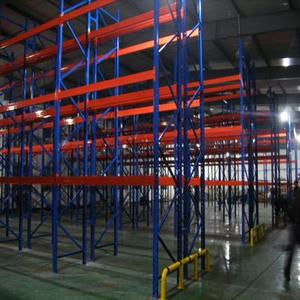
Narrow Aisle Pallet Rack High Density Storage System with Adjustable Beams
Contact Us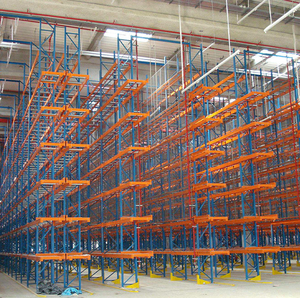
Very Narrow Aisle Racking System Solution VNA Rack High Density Storage
Contact Us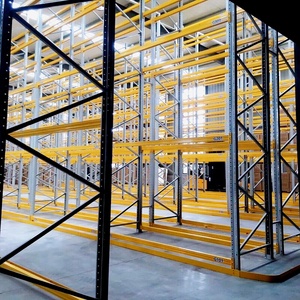
Pallet Racking Warehouse Storage Heavy Duty Industrial Pallet Shelf VNA Racking
Contact Us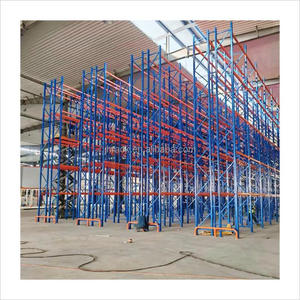
5 Layer Heavy Duty Racks And Shelves Very Narrow Aisle Pallet VNA Warehouse Racking
Contact Us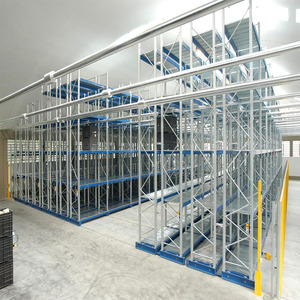
Heavy-Duty Automated Mobile Storage System Electrically Operated Mobile Shelves
Contact Us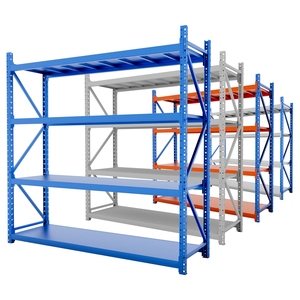
Factory Direct Steel Heavy Duty Pallet Rack Bolt Metal Long Span Shelving
Contact UsArchitectural Engineering & Spatial Economics of VNA Racking
A comprehensive analysis on optimizing high-bay warehouse cubic footprint, structural integrity, and automated material handling integration.
In modern industrial logistics, floor space is one of the highest operating capital costs. Traditional selective pallet racking systems require operating aisles ranging between 3.5 to 4.5 meters to accommodate standard counterbalanced forklifts. This layout sacrifices nearly 50% to 60% of total warehouse floor area to vehicle circulation corridors. As global supply chains demand higher SKU throughput and denser cubic storage, Very Narrow Aisle (VNA) Racking Systems engineered by premium Chinese manufacturers have emerged as the definitive solution for logistics operators, 3PL providers, and industrial distributors globally.
1. Structural Physics & Engineering Integrity of VNA Racking
Very Narrow Aisle racking is fundamentally a specialized variation of heavy-duty selective pallet racking, re-engineered for precise tolerances and extreme vertical elevation. Because VNA systems utilize specialized turret trucks or Articulated Very Narrow Aisle (AVNA) forklifts that operate inside rigid guide channels, structural deflection tolerances are drastically tighter than standard static racking.
- High-Tensile Cold-Rolled Steel Profiles: Fabricated using premium Q355B (equivalent to S355JR structural steel), upright profiles feature optimized multi-flange cross-sections to withstand intense axial compression and lateral sway at heights exceeding 15 meters.
- Aisle Guidance Systems: VNA aisles rely on either mechanical floor guide rails (typically 100mm x 50mm heavy structural angle iron elevated slightly above slab level) or low-frequency inductive wire guidance embedded into the concrete floor slab. Wire guidance eliminates physical rail interference, allowing seamless cross-aisle vehicle transitions.
- Superflat Floor Standards (EN 15620 / TR34): Because turret trucks elevate operators up to 16+ meters, floor flatness tolerances (FM1 or VDMA Class A) are critical. A 1mm inclination at floor level creates an unacceptably dangerous 15mm horizontal displacement at the top beam level.
- Structural Top-Ties & Portal Frame Bracing: To absorb dynamic sway forces generated when turret trucks extend 1,500kg unit loads to maximum elevation, VNA systems utilize overhead structural portal ties across rows, locking the entire racking grid into a unified rigid framework.
2. Technical Comparison Matrix: VNA vs. Alternative High-Density Racking Systems
Selecting the optimal storage methodology requires evaluating SKU diversity, pallet turnover rate, equipment investment, and structural constraints. Below is an engineering comparison comparing VNA racking with traditional selective, drive-in, radio shuttle, and automated storage systems (ASRS).
| Storage Methodology | Aisle Width (mm) | Volumetric Density | Pallet Selectivity | CAPEX (Racking & Equipment) | Best Application Fit |
|---|---|---|---|---|---|
| Very Narrow Aisle (VNA) | 1,500 – 1,800 | High (85%) | 100% Direct Access | Moderate | High SKU count, high density, fast throughput |
| Standard Selective Rack | 3,200 – 4,500 | Low (45%) | 100% Direct Access | Low | General storage, flexible SKU mix, standard trucks |
| Drive-In Racking | N/A (Continuous) | Very High (75%) | LIFO (Low Access) | Low-Moderate | Bulk homogeneous stock, seasonal goods |
| Radio Shuttle System | N/A (Channel Based) | Maximum (88%) | FIFO / LIFO (Lane level) | High | Cold storage, high volume per SKU, FMCG |
| Automated ASRS System | 1,400 – 1,600 | Maximum (92%) | 100% Automated Access | Very High | 24/7 automated operations, labor-short markets |
3. Global Sourcing & Procurement Trends (2025–2030)
As international supply chain managers look to source heavy industrial racking from China, procurement strategies are shifting from purely unit-cost evaluations toward holistic value engineering. Key trends shaping the global VNA procurement landscape include:
AGV & AMR Integration
Modern VNA systems are increasingly specified to support automated guided vehicles (AGVs) and autonomous mobile robots (AMRs). Chinese engineering suppliers now manufacture VNA frames with laser-target reflectometry cutouts and sub-millimeter beam punch tolerances to enable seamless robotic handling.
Severe Environment Coatings
With massive growth in cold-chain logistics for pharmaceuticals and perishables, buyers are insisting on heavy-duty thermosetting epoxy polyester powder coatings (ISO 12944 standard) capable of resisting sub-zero temperatures down to -30°C without micro-cracking or delamination.
Modularity & Circular Reconfigurability
Importers favor modular teardrop or beam-connector configurations that allow easy elevation adjustments at 50mm or 75mm pitch increments, protecting long-term capital investments when tenant lease terms change or pallet profiles shift.
4. E-E-A-T Framework: Assessing Manufacturer Quality and Reliability
When sourcing industrial racking from China, evaluating a factory's engineering capability is critical to ensuring workplace safety and structural compliance with local building codes (e.g., ANSI/RMI MH16.1 in North America, EN 15512 in Europe, and AS4084 in Australia). PrimeBay Heavy Duty Racking Co., Ltd. exemplifies the highest international manufacturing standards:
- State-of-the-Art Production Hub: Operating out of a modern 40,000 m² manufacturing plant in Nanjing, Jiangsu, equipped with fully automated continuous cold-roll forming mills, robotic welding cells, and automated powder coating lines.
- International Certification Portfolio: Every racking system undergoes rigorous FEA (Finite Element Analysis) structural calculation and carries official compliance certifications for CE, ISO 9001 (Quality Management), ISO 14001 (Environmental Management), and TUV Rheinland testing.
- Global Export Footprint: Over 20+ years of export leadership delivering custom racking engineering to distributors, logistics integrators, and Fortune 500 corporations in 85+ countries across Europe, the Americas, Australia, and the Middle East.
- End-to-End OEM & ODM Capability: Complete custom structural design service, tailored color matching (RAL palette), branded packaging, custom upright beam profiles, and full CAD/3D BIM layout modeling supplied alongside formal engineering quotes.
Ready to Maximize Your Warehouse Storage Capacity?
Send us your warehouse CAD drawing or spatial dimensions today. Our senior structural racking engineers will provide a comprehensive VNA layout design, load calculation, and factory-direct quotation within 24 hours.
Contact UsWhy Partner with PrimeBay Heavy Duty Racking Co., Ltd.
Combining automated manufacturing precision with world-class engineering support for overseas importers and project contractors.
20+ Years Excellence
Founded in 2006, our engineering legacy ensures deep mastery of structural physics, load dynamics, and international building safety codes.
Advanced R&D Team
Supported by 300+ skilled staff and an in-house team holding 100+ structural patents for specialized connectors and shuttle systems.
Certified Durability
Rigorous multi-stage Quality Assurance guarantees every beam and upright conforms to strict load limits, backed by a 10-year warranty.
Turnkey OEM/ODM
From initial CAD layout and floor slab analysis to customized container loading and installation guidance, we streamline procurement.
High-Intent Procurement & Technical FAQ
Expert insights covering installation, equipment compatibility, load capacities, and international shipping.
Q1: What structural aisle clearance is mandatory for VNA turret trucks?
A: Standard Very Narrow Aisle turret trucks typically require an operating aisle width between 1,600mm to 1,900mm, depending on pallet depth (e.g., 1,200mm deep Euro or Industrial pallets) and forklift model specs. Articulated forklifts (like Flexi or Bendi) operate in aisles around 1,800mm to 2,000mm. Our engineering team calculates exact aisle clearances based on your specific material handling equipment spec sheets.
Q2: How do mechanical guide rails compare to inductive wire guidance in VNA aisles?
A: Mechanical guide rails (typically 100mm heavy angle steel anchored to the floor along aisle bottoms) offer physical impact protection for uprights and lower initial installation complexity. Inductive wire guidance embeds a low-frequency signal cable into a 10mm channel saw-cut into the concrete slab; this eliminates physical floor obstructions, reduces damage to truck tires, and speeds up transfer times between aisles.
Q3: What floor slab specs and tolerances are required for high-bay VNA installations?
A: For VNA racking exceeding 10 meters in height, concrete floor flatness must comply with EN 15620 Category TR34 (FM1 or FM2) or ACI F-min 100 specifications. If the floor slab exhibits unevenness, structural shimming must be carefully engineered, or localized floor grinding along vehicle wheel paths must be performed prior to system anchor commissioning.
Q4: How does PrimeBay ensure safety and compliance for seismic or high-wind regions?
A: Our engineering R&D team uses advanced Finite Element Analysis (FEA) software to model dynamic stress distribution. For clients located in seismic zones (such as Chile, Japan, or New Zealand), we engineer custom baseplates, heavy-duty anchor bolts, thickened upright profiles, and cross-aisle portal ties engineered to withstand specific Peak Ground Acceleration (PGA) ratings.
Q5: What are the lead times and container shipping packaging for wholesale orders?
A: Standard production lead time is 15 to 25 days from final CAD drawing approval. Beams and uprights are bundled with steel strapping, wrapped in protective moisture-proof film, and fitted with timber corner guards to prevent freight damage. Our loading teams optimize 40ft High Cube (HQ) container space to maximize tonnage and prevent transit movement.
Partner with China's Premier VNA Racking Exporters
Contact our global project engineering team today to discuss wholesale pricing, custom OEM specs, or technical drawings for your next warehouse development.
Contact Us