Featured Crane-Supported & High-Density Racking Systems
Engineered for seamless integration with automated stacker cranes, overhead bridge cranes, and heavy-duty VNA material handling equipment.
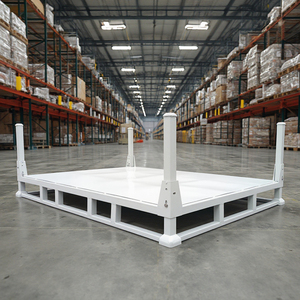
CASE CARTER MX-10 Heavy Duty Foldable Powder Coated Q235 Steel Stackable 4 High Storage Pallets For Fabric Rolls
Inquire System Specs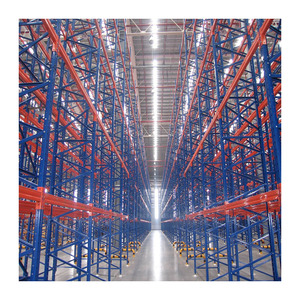
Mracking Heavy Duty Industrial Palletized Racking with a Capacity of 1000-4000kg Industrial Storage Racking
Inquire System Specs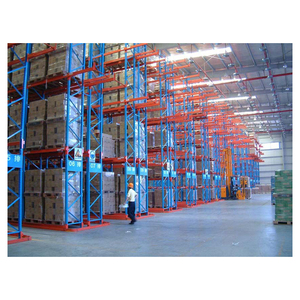
Narrow Aisle Racks Factory Price Heavy Duty VNA Rack Very Narrow Aisle Racking High Density Warehouse Storage Rack
Inquire System Specs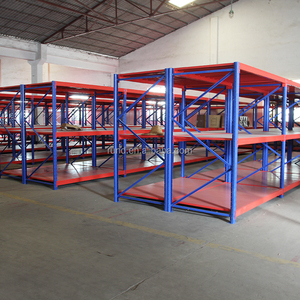
Heavy Duty 5-Layer Selective Pallet Rack 1500-4500kgs/level Warehouse Storage System Steel Iron Stacking Racks Shelves Carton
Inquire System Specs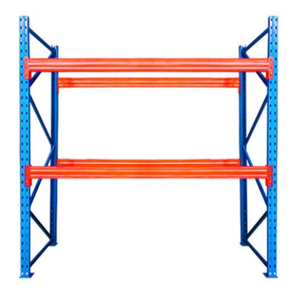
Pallet Racking System Warehouse Shelves Heavy Duty, Warehouse Picking Shelves Rack
Inquire System Specs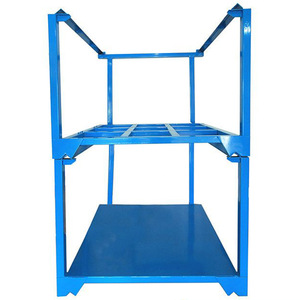
CASE CARTER OEM Warehouse Stack Foldable Portable Vertical Steel Pallet Frame Nestainer Storage Rack System
Inquire System Specs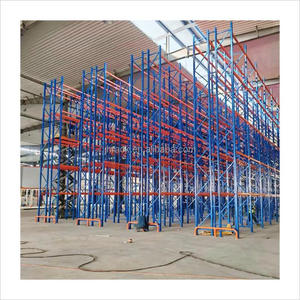
5 Layer Heavy Duty Racks And Shelves Very Narrow Aisle Pallet Vna Warehouse Racking For Storage Inventory Management
Inquire System Specs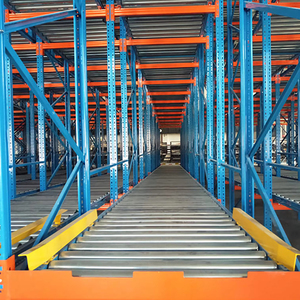
Mracking Warehouse Storage Steel Gravity Flow Rack Heavy Duty Live Pallet Racking System 1000kg/layer
Inquire System SpecsEngineering Foundations of Crane Supported Pallet Racking Systems
Crane supported pallet racking systems—frequently integrated into Automated Storage and Retrieval Systems (AS/RS) or high-bay overhead bridge crane environments—represent the pinnacle of industrial structural engineering. Unlike conventional static pallet racks that rely solely on floor loading and localized forklift insertion, crane-supported racking structures act as dynamic load-bearing frames. They absorb both static vertical dead/live loads and severe horizontal dynamic forces caused by high-velocity automated stacker cranes or overhead runway systems.
Information Gain Benchmark: Standard warehouse racks permit a beam deflection ratio of up to L/200 under maximal load. In contrast, PrimeBay crane-supported pallet racking systems are cold-rolled and finite-element analyzed to satisfy rigorous deflection tolerances down to Δ ≤ L/400 or L/600. This extreme rigidity prevents automated crane guide-rail misalignment and eliminates mast jamming during high-speed vertical travel.
When sourcing wholesale crane-supported pallet racking from Chinese manufacturers, enterprise procurement directors must evaluate the structural steel grade, upright column profiling, dynamic fatigue limits, and connection tolerances. PrimeBay engineers utilize premium-grade Q235B and Q355B structural steel, cold-formed into multi-faceted omega profiles with continuous drop-lock or bolted beam connectors. This structural configuration ensures that top-mounted crane rails or side-guided stacker crane masts remain structurally decoupled from transient thermal expansion and localized impact forces.
Q355B High-Yield Structural Steel
Engineered with high tensile strength steel profiles, providing a minimum yield strength of 355 MPa to withstand dynamic horizontal braking forces generated by overhead automated stacker cranes.
FEM 10.2.02 Dynamic Load Modeling
Designed under strict European FEM and EN 15512 codes. Advanced Finite Element Method (FEM) software verifies load distributions under full acceleration, seismic vibration, and multi-crane load combinations.
Precision Stacker Crane Interfacing
Integrated upper and lower guide rail mounts machined within ±1.0mm tolerance across 30-meter high-bay structures, eliminating crane mast vibration and position sensor reading errors.
Engineering Specifications Matrix: Standard vs. Crane-Supported Systems
Comprehensive structural comparison detailing why crane-interfaced racking requires elevated material specifications.
| Structural Parameter | Standard Selective Pallet Rack | VNA High-Bay Racking | PrimeBay Crane Supported Racking |
|---|---|---|---|
| Primary Steel Grade | Q235B Cold Rolled Steel | Q235B / Q355B High-Tensile | Q355B Heavy Structural Steel |
| Max Deflection Limit | L / 200 | L / 300 to L / 400 | L / 400 to L / 600 (Ultra-Rigid) |
| Max Height Capability | up to 12 meters | up to 18 meters | up to 40+ meters (Clad Rack Integration) |
| Crane Runway Interfacing | Not Applicable | Floor Rail Only (Turret Truck) | Top Overhead Bridge / Stacker Crane Guide Rails |
| Structural Certification | ISO 9001, CE | CE, ISO 9001, TUV | CE, ISO 9001, ISO 14001, TUV, FEM 10.2.02 |
| Seismic Zone Rating | Standard Base Anchor | Enhanced Footplate Bracing | Custom Seismic Damper & Base Isolation Anchoring |
Future Procurement & Architectural Trends in Industrial Racking
As global logistics centers transition toward complete automation and land scarcity inflates warehouse real estate costs, the procurement paradigm for warehouse equipment is undergoing a structural shift. Buying managers and industrial engineering directors are no longer purchasing isolated shelf components; they are specifying integrated, automated structural ecosystems.
1. The Rise of Rack-Supported Buildings (Clad-Rack Architecture)
The standard approach of building a concrete warehouse envelope and subsequently installing internal racking is rapidly being replaced by Rack-Supported Buildings (Clad Racks). In these futuristic high-bay facilities, the heavy-duty crane-supported pallet racking forms the structural skeleton of the building itself. Wall cladding and roof trusses are anchored directly onto the racking uprights. This architectural approach eliminates the need for structural steel building columns, saving up to 25% in total civil construction capital expenditure while maximizing internal volumetric storage density by up to 100%.
2. Smart Sensor IoT Integration & Predictive Maintenance
Modern crane-supported racking systems are increasingly integrated with fiber-optic strain gauges, tilt sensors, and digital twin monitoring systems. These IoT sensors continuously broadcast operational health parameters to the warehouse execution system (WES). If an accidental crane overload or forklift impact alters column plumbness beyond 0.1 degrees, maintenance alerts are instantly triggered prior to structural fatigue failure.
3. Ultra-Low Temperature Cold Chain Optimization
With global demand surging for pharmaceutical biological storage and deep-frozen food processing, high-bay automated racking operated in cold stores (-25°C to -40°C) requires specialized low-temperature high-impact steel alloys (such as normalized Q355D/E steel grades). These alloys prevent cold-shortness brittle fracture. Combined with automated stacker cranes, cold store operators minimize human thermal exposure while maintaining absolute inventory control.
PrimeBay Corporate Superiority & Global Supply Chain Advantage
Why Fortune 500 logistics firms, international EPC contractors, and rack distributors partner with PrimeBay Heavy Duty Racking Co., Ltd.
40,000 m² Advanced Manufacturing Base
Operating from Nanjing, Jiangsu, our state-of-the-art facility features 18 automated continuous cold-roll forming lines, robotic welding cells, and fully automated electrostatic powder coating lines capable of processing over 50,000 tons of structural steel annually.
Global Quality & Structural Compliance
Fully accredited to CE, ISO 9001 (Quality Management), ISO 14001 (Environmental Management), and TUV Rheinland structural safety certifications. Every export batch undergoes non-destructive weld testing and powder adhesion verification.
Full Custom OEM/ODM Engineering Support
Our in-house R&D department of 30+ structural engineers provides CAD layout designs, 3D structural simulation models, seismic load calculations, and tailored upright/beam profiles customized to your material handling equipment fleet.
Since 2006, PrimeBay Heavy Duty Racking Co., Ltd. has established a formidable international reputation, delivering turnkey industrial storage projects to over 85 nations across Europe, the Americas, the Middle East, and Southeast Asia. By controlling the entire manufacturing process internally—from raw steel coil slitting to precision punch punching and final surface treatment—we deliver factory-direct wholesale pricing without sacrificing micro-level structural integrity.
Frequently Asked Questions (FAQ) for Global Buyers
Technical clarity on procurement, installation, structural standards, and custom manufacturing.
How does a crane-supported pallet racking system differ structurally from standard pallet racking?
Which international design codes and structural certifications do PrimeBay racking systems meet?
Can PrimeBay engineer racking systems based on our custom warehouse CAD floor plans?
What surface finish options are available for harsh industrial or cold-storage environments?
What is the standard warranty period and expected operational service life?
How are export racking shipments packaged to prevent transit damage during ocean freight?
Request an Engineered Layout & Wholesale Quotation Today
Connect directly with PrimeBay senior structural engineers to optimize your warehouse volumetric capacity, integrate automated crane systems, and secure factory-direct wholesale pricing.
Contact Us