High-Performance Pallet Racking & Material Handling Equipment
Engineered to international quality standards, delivering optimal volumetric density and long-term structural reliability.
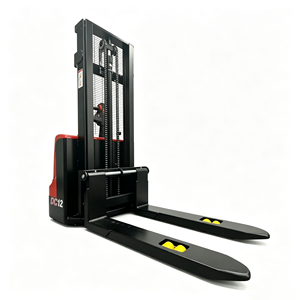
Narrow Aisle Full Electric Stacker 1200kg 3.5m Lifting Flexible Turning Pallet Stacker Workshop Lifting Equipment
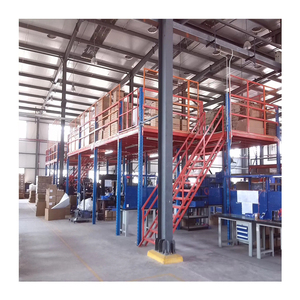
HUAWU Hw-mf54 Heavy Duty Steel Industrial Racks Pallet Racking Systems 2 Layer Mezzanine Floor Platforms Corrosion Protection
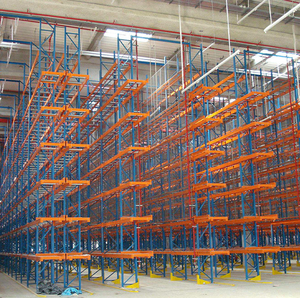
Very Narrow Aisle Racking System Solution VNA Rack High Density Storage
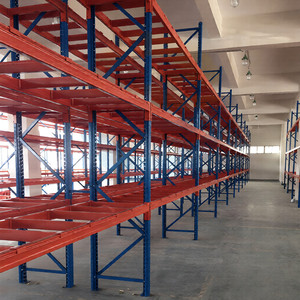
Heavy Duty Steel Pallet Storage Racks Complete Warehouse Pallet Racking Systems Solution Factory Wholesale
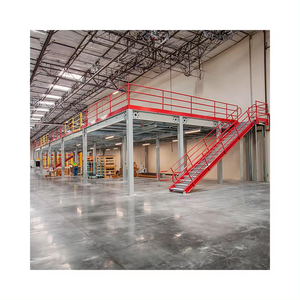
HUAWU 1000kg/sqm Industrial Mezzanine Floor Rack System Multi-layer Steel Warehouse Storage Platform Q235 Steel Structure
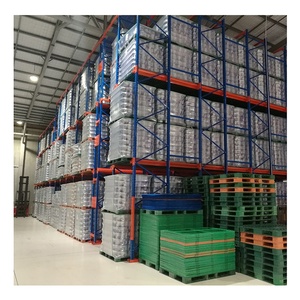
Warehouse Heavy Duty Storage FiFo Drive in Pallet Racking System
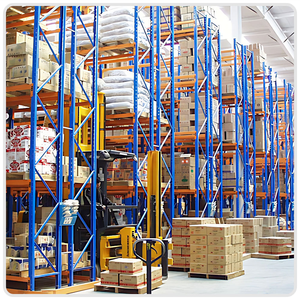
Customized Industrial Storage Racking System Selective Pallet Rack with Load Beams And Safety Clips For Warehouse Safety
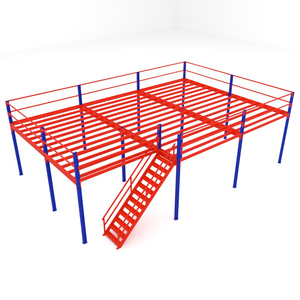
Factory Price Customized Steel Heavy Duty Warehouse Multi-level Storage Office Platform Mezzanine Floor Rack System
Why PrimeBay Leads China's Racking & Decking Export Market
Combining structural metallurgy, automated roll-forming precision, and strict compliance with European (FEM) and American (RMI/ANSI) design codes.
Certified Quality Engineering
Our manufacturing workflow is certified under ISO 9001:2015, ISO 14001:2015, CE, and TUV Rheinland. Components undergo tensile strength testing, seam weld checking, and coating thickness verification.
High-Grade Cold-Rolled Steel
We source premium Q235B and Q355B structural steel directly from top-tier mills (Baosteel/Shougang). Structural integrity is guaranteed against local buckling under peak loading conditions.
Full Custom OEM/ODM Capabilities
Tailored beam section profiles, column pitch designs, upright gauges (1.5mm–2.5mm), wire mesh grid sizes, and electrostatic powder coating finishes (RAL spectrum) built to match your brand or warehouse layout.
Engineering Integration: Heavy-Duty Pallet Racking with Wire Decking
A comprehensive analysis of structural dynamics, ANSI MH26.2 wire decking mechanics, and fire safety integration for high-density warehouse storage.
1. Structural Mechanics of Heavy-Duty Selective Pallet Racking
Selective pallet racking forms the backbone of global supply chain infrastructure, offering 100% direct selectivity to every single pallet position. As a leading manufacturer based in Nanjing, China, PrimeBay utilizes advanced cold-formed structural steel profiles (Q235B and Q355B high-yield strength steel) to manufacture upright frames and step beams optimized for maximum moment-resisting connection rigidity.
The structural stability of modern selective pallet racking depends on three fundamental mechanical parameters:
- Column Section Geometry & Upright Profiles: Cold-rolled upright posts are manufactured with multi-ribbed profiles featuring 11 to 13 bending points. This geometry exponentially increases the moment of inertia ($I_x$, $I_y$) and flexural-torsional resistance against column buckling under heavy vertical loads. Upright widths range from 80mm to 120mm with thickness options between 1.5mm and 2.5mm, engineered to accommodate bay capacities exceeding 25,000 kg.
- Beam-to-Column Connection Mechanics: Heavy-duty step beams are fabricated using continuous high-frequency welded box sections or twin-C nested profiles. End connectors feature 3 to 5 heavy-duty welded hooks that wedge tightly into teardrop or omega upright slots. The self-locking taper angle reduces connection rotation, maintaining rigid frame stability without horizontal sway. Safety locking pins prevent accidental beam dislodgement caused by upward forklift strikes.
- Footplate Anchor Load Transfer: Heavy-gauge steel baseplates distribute column axial forces directly into the concrete slab. Chemical or mechanical expansion anchor bolts transfer shear and uplift forces caused by seismic accelerations or vehicle impacts, ensuring compliance with global seismic design codes (such as AS4084, RMI MH16.1, and EN 15512).
Engineering Rule of Thumb: Total load calculations must factor in structural dead loads, live inventory loads, impact factors (typically 125% of static load for forklift placement), and maximum allowable beam deflection capped at $L/240$ (where $L$ is the clear beam length between columns) in accordance with ANSI/RMI specifications.
2. The Role of Wire Mesh Decking: ANSI MH26.2 Standard & Safety Compliance
Wire mesh decking is an essential safety component integrated into heavy-duty pallet racking systems. Composed of cold-drawn steel wire mesh supported by heavy-gauge structural steel support channels, wire decking provides an expansive, robust platform that prevents misplaced pallets, broken wood fragments, or loose cartons from falling through rack levels.
PrimeBay's wire decking solutions adhere strictly to the ANSI MH26.2 standard ("Design, Testing, and Utilization of Industrial Steel Rack Wire Decking"). Understanding the channel configuration is critical when selecting wire decking for specific beam profiles:
| Wire Deck Channel Type | Compatible Beam Profile | Structural Mechanism | Typical Load Rating (UDL) |
|---|---|---|---|
| Standard Step Channel (Flanged) | Standard Step Beams (1.5" or 1.625" step) | Channel ends rest flush inside the step, while universal flanged waterfall edges wrap over the beam face. | 800 kg – 1,500 kg / deck |
| Universal Flanged Deck (Flat/Box Beam) | Box Beams, Structural I-Beams, Channel Beams | Flat support channels feature wide horizontal flanges that sit flat on top of box beams without step recesses. | 1,000 kg – 2,000 kg / deck |
| Inverted U-Channel Deck | Dust-Sensitive & Food Grade Step Beams | Channels are welded upside down (U-opening facing down), preventing debris, dirt, and food particles from accumulating inside channels. | 1,000 kg – 1,800 kg / deck |
| Drop-In Inside Fit Deck | Flush Architectural & Robot Picking Racks | Sits completely inside the step beam without waterfall overhangs, creating a flat top surface for automated conveyor integration. | 600 kg – 1,200 kg / deck |
Fire Safety and Sprinkler Permeability: One of the strongest drivers for wire decking adoption over solid wood or corrugated steel decks is building fire safety regulation. Open wire mesh (typically 2" x 4" or 50mm x 100mm grid patterns) provides over **70% open area permeability**. In the event of an automated fire alarm, overhead ESFR (Early Suppression, Fast Response) sprinkler water passes uninhibited through all lower storage levels. This drastically improves early fire suppression capability, protects warehouse infrastructure, and significantly reduces insurance premiums for logistics facility operators.
3. Future Trends in Pallet Racking & Wire Decking Sourcing
The global material handling and warehouse storage market is undergoing rapid technological transition. B2B buyers, supply chain directors, and logistics contractors must align their long-term procurement strategies with key macro trends shaping industrial storage through 2030:
- Shift Toward Automated Storage & Hybrid Shuttle Compatibility: Modern pallet racking is increasingly engineered for automation readiness. Traditional selective racks are evolving into high-density Radio Shuttle Racking and 4-Way Pallet Shuttle Systems. Wire decking designs are adapting to accommodate optical sensors, automated guided vehicles (AGVs), and autonomous mobile robots (AMRs) operating underneath rack bays.
- High-Tensile Thin-Gauge Steel Engineering: Breakthroughs in cold-rolling metallurgy allow manufacturers to produce ultra-high-strength steel grades (e.g., Q355B and high-yield micro-alloyed steels). This enables thinner steel profiles (reducing shipping weight and raw material carbon footprint) while maintaining identical or superior structural load ratings.
- Advanced Anti-Corrosion Finishes for Cold Chain Logistics: With the explosive growth of frozen food distribution and pharmaceutical cold chains, hot-dip galvanizing (HDG) and specialized zinc-nickel electroplating for wire decking are replacing standard paint finishes. Galvanized wire decks withstand constant sub-zero temperatures (-30°C) and condensation without flaking or rusting.
- Digital Twin Layout Planning & Structural BIM Integration: Enterprise buyers no longer accept basic 2D CAD drawings. Future procurement mandates full 3D Building Information Modeling (BIM) files (Revit/IFC formats) and finite element analysis (FEA) simulations to verify seismic resistance and space utilization prior to factory manufacturing.
4. Material Selection Matrix: Wire Decking vs. Traditional Storage Platforms
When selecting intermediate support surfaces for pallet racking, facility planners must evaluate total operational lifecycle costs (TCO) rather than initial purchase price alone:
| Evaluation Parameter | Wire Mesh Decking | Plywood / Timber Deck | Solid Steel Decking | Steel Bar Grating |
|---|---|---|---|---|
| NFPA / ESFR Fire Safety Compliance | Excellent (>70% Open) | Poor (Combustible/Blockage) | Poor (100% Water Block) | Excellent (High Openness) |
| Dust & Debris Accumulation | Minimal (Self-Cleaning) | High Accumulation | High Accumulation | Minimal |
| Installation Efficiency | Instant Drop-In (No Tools) | Requires Fasteners / Screws | Drop-In / Tek Screws | Heavy / Requires Clamps |
| Illumination & Visibility | High Light Passage | Blocks Light completely | Blocks Light completely | High Light Passage |
| Cost per Unit Capacity Ratio | Optimal / Low Cost | Moderate Initial Cost | High Material Cost | Very High Cost |
Frequently Asked Questions (FAQ) for Global Importers & Contractors
Technical guidance and commercial parameters for procurement managers sourcing pallet racking and wire decking from China.
Why is wire mesh decking strongly recommended over wood or solid steel decking in pallet racking systems?
How do ANSI MH26.2 specifications determine the load capacity of wire mesh decking?
What engineering details are required when requesting a custom racking and decking quote?
1. Warehouse CAD drawing or building dimensions (length, width, clear height beneath roof trusses/sprinklers).
2. Pallet dimensions including load overhang: Width (mm) x Depth (mm) x Height (mm).
3. Maximum unit load weight per pallet (including pallet weight).
4. Required total pallet storage positions or target throughput density.
5. Forklift fleet specifications (maximum lift height, turning radius, and aisle width requirement).
6. Local ambient conditions (ambient warehouse vs. cold storage / outdoor exposure).