20+
Years Racking Engineering
85+
Global Export Markets
40,000m²
Advanced Factory Base
100+
Patented Technologies
Featured Deep Lane & Storage Racking Equipment
Engineered Deep Lane & Heavy-Duty Racking Systems
Explore our premium warehouse storage product matrix optimized for maximum space utilization, high load-bearing safety, and automated throughput.
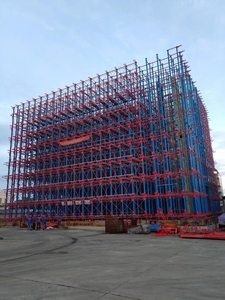
Pallet Shuttle Rack Deep Lane Storage & Retrieval Capacity Optimization System
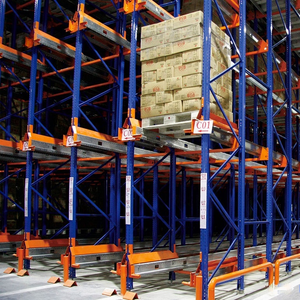
Radio Shuttle Pallet Racking Automated Heavy Duty 40m Deep Lane System
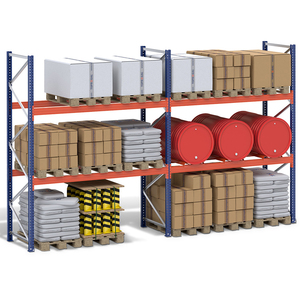
Industrial Anti-Corrosion Heavy Duty Warehouse Steel Pallet Racking System
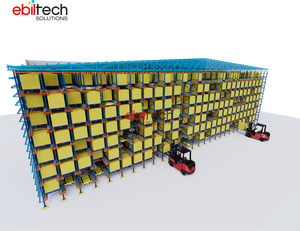
CE Certified Two-Way Shuttle Clad Racking Integrated Deep Lane System
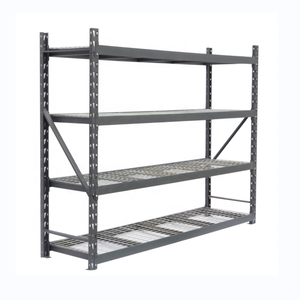
Industrial Heavy Duty Steel Pallet Racking Unit Load 800kg-3000kg
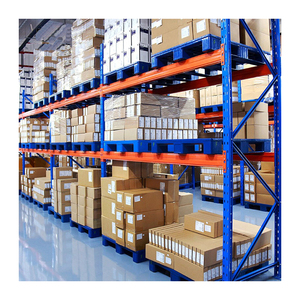
5-Ton Heavy Duty Steel Q235/Q355 High-Bay Selective Pallet Racking System
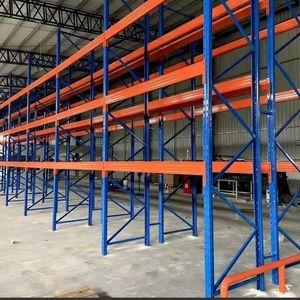
Steel Drive-In Pallet Rack Heavy Duty Anti-Rust FIFO/LIFO High Density System
Deep Lane Pallet Racking Technical Architecture & Engineering White Paper
In modern industrial logistics, warehouse floor space represents one of the highest recurring operational expenditures. Deep lane pallet racking systems—encompassing semi-automated radio shuttle racking, drive-in systems, push-back mechanisms, and automated 4-way shuttle configurations—have emerged as the definitive structural solution for maximizing cubic storage density. As China's premier heavy-duty warehouse racking manufacturer and exporter, our engineering methodology integrates rigorous finite element analysis (FEA), advanced cold roll-forming metallurgy, and strict compliance with international structural standards including FEM 10.2.02, EN 15512, ANSI MH16.1, and RMI guidelines.
Structural Steel Metallurgy & Load-Bearing Physics
The performance of deep lane storage structures under extreme multi-ton static and dynamic loads depends on material selection and profile engineering. Standard selective racking often succumbs to frame buckling under deep-lane forces. Our manufacturing standard exclusively employs high-yield, cold-rolled structural steel profiles (Q235B and Q355B micro-alloyed steel). By optimizing the upright column profile with up to 13-fold cold-bending deformation points, structural stiffness is enhanced by 28% compared to conventional omega-profile posts.
Technical Note on Beam Deflection Ratios
Under maximum design load conditions ($L$), our heavy-duty beam profiles maintain a maximum deflection ratio strictly under $L/200$ (and $L/300$ for automated shuttle system rails), preventing frame fatigue, vehicle jam incidents, and micro-cracking over extended operational cycles.
Comparative Analysis of Deep Lane Storage Technologies
Evaluating storage architecture requires analyzing SKU diversity, throughput velocity, operational safety, and initial capital expenditure (CAPEX). Below is an engineering comparison matrix for enterprise logistics planners:
| Racking Architecture | Volumetric Density | SKU Selectivity | Handling Efficiency | Operational Safety Index | Ideal Logistics Application |
|---|---|---|---|---|---|
| Radio Shuttle Deep Lane | Ultra-High (85%+) | Lane-Based (Medium) | Very High (Automated) | High (Zero Forklift Entry) | Cold Storage, Food & Beverage, FMCG |
| 4-Way Intelligent Shuttle | Maximum (90%+) | High (Matrix Access) | Automated Smart Flow | Maximum (Full Robotics) | Pharmaceuticals, High-Bay ASRS, E-Commerce |
| Drive-In / Drive-Through | High (65-75%) | Low (LIFO / FIFO) | Moderate (Manual) | Moderate (Impact Risk) | Bulk Raw Materials, Seasonal Items |
| Push-Back Racking | High (70-75%) | Medium (2-6 Deep) | High (Gravity Cart) | High (Forklift Stays in Aisle) | Buffer Storage, Staging Depots |
| Selective Heavy-Duty | Standard (40-50%) | 100% Direct Access | Standard | High | High-SKU 3PL Warehouses |
Surface Protection: Epoxy Powder Coating & Hot-Dip Galvanization
Corrosion protection dictates the lifespan of structural racking, particularly in humidity-controlled or sub-zero cold storage facilities down to -30°C. PrimeBay utilizes a automated 9-stage pre-treatment cleaning system combined with thermosetting epoxy polyester powder coating. The resulting surface coating thickness (certified 80–110 microns) exceeds ISO 9227 salt spray resistance testing for over 500 hours without blistering. For chemical environments or coastal logistics hubs, hot-dip galvanizing per EN ISO 1461 delivers zinc coating protection over 65 microns thick for maintenance-free service exceeding 30 years.
Development Trends in Deep Lane Storage Technology
The global warehousing industry is undergoing a paradigm shift from static storage units to dynamic, software-driven automated eco-systems. Deep lane pallet racking is no longer a simple structural steel frame—it is now the physical skeleton for intelligent warehouse robotics.
1. 2-Way to 4-Way Shuttle Evolution
Traditional shuttle cars operate solely in linear channels (X-axis). The industry standard is rapidly moving to 4-way shuttles capable of traversing both storage channels and main transport aisles (X and Y axes), eliminating lift transfers and elevating throughput by 35%.
2. LiFePO4 Fast-Charging & Thermal Management
Modern radio shuttle cars incorporate Lithium Iron Phosphate (LiFePO4) power cells with supercapacitor energy recovery. Capable of full recharge within 30 minutes, these cars function continuously for 8 to 10 hours inside -30°C cold chain rooms without voltage drop-off.
3. IoT & WMS/WCS Seamless Integration
Next-gen deep lane systems utilize Wi-Fi 6 or Private 5G industrial networks. Sensors embedded within shuttle rails relay real-time pallet location, weight verification, battery health, and collision alerts directly to enterprise WMS (Warehouse Management Systems).
Automated Rack-Clad Building Structures (Self-Supporting Storage)
A notable architectural development is the rise of Rack-Clad High-Bay Buildings. Rather than constructing a building shell and placing racking inside, the deep-lane heavy-duty racking frame itself acts as the load-bearing structure for the facility walls and roof. This integrated approach reduces structural steel usage by up to 15% and slashes construction timelines for cold storage facilities over 30 meters high.
Global Procurement Trends: Deep Lane Pallet Racking (2025–2030)
International procurement managers and logistics infrastructure investors face shifting economic dynamics. Sourcing deep-lane racking from top-tier Chinese manufacturers now requires evaluating holistic Total Cost of Ownership (TCO) beyond initial purchase prices.
1. Shift Toward Direct Factory OEM/ODM Standardization
Global distributors and warehouse contractors are bypassing middle-man trading companies to establish direct engineering partnerships with original China manufacturers. Direct factory engagement enables customized upright punch profiles (compatible with teardrop, Dexion, or Speedlock systems), mill certificate verification, and custom powder-coat branding matching corporate identity specs.
2. Modular Scalability for Automation Readiness
Forward-thinking buyers are installing "Automation-Ready" deep-lane structural designs. Warehouses initially operating drive-in or manual push-back racking are purchasing frames equipped with prepunched mounting slots and precision rail brackets. This structural foresight permits retrofitting automated radio shuttles or ASRS stacker cranes without replacing structural steel components.
3. Carbon Footprint Compliance & Green Steel Verification
Environmental regulations in Europe and North America demand transparent environmental product declarations (EPD). Modern racking plants are adopting closed-loop powder recovery systems (up to 98% powder reuse), energy-efficient continuous roll-forming mills, and verified low-carbon steel billets to support client Scope 3 carbon reduction targets.
Manufacturer Advantage & Infrastructure Strength
Headquartered in Nanjing, Jiangsu—China's primary hub for structural racking innovation—our enterprise operates a state-of-the-art 40,000 m² manufacturing plant. With over two decades of engineering heritage since 2006, we deliver complete warehouse systems to over 85 countries.
Our facility houses 24 automated continuous cold roll-forming production lines, robotic laser welding stations, and high-speed CNC punching centers capable of outputting over 50,000 tons of structural steel components per year with micron-level tolerances.
Certified Quality Assurance
- Certified Compliance: CE, ISO 9001, ISO 14001, and TUV Rheinland certified manufacturing protocols.
- Complete CAD & FEA Support: Custom structural engineering layouts and seismic calculations delivered within 24 hours.
- 10-Year Warranty: Full structural backing against material defect or weld failure under rating conditions.
- Global Project Track Record: 2,000+ completed installations worldwide across logistics, cold chain, and manufacturing.
Deep Lane Pallet Racking Procurement FAQ
Find authoritative technical answers to common questions asked by B2B buyers, logistics project directors, and structural engineers during the racking procurement process.
Q1: What floor slab requirements are necessary for deep lane radio shuttle or drive-in racking?
Deep lane racking concentrates massive static point loads on upright baseplates. Typically, concrete floor slabs should have a minimum thickness of 150mm to 250mm with a compressive strength of C25/C30 grade (30 MPa). Deflection must not exceed 1:600, and floor flatness should meet DIN 18202 Group 4 or VDMA tight-tolerance guidelines to avoid shuttle vehicle derailment or mast tilting.
Q2: How do I choose between Radio Shuttle Racking, Drive-In Racking, and Push-Back Racking?
Drive-In racking offers the lowest initial cost per pallet position for high-volume, low-SKU operations, but requires forklifts to drive inside the frame, increasing impact risks and cycle times. Push-Back racking provides faster LIFO throughput for 2 to 6 pallets deep without forklift entry. Radio Shuttle racking delivers the highest density (up to 40+ pallets deep per lane), operates in both FIFO and LIFO modes, reduces forklift driver labor by up to 50%, and is the premier choice for cold storage environments.
Q3: Can your deep lane pallet racking systems be customized to fit existing warehouse building obstacles?
Yes. Our in-house structural engineering team custom-designs racking layouts around building column grids, roof trusses, sprinkler piping, roof slopes, and floor level variances. We provide complete 3D CAD modeling and bill of materials (BOM) prior to manufacturing approval.
Q4: What structural standards and quality certifications do your racking systems meet?
Our storage racking systems are engineered, calculated, and manufactured in accordance with European FEM 10.2.02 / EN 15512 standards, American RMI (Rack Manufacturers Institute) MH16.1 specifications, and Australian AS4084-2012 guidelines. Production processes are verified under ISO 9001, ISO 14001, CE, and TUV Rheinland audits.
Q5: What is the typical lead time from design approval to container loading at your factory?
Standard manufacturing lead time ranges from 15 to 25 calendar days depending on project size (typically 2 to 10 Forty-Foot High Cube containers). Custom powder coating colors, special punch profiles, or hot-dip galvanized finishes may add 5 to 7 days.
Q6: Do you provide OEM/ODM production for global racking distributors and project integrators?
Yes. As a leading OEM/ODM exporter, we produce customized upright profiles, beam connector types, heavy-duty floor baseplates, customized safety accessories, and private-label packaging matching distributor specifications worldwide.
Optimize Your Warehouse Floor Space Today
Contact our senior structural racking engineers for a complimentary CAD warehouse layout, load-bearing analysis, and factory-direct quotation within 24 hours.