Featured Reach Truck Storage Racking Systems
Explore engineered selective, double-deep, VNA, and heavy-duty steel rack solutions precision-matched to reach truck mast clearance, aisle width tolerances, and maximum weight capacities.
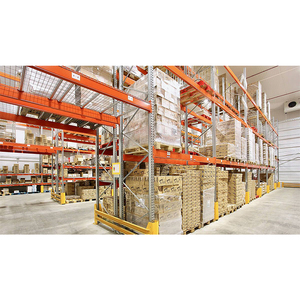
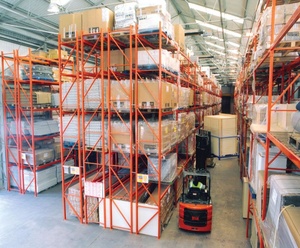
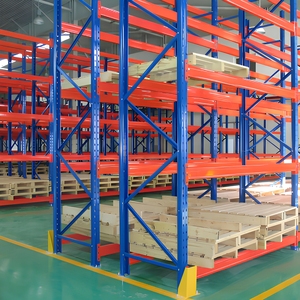
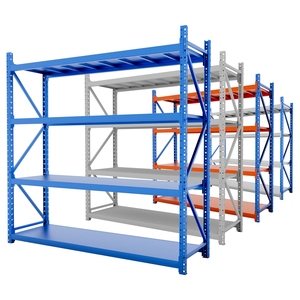
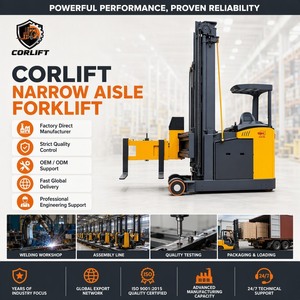
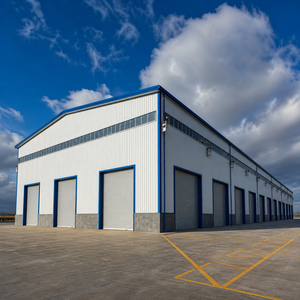
1. Engineering Reach Truck Compatible Racking: Operational Dynamics & Structural Mechanics
In modern high-density fulfillment centers and cold-chain logistics hubs, the operational synergy between electrical reach trucks (such as pantograph reach trucks, moving-mast reach trucks, and turret VNA trucks) and heavy-duty steel pallet racking dictates overall warehouse throughput, operator safety, and floor cube utilization. As China's leading reach truck storage racking supplier and exporter, PrimeBay approaches storage design not as static steel erection, but as an integrated dynamic material handling ecosystem.
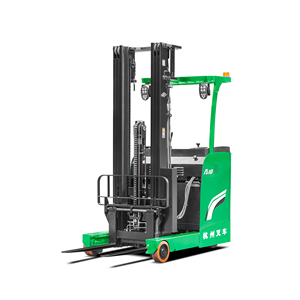
Electric reach trucks feature outrigger legs and a specialized mast mechanism that moves forward within the truck chassis to retrieve or deposit pallets without moving the entire vehicle. To maximize this capability, racking systems must be engineered with precise beam level offsets, clear column spacing, and strict structural deflection controls (complying with FEM 10.2.02, EN 15512, and RMI standards).
High Yield Q235B / Q355B Steel
Our upright columns and box beams are roll-formed from premium cold-rolled structural steel, delivering yield strengths up to 355 MPa for high-bay reach truck storage up to 13 meters high.
Optimized Aisle Math (AST)
Engineered to minimize Right Angle Stacking Aisle (AST) dimensions from standard 3.8m down to 2.7m–3.0m for standard reach trucks, and 1.6m–1.8m for VNA articulated reach trucks.
Column Damage Mitigation
Integrated heavy-gauge wrap-around column protectors, aisle end guards, and guide rails specifically rated to absorb lateral impact from outrigger wheels and heavy chassis bases.
Understanding Aisle Calculation for Reach Truck Racking
Calculating the required operating aisle width for reach trucks involves evaluating the truck’s overall length ($L$), distance from load center to front axle ($a$), turning radius ($Wa$), and safety margin ($c$). The engineering formula for minimum clear aisle width ($AST$) is defined as:
Where $b$ is the length of the load, $W$ is the pallet width, and $c$ represents mandatory operational clearance (typically 200 mm to 300 mm according to FEM safety codes). PrimeBay’s engineering team provides customized CAD layouts ensuring every racking system optimized for reach trucks balances spatial efficiency with fail-safe operational clearances.
2. Technical Comparative Analysis of Storage Racking Configurations
Selecting the optimal racking architectural configuration depends on SKU diversity, inventory turnover velocity (FIFO vs. LIFO), floor slab load-bearing rating, and reach truck mast lift heights. Below is a comprehensive engineering comparison table designed for warehouse procurement officers and structural engineers.
| Racking Architecture | Storage Density | Pallet Selectivity | Reach Truck Requirement | Optimal Operational Use Case |
|---|---|---|---|---|
| Selective Pallet Racking | Standard (40-50%) | 100% Direct Access | Standard Reach Truck (Mast 3m - 11m) | High SKU counts, fast turnover, FMCG distribution, retail logistics hubs. |
| Double Deep Pallet Racking | High (60-65%) | 50% Immediate Access | Pantograph / Telescopic Fork Reach Truck | Medium SKU counts, batch processing, cold storage, high volume per SKU. |
| Very Narrow Aisle (VNA) Racking | Ultra-High (75-85%) | 100% Direct Access | VNA Turret Truck / Articulated Reach Truck | High ceiling heights (up to 15m), expensive real estate, high-density distribution. |
| Drive-In / Drive-Through Racks | Maximum (75-80%) | LIFO / FIFO Lane-Wise | Narrow-Chassis Counterbalance or Reach Truck | Low SKU variety, seasonal bulk goods, raw material storage, cold rooms. |
| Radio Shuttle High-Density Racks | Maximum (85-90%) | Automatic Lane Control | Standard Reach Truck (Transporter Loading) | Large batch manufacturing, automated distribution, extreme cold storage. |
Double Deep Racking Mechanics & Capacity Derating Curves
Double Deep racking requires storing pallets two deep in a back-to-back structure. While it eliminates 50% of operating aisles compared to standard selective racking, it introduces mechanical eccentric loads on extended reach truck forks. When operating pantograph reach trucks at high lift heights (above 8 meters), fork extension causes a reduction in nominal lifting capacity due to load center displacement.
To mitigate this capacity derating, PrimeBay engineers custom upright profiles featuring wider front-to-back depths (up to 1100mm per frame) and increased beam wall thickness (ranging from 1.5mm to 2.5mm heavy-gauge structural steel). Furthermore, guide rails mounted on lower levels facilitate rapid fork alignment, protecting upright frames from accidental impact.
3. Factory-Direct Excellence: Why Sourcing Racking from China’s Top Exporter Matters
When procuring heavy-duty warehouse racking internationally, supply chain directors must evaluate the manufacturer’s structural engineering rigor, quality control procedures, steel raw material origin, and compliance certifications. PrimeBay Heavy Duty Racking Co., Ltd. stands out as a world-class OEM & ODM manufacturer committed to zero-defect production.
Automated Cold Roll-Forming Lines
Our Nanjing manufacturing base operates 24 automated high-precision roll-forming lines capable of continuous punching, forming, and bending. This ensures dimensional tolerance repeatability within ±0.5mm across all upright columns and step beams, enabling seamless on-site installation.
Robotic Welding & Electrostatic Powder Coating
Beam connectors are welded using Swiss-imported robotic welding stations to deliver uniform penetration welds without internal stress points. Components undergo a 7-stage chemical pre-treatment and electrostatic epoxy powder coating cured at 200°C for exceptional corrosion and scratch resistance.
Rigorous Destructive & Non-Destructive QC Testing
Every batch of steel coil undergoes tensile strength testing and chemical composition analysis. Finished beams and frames are subject to load-to-collapse structural destructive testing, ultrasonic weld inspection, and salt-spray corrosion chamber testing according to ISO standards.
Global Compliance & 10-Year Warranty
Our products comply with European FEM 10.2.02 standards, American RMI guidelines, and Australian AS4084-2012 specifications. We back every project with an industry-leading 10-year structural warranty and provide complete engineering calculation packages.
4. Future Procurement Trends in Reach Truck Storage Systems (2025–2035)
As global supply chains accelerate toward automation, sustainability, and ultra-high vertical density, procurement strategies for storage racking are undergoing structural shifts. Buyers sourcing racking from China must align their projects with the following emerging industry trends:
-
1Integration with Autonomous Reach Trucks (AMRs & AGVs)
The global transition from human-driven electric reach trucks to Autonomous Mobile Robot (AMR) reach trucks requires micro-tolerance installation precision. Upright frames and floor anchors must maintain strict floor flatness (FF/FL numbers) and magnetic/laser reflectance compatibility. PrimeBay engineered systems integrate magnetic positioning floor plates and camera-guided reflective markers for AGV navigation.
-
2Cold-Chain Optimization & Anti-Corrosion Hot-Dip Galvanizing
With global cold-chain storage expanding for pharmaceuticals and frozen food, storage systems must operate reliably in temperatures as low as -30°C. Standard powder coating can become brittle; future procurement favors hot-dip galvanized (HDG) racking frames and stainless steel fasteners to eliminate rust formation caused by condensation cycles.
-
3IoT Sensor-Embedded Racking Structures for Health Monitoring
Next-generation reach truck storage racking incorporates smart strain-gauge sensors embedded in lower beam connectors and structural bracing. These IoT devices monitor dynamic weight distribution, structural tilt, seismic stress, and fork impact in real-time, alerting facility managers via cloud dashboards before structural failures occur.
-
4ESG & Carbon-Neutral Green Steel Production
Multinational buyers are demanding carbon-footprint documentation across imported racking products. PrimeBay leads the industrial racking sector in adopting recyclable steel materials, solar-powered factory production, and low-VOC powder coating processes to assist global clients in achieving Scope 3 ESG compliance.
Frequently Asked Questions (FAQ) for Global Buyers
Key technical considerations when specifying, ordering, and importing reach truck storage racking from China.
Which certifications do PrimeBay reach truck storage racking systems carry?
How do I determine whether Selective, Double Deep, or VNA Racking is right for my reach truck fleet?
- Selective Racking: Best for high SKU variation requiring 100% immediate pallet access using standard reach trucks.
- Double Deep Racking: Increases capacity by up to 30% over selective racking by storing pallets 2-deep. Requires pantograph or telescopic fork reach trucks.
- VNA Racking: Maximizes vertical space (up to 15m) and shrinks aisle width to 1.6m-1.8m. Requires specialized VNA articulated or turret reach trucks.
Can PrimeBay design custom racking layouts directly from my CAD drawings?
Do you offer OEM and ODM racking manufacturing for overseas distributors?
What is the standard warranty and structural lifespan of PrimeBay racking systems?
How are reach truck racking components packaged for ocean freight to prevent transit damage?
Ready to Optimize Your Warehouse Storage Space?
Consult with PrimeBay's Senior Storage Racking Engineers today. Receive customized CAD layout drawings, load calculations, and factory-direct pricing for your reach truck storage project.
Get Catalog