Engineered Multi Pallet Storage Systems
Factory-direct structural steel racking solutions custom-built for maximum cubic utilization and rigorous heavy-duty load capacities.
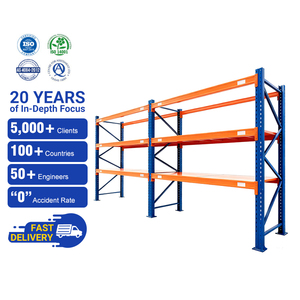
Customized Heavy Duty Industrial Storage Shelves System Metal Rack Stacking Units Warehouse Steel Industrial Pallet Racking
Get Catalog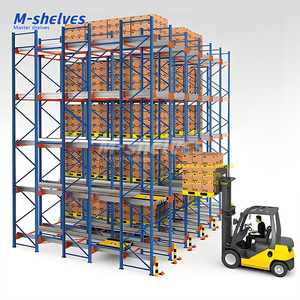
Innovative Auto Shuttle Racking System for Intelligent Cold Storage Steel Pallet Racks Automatic Shuttle Shelving
Get Catalog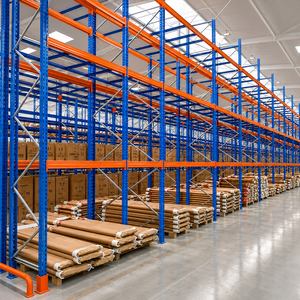
Warehouse Storage Rack System High Density Porta Pallet 1000kg Q235B Cold Rolled Steel Heavy Duty Pallet Rack Warehouse
Get Catalog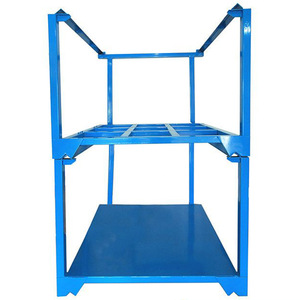
CASE CARTER OEM Warehouse Stack Foldable Portable Vertical Steel Pallet Frame Nestainer Storage Rack System
Get Catalog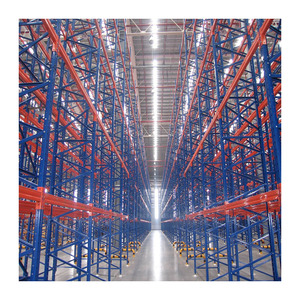
Mracking Heavy Duty Industrial Palletized Racking with a Capacity of 1000-4000kg Industrial Storage Racking
Get Catalog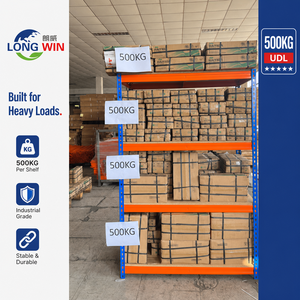
Extra Heavy Duty Boltless Steel Rack 5-Tier Adjustable 2000kg Rivet Lock Garage Warehouse Heavy Duty Warehouse Rack
Get Catalog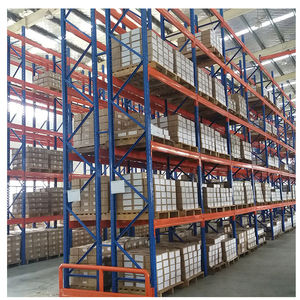
Heavy Duty Rack Storage Industrial Selective Assembly Pallet Use Rack Warehouse Storage Pallet Rack
Get Catalog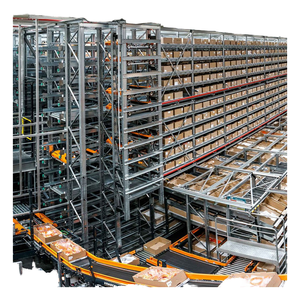
Automated Storage and Retrieval System Warehouse Bins Storage Solutions Pallet Rack ASRS Racking System
Get CatalogArchitectural Foundations of Multi-Pallet Position Racking Systems
Modern logistics real estate is characterized by escalating land acquisition costs, strictly enforced building heights, and aggressive throughput quotas. Industrial logistics managers and warehouse design specialists can no longer rely on single-deep standard selective racking layouts when attempting to optimize cubic floor area. Selecting a premier China best multi pallet position racking supplier requires understanding structural steel performance, high-density storage mechanics, and dynamic load-bearing profiles engineered for scalable logistics operations.
Multi-pallet position racking—spanning double-deep selective, push-back carts, radio shuttle channels, drive-in systems, and automated storage and retrieval systems (AS/RS)—refers to structural rack architectures configured to store two or more pallet loads deep per entry aisle. By drastically reducing internal access aisles, multi-pallet position frameworks transform horizontal transit corridors into active storage volume, increasing storage density by 40% to over 85% compared to conventional single-selective pallet frame installations.
Technical Insight: Structurally calculated according to EN 15512, FEM 10.2.02, and RMI (Rack Manufacturers Institute) standards, multi-pallet racking components engineered from high-tensile cold-rolled Q235B and Q355B structural steel deliver uncompromised frame rigidity, seismic deflection stability, and prolonged service lifespans under intense fork-truck cycle stresses.
High Cubic Density
Maximizes floor area footprint by consolidating aisle space into contiguous multi-depth pallet bays, enabling deep-lane storage up to 60 meters in automated shuttle configurations.
Engineering Precision
Precision roll-formed upright profiles featuring 50mm and 75mm pitch adjustments permit optimal vertical beam placement, preventing wasted vertical space above pallet loads.
Certified Integrity
Manufactured under strict ISO 9001 quality management, certified with CE, ISO 14001, and TUV quality benchmarks to ensure structural compliance across global jurisdictions.
Comparative Analysis of Multi-Pallet Position Storage Configurations
Selecting the precise multi-pallet position racking layout requires balancing SKU diversity, pallet turnover velocity, material handling equipment (MHE) accessibility, and capital budget constraints. Below is a comprehensive engineering comparison table analyzing primary multi-pallet racking modalities:
| Racking Architecture | Storage Depth | Floor Footprint Utilization | Selectivity Rate | Inventory Logic | Primary Application Field |
|---|---|---|---|---|---|
| Double-Deep Selective | 2 Pallets Deep | 60% – 65% | 50% Direct Access | LIFO (Last-In, First-Out) | General Logistics, Dry Goods, FMCG Bulk |
| Push-Back Cart Racks | 2 to 6 Pallets Deep | 70% – 75% | Lane-Level Selectivity | LIFO (Gravitational) | Medium-SKU / High-Volume Warehouses |
| Radio Shuttle Racking | 2 to 40+ Pallets Deep | 80% – 90% | Lane-Level Automated | FIFO or LIFO Selectable | Cold Storage, Food & Beverage, Raw Material |
| Drive-In / Drive-Through | 5 to 10 Pallets Deep | 75% – 85% | Low (Tunnel Entry) | LIFO (Drive-In) / FIFO (Drive-Thru) | Homogeneous Goods, Seasonal Storage |
| Automated AS/RS Multi-Deep | Unlimited (Crane/SRM) | 90% – 95% | Automated Full Access | Software Controlled (WMS/WCS) | Smart Factories, Automated Distribution Centers |
Deep-Dive Engineering Mechanics by Racking Category
1. Radio Shuttle & Automatic Multi-Pallet Racking Systems
Radio shuttle racking represents the modern benchmark in semi-automated high-density multi-pallet storage. Utilizing an independent battery-powered micro-shuttle vehicle operating inside precision-engineered continuous guide rails, the system transports pallets autonomously into deep storage channels. Forklift operators do not enter the storage channels; instead, trucks position pallets at the channel entrance, where the shuttle lifts and shuttles the load to the nearest available depth position.
Key technical innovations engineered by top-tier Chinese racking suppliers include intelligent lithium-iron-phosphate (LiFePO4) power cells, optical laser sensors for exact pallet gap positioning, and wireless remote or WMS-integrated control protocols. In cold storage facilities operating down to -30°C, automated shuttle racking significantly curtails refrigerated air loss by compacting thermal volume and eliminating wide forklift aisles.
2. Heavy-Duty Push-Back Cart Racking Systems
Push-back racking operates on a series of nested, inclined wheeled carts traveling along structural steel track assemblies. When the front pallet is loaded by a forklift, it physically pushes the existing pallet backward into the lane, exposing the nested cart beneath. Upon retrieval, gravity gently rolls the remaining pallets forward to the picking face.
Engineered for 2, 3, 4, 5, and 6-deep configurations, push-back racking provides superior selectivity compared to drive-in racks because each lane operates independently. High-quality Chinese suppliers fabricate push-back carts using heavy-gauge structural channel profiles, precision sealed bearings, and integrated safety anti-jump stops to ensure effortless operation under unit loads exceeding 1,500kg per cart.
3. Double-Deep Pallet Racking & Specialized Reach Truck Interface
Double-deep racking modifies standard selective frames by positioning two double-entry runs back-to-back. Accessed via specialized pantograph reach trucks or deep-reach attachments, this format eliminates 50% of the aisles required in standard 1-deep selective systems. It offers an ideal compromise between high storage density and moderate SKU selectivity, making it a favorite for fast-moving consumer goods (FMCG) distribution hubs.
4. Multi-Tier Steel Mezzanine & Rack-Supported Platforms
For operations combining pallet storage with dense hand-picking or light assembly, rack-supported multi-tier platforms leverage vertical building clear heights. By installing structural beam grids, cold-formed floor joists, and steel grating or high-density timber decking above lower pallet positions, enterprise facilities double or triple usable square footage without structural building expansions.
Factory Procurement Advice: When evaluating OEM/ODM rack manufacturers, ensure the factory utilizes automated multi-stage roll-forming mills, robotic continuous seam welding, and fully automated electrostatic powder coating lines that apply minimum 80-100μm thick thermosetting epoxy-polyester coatings for scratch resistance and humidity protection.
Future Procurement Trends in Multi-Pallet Position Racking (2025–2035)
The global material handling equipment (MHE) landscape is undergoing rapid technological transformation. Enterprise buyers, supply chain consultants, and industrial real estate developers must align their procurement strategies with several rising structural and technological trends:
1. Autonomous 4-Way Shuttle Integration
Transitioning from 2-way linear shuttles to 4-way omnidirectional shuttles and AMR (Autonomous Mobile Robot) fleets. Racking designs now incorporate 3D cross-rail intersections, integrated vertical lifts, and real-time fleet management alignment.
2. High-Strength Low-Alloy (HSLA) Steels
Adoption of advanced HSLA Q355B and Q460 steel grades allows thinner profile gauge profiles to achieve higher ultimate load-bearing metrics, decreasing structural deadweight while reducing global ocean freight shipping costs.
3. IoT Rack Telemetry & Seismic Monitoring
Smart racking uprights embedded with optical impact sensors, strain gauges, and inclination modules alert safety managers immediately if a forklift strike threatens frame structural integrity or exceeds deflection limits.
Manufacturing Superiority & Enterprise OEM/ODM Capabilities
As an industry-leading warehouse racking system manufacturer operating since 2006, PrimeBay Heavy Duty Racking Co., Ltd. exemplifies the engineering rigor, manufacturing scale, and quality standards demanded by overseas buyers. Situated in Nanjing, Jiangsu, our state-of-the-art 40,000 m² production facility houses automated roll-forming lines, automated laser cutting systems, robotic welding cells, and eco-friendly powder coating plants.
Engineered for global deployment across 85+ countries, our multi-pallet position racking systems are designed around strict load calculations, finite element analysis (FEA), and building codes. Whether your facility requires custom upright profile dimensions, heavy beam span capacities up to 4,000kg per level, customized OEM colors, or private-label branding, our engineering team converts CAD warehouse drawings into optimized, cost-effective structural systems.