High-Density Pallet Racking & Material Handling Catalog
Explore our premium factory-direct LIFO and engineered warehouse racking systems designed for maximum cubic space utilization and structural safety.
1. Architectural Dynamics & Structural Mechanics of LIFO Pallet Racking Systems
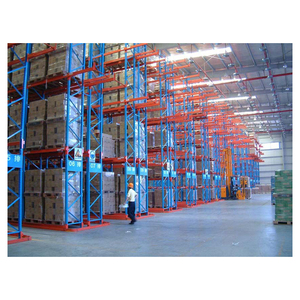
In modern industrial intra-logistics, spatial optimization is directly correlated with operational profitability. Last-In, First-Out (LIFO) pallet racking technology represents the pinnacle of high-density warehouse structural design. By utilizing single-aisle access points for both load placement and retrieval, LIFO configurations eliminate up to 60% of unnecessary forklift aisles required by traditional selective pallet systems. As leading Chinese structural steel engineers and premium racking suppliers, PrimeBay Heavy Duty Racking Co., Ltd. builds engineered LIFO frameworks engineered to maximize vertical footprint while strictly complying with FEM 10.2.02, RMI, and EN 15512 global structural codes.
The operational premise of LIFO systems relies on gravitational or mechanical conveyance along inclined storage lanes. Pallets inserted into a storage channel automatically push existing inventory deeper toward the rear structural uprights. Upon unit retrieval, remaining pallets automatically advance toward the picking face. This mechanism drastically reduces travel distance, accelerates turnaround times for homogeneous SKUs, and maximizes warehouse volumetric utilization to ratios exceeding 85%.
Engineering Insight: LIFO storage configurations are structurally ideal for non-perishable bulk commodities, high-volume seasonal inventory, cold storage operations, and standardized palletized goods where single-SKU batch processing takes precedence over individual unit selectivity.
2. Technical Matrix: Comparative Analysis of LIFO Racking Modalities
Choosing the ideal LIFO configuration requires evaluating structural load ratings, lane depth tolerances, material flow velocity, and forklift interaction dynamics. Below is a comparative breakdown engineered by PrimeBay's structural design team to guide procurement decisions for global logistics managers.
| Racking Technology | Storage Density | Lane Depth Capacity | Forklift Entry Requirement | Throughput Rate | Optimal Industry Application |
|---|---|---|---|---|---|
| Push Back Racking (Nested Carts) | High (70–80%) | 2 to 6 Pallets Deep | No (Stays in Main Aisle) | Very High (Fast LIFO) | Cold Storage, FMCG, Manufacturing |
| Drive-In Racking (Rail System) | Maximum (80–88%) | 5 to 10+ Pallets Deep | Yes (Enters Rack Structure) | Moderate (Slow Travel) | Bulk Raw Materials, Seasonal Stock |
| Radio Shuttle Racking (LIFO Mode) | Ultra-High (85–92%) | 20 to 50+ Pallets Deep | No (Automated Runner) | Maximum (Automated) | Automotive, Food & Beverage, 3PL |
| Double-Deep Selective Rack | Moderate (60–70%) | 2 Pallets Deep | No (Requires Deep Reach Truck) | High | General Warehousing, Electronics |
2.1 Push Back Racking Systems: Mechanics and Cart Engineering
PrimeBay Push Back Racks employ a series of nested, heavy-duty steel carts moving along inclined structural steel channels anchored to structural beams. Manufactured from high-tensile Q235B and Q355B cold-rolled steel, each cart operates on precision sealed bearings and low-friction steel wheels. When a forklift loads a pallet, it pushes the front cart back to expose the underlying cart. Upon unloading, gravity smoothly moves the subsequent pallets forward to the picking face at a controlled speed governed by integrated speed-limiting safety dampers.
2.2 Drive-In Pallet Storage: High-Density Structural Integrity
For low-SKU, high-volume applications where floor footprint costs are high, Drive-In Racking offers exceptional volumetric density. Forklifts enter the racking bays directly to place pallets on continuous heavy-gauge side rails. PrimeBay engineers design reinforced top and rear diagonal bracing frames, heavy-duty floor-anchored column protectors, and lead-in rail guides to minimize collision risks and maintain structural rigidity under intense operational loads.
2.3 Radio Shuttle Racking: Semi-Automated LIFO Innovation
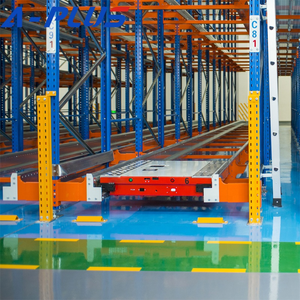
Combining structural steel frames with robotic automation, PrimeBay Radio Shuttle Systems use self-propelled, battery-powered runners to transport pallets inside deep storage lanes. Controlled via Wi-Fi RF remotes or integrated WMS interfaces, the shuttle lifts and retrieves pallets autonomously. This eliminates forklift travel within the rack structure, dramatically reducing structural impact damage, increasing pallet movement speed, and offering configurable operations for both LIFO and FIFO inventory handling.
3. Global Procurement Trends in LIFO Racking Systems (2025–2030)
The global warehouse logistics sector is undergoing a massive transformation driven by land supply constraints, rising labor costs, and decarbonization mandates. Procurement directors sourcing LIFO racking systems from top Chinese manufacturers are prioritizing several key technological trends:
Automation-Ready Modular Framing
Supply chains require racking frameworks built with standard dimensional tolerances capable of seamless upgrading from manual forklift operations to full AGV and ASRS automated shuttle integration without dynamic structural modifications.
Cold Chain Density Optimization
With cold storage power costs soaring, high-density LIFO systems (especially automated radio shuttle and push-back configurations) are replacing standard selective racks to minimize refrigerated air volume loss and optimize energy efficiency per pallet slot.
High-Tensile Eco-Steel Profiles
Engineered cold-rolled Q355 steel profiles coated with eco-friendly electrostatic thermosetting powder finishes are rapidly replacing legacy heavy steel, reducing total deadweight without sacrificing yield strength or load compliance.
4. Future Market Development & Engineering Breakthroughs
As warehouse heights expand beyond 15 meters to utilize vertical building envelopes, LIFO racking engineering is advancing rapidly in several key areas:
Seismic Structural Resilience: Modern LIFO systems designed for earthquake-prone zones incorporate dynamic baseplates, high-ductility sway bracing, and finite element method (FEM) computer modeling to absorb kinetic energy during seismic events, preventing rack collapse and protecting stored goods.
Hybrid FIFO/LIFO Intelligent Slotting: Next-generation warehouse management software (WMS) dynamically reconfigures shuttle movement logic within identical physical rack structures. During peak seasonal volume, systems operate in high-throughput LIFO mode; during standard operations, they transition to FIFO inventory rotation, maximizing flexibility for logistics managers.
5. Enterprise Advantage: Why Partner with PrimeBay Heavy Duty Racking
Established in 2006, PrimeBay Heavy Duty Racking Co., Ltd. has grown into one of China's premier racking designers, manufacturers, and exporters. Located in the Guli Industry District of Nanjing, Jiangsu, our state-of-the-art 40,000 m² manufacturing facility operates advanced automatic cold-roll forming lines, robotic welding stations, and automated continuous powder coating channels.
Certified Factory Rigor
Our operations strictly follow ISO 9001 quality management, ISO 14001 environmental standards, and TUV safety guidelines. All structural racking products are certified compliant with European CE standards.
Full Engineering & CAD Support
We don't just sell standard components—our engineering team calculates load distribution, beam deflection (strictly held to L/200), and seismic safety to deliver custom warehouse layout drawings for your review.
Global Track Record
With over 2,000 successful projects completed across 85+ countries, PrimeBay is a trusted partner for global importers, distributors, 3PL providers, and warehouse facility contractors.