High-Load Heavy Duty Pallet Racking Systems
Engineered to FEM 10.2.02 and EN 15512 standards for maximum structural resilience and vertical cube utilization.
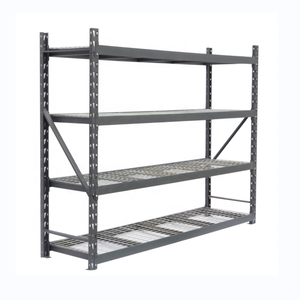
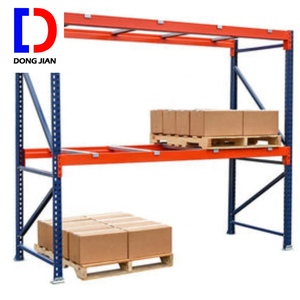
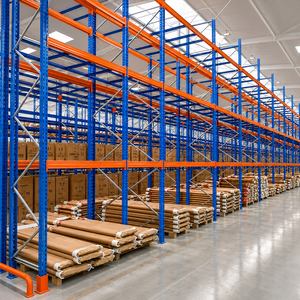
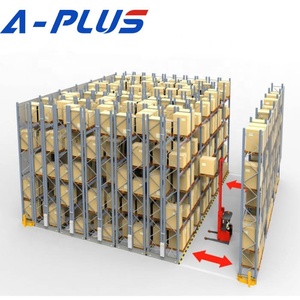
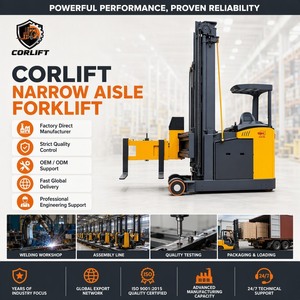
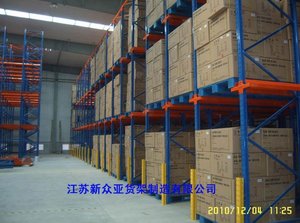
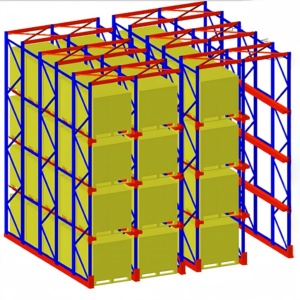

1. Executive Summary & Technical Benchmark: Large Load Pallet Racking
Modern industrial supply chains require an relentless optimization of cubic storage density alongside uncompromising structural integrity. As global logistics centers evolve toward high-bay automation and ultra-dense storage configurations, selecting a top-tier China best large load pallet racking exporter becomes a strategic imperative for supply chain directors, industrial architects, and 3PL warehouse operators worldwide.
Large load pallet racking systems—engineered to support unit load capacities ranging from 1,000 kg up to 4,500 kg per beam tier—are fundamentally governed by complex structural mechanics. The physical behavior of cold-formed steel sections under static, dynamic, seismic, and impact loadings demands precise structural analysis. Factors such as cross-sectional profile geometry, moment of inertia ($I_x, I_y$), torsional rigidity, and weldment fatigue strength dictate the ultimate load-bearing threshold of warehouse storage configurations.
Engineering Core Note: High-capacity structural performance is not merely a function of steel thickness; it is an optimized synthesis of structural profile cold roll-forming precision, connection-hook engagement mechanics, high-yield material grade selection (e.g., Q235B to Q355B structural steel), and adherence to international design codes such as FEM 10.2.02, EN 15512, and RMI (Rack Manufacturers Institute) ANSI MH16.1 standards.
When sourcing heavy-duty pallet racking directly from premier Chinese manufacturing facilities, global importers gain a decisive competitive advantage: structural customization executed through advanced finite element analysis (FEA), combined with high-volume automated manufacturing efficiency. This white paper breaks down structural classifications, mathematical load evaluation criteria, procurement trends, and engineering quality assurance parameters governing modern industrial pallet racking export.
2. Structural Mechanics & Steel Grade Selection in Large Load Racking
The structural efficacy of any heavy-duty pallet racking system rests upon the metallurgy and section profile geometry of its vertical upright frames and horizontal load beams. Chinese heavy-industry mills supply premium cold-rolled steel coils engineered specifically for heavy structural storage applications.
2.1 Upright Column Profile Geometry & Buckling Mechanics
The primary load-bearing vertical component—the upright frame—is subjected to combination axial compression and bending moments. Under extreme loading (up to 24,000 kg total frame capacity), unbraced lengths between beam elevations are vulnerable to flexural-torsional buckling. To mitigate this risk, leading Chinese racking exporters utilize multi-ribbed section profiles featuring 11 to 13 structural bends per column face.
These complex cold-formed geometries significantly enhance the section's radius of gyration ($r$), elevating the critical Euler buckling load ($P_{cr} = \frac{\pi^2 E I}{(K L)^2}$). By incorporating teardrop or diamond-patterned keyhole punchings at precise vertical pitches (such as 50mm, 75mm, or 76.2mm), structural engineers preserve structural stiffness while allowing flexible beam height adjustability.
2.2 Load Beams: Box Beams vs. Step Beams
Horizontal load beams transmit vertical pallet payload weights directly into the upright columns. In large load industrial storage applications, two main structural beam types dominate global procurement:
- Interlocking Box Beams: Manufactured by cold-forming two identical C-sections that nestedly interlock before undergoing continuous robotic MIG welding along top and bottom seams. Interlocking box beams offer exceptional torsional stability and uniform section moduli, ideal for standard EU/US pallet configurations carrying up to 4,500 kg per pair.
- Structural Step Beams: Designed with an internal step recess along the top inner edge, step beams facilitate the seamless drop-in installation of secondary support elements, such as wire mesh decking, steel shelf panels, or pallet support bars.
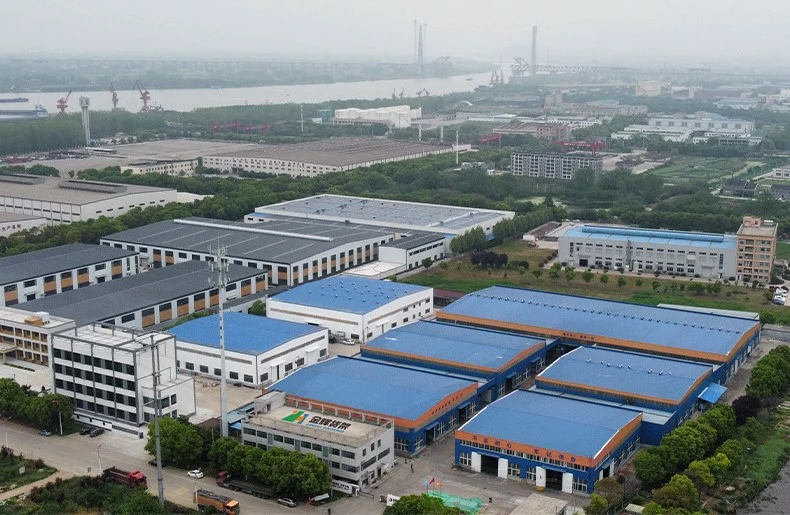
Precision Engineering & Robotic Manufacturing
Factory-direct manufacturing ensures structural integrity from coil slitting to automated powder coating. Continuous roll-forming lines operate with sub-millimeter tolerances, guaranteeing uniform load distribution across extended beam spans (up to 4,500mm clear width).
Every connector claw is stamped from high-strength forged steel with 3 to 5 engagement hooks, complete with automated safety lock pins that prevent accidental beam displacement caused by upward forklift impacts.
3. Technical Matrix: Classification of Heavy-Duty Warehouse Storage Systems
Selecting the optimal structural layout depends directly on the facility's SKU diversity, storage density requirements, pallet rotation dynamics (FIFO vs. LIFO), and automated material handling equipment (MHE) fleet.
| Racking System Type | Load Capacity (Per Tier) | Space Utilization Ratio | Selectivity & Access | Optimal Industry Application |
|---|---|---|---|---|
| Heavy Duty Selective Rack | 1,000 kg – 4,500 kg | 40% – 50% | 100% Direct Access (FIFO) | High-SKU distribution, manufacturing, 3PL hubs |
| Radio Shuttle Racking | 1,000 kg – 2,000 kg | 80% – 85% | Deep-Lane High Density (FIFO/LIFO) | Cold storage (-30°C), food & beverage, FMCG bulk |
| Drive-In / Drive-Through | 1,000 kg – 1,500 kg | 65% – 75% | Last-In, First-Out (LIFO) | Homogeneous bulk inventory, seasonal storage |
| Push-Back Cart Racking | 1,000 kg – 1,800 kg | 60% – 70% | 2 to 6 Pallets Deep (LIFO) | Medium SKU velocity, cold chain, staging areas |
| Very Narrow Aisle (VNA) | 1,000 kg – 3,500 kg | 85% – 90% | 100% Direct Access (Turret Truck) | High-bay warehouses up to 18m height |
| Heavy Duty Cantilever Rack | 500 kg – 3,000 kg / Arm | 55% – 65% | Unobstructed Horizontal Access | Steel pipes, lumber, aluminum extrusions, plates |
4. Global Sourcing & Procurement Trends (2025–2030)
As international trade barriers normalize and digital supply chains demand rapid site turnarounds, overseas buyers (including EPC contractors, storage equipment distributors, and industrial logistics developers) are re-evaluating their racking procurement frameworks. Key macro trends shaping global sourcing from China include:
1. Transition to ASRS & 4-Way Shuttle Racking
Traditional manual forklift storage is increasingly giving way to fully automated storage and retrieval systems (ASRS) and 4-way radio shuttle grids. Chinese manufacturing facilities are producing sub-millimeter tolerance automated structural rack frames designed to interface directly with WMS/WCS software and autonomous robotic shuttles.
2. Anti-Corrosion Coating Technologies
With cold-chain pharmaceutical and frozen food logistics expanding globally, high-durability surface treatment is paramount. Advanced electrostatic powder coating systems delivering 60–90 micron thick epoxy-polyester coatings, alongside hot-dip galvanizing (HDG) conforming to ISO 1461, prevent oxidation in humid and sub-zero environments (-30°C).
3. Seismic Design & Dynamic Risk Compliance
Warehouses constructed in seismic zones require dynamic finite element calculations accounting for horizontal ground acceleration ($S_d$). China’s top racking engineering teams incorporate heavy-duty baseplates, floor-anchoring expansion bolts, diagonal bracing towers, and seismic isolators to guarantee structural survival during seismic events.
5. Competitive Advantages of PrimeBay Engineering & China Export Hubs
Founded in 2006, PrimeBay Heavy Duty Racking Co., Ltd. represents the apex of Chinese warehouse storage system engineering and direct export capability. Operating from a 40,000 square meter manufacturing base in Nanjing, Jiangsu, the facility combines robust cold roll-forming lines with rigorous quality control certified to CE, ISO 9001, ISO 14001, and TÜV standards.
Every industrial project engineered by PrimeBay undergoes rigorous FEA structural simulation to model real-world deflection under dynamic pallet placement. Key enterprise capabilities include:
- Turnkey CAD & Structural Calculation: Rapid layout engineering and load capability validation delivered within 24 hours of receipt of floor plans.
- Custom OEM & ODM Manufacturing: Custom upright profiles, non-standard beam lengths, tailored powder-coat RAL color matching, and private label packaging for international distributors.
- Export Logistics Optimization: Container packing algorithms designed to maximize CBM utilization, using custom steel banding and protective wrapping to ensure scratch-free ocean transit to over 85 destination countries.
- 10-Year Comprehensive Warranty: Factory-backed structural integrity guarantee backed by load testing reports and full traceability certificates.
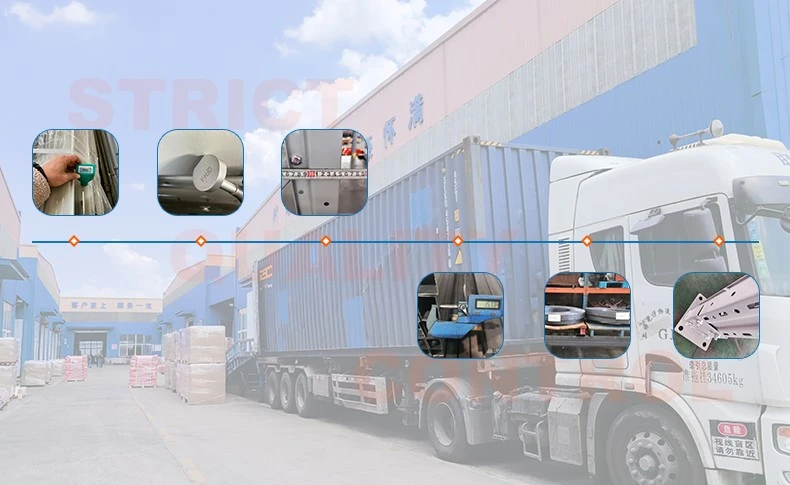
6. Engineering Quality Control & Compliance Verification Protocols
To ensure high operational reliability across international installations, professional China racking exporters implement a multi-stage Quality Management System (QMS):
- Raw Material Tensile & Yield Testing: Every batch of cold-rolled steel coil undergoes spectral chemical composition verification and mechanical tensile testing (Yield strength $f_y \ge 235 \text{ MPa}$ for Q235B, $f_y \ge 355 \text{ MPa}$ for Q355B).
- Deflection Tolerances under Max Load: In strict compliance with FEM 10.2.02, horizontal beam deflection under full load is limited to a maximum of $\frac{L}{200}$ (where $L$ is clear span length). For high-precision automated ASRS systems, deflection limits are held to a stringent $\frac{L}{300}$ or $\frac{L}{400}$.
- Weld Integrity & Coating Thickness Inspection: Beam-connector MIG welds undergo non-destructive magnetic particle testing, while electronic thickness gauges measure powder coating coverage (minimum 65 $\mu\text{m}$) to ensure corrosion prevention over multi-decade operational cycles.
Integrated Engineering Support for Overseas Buyers
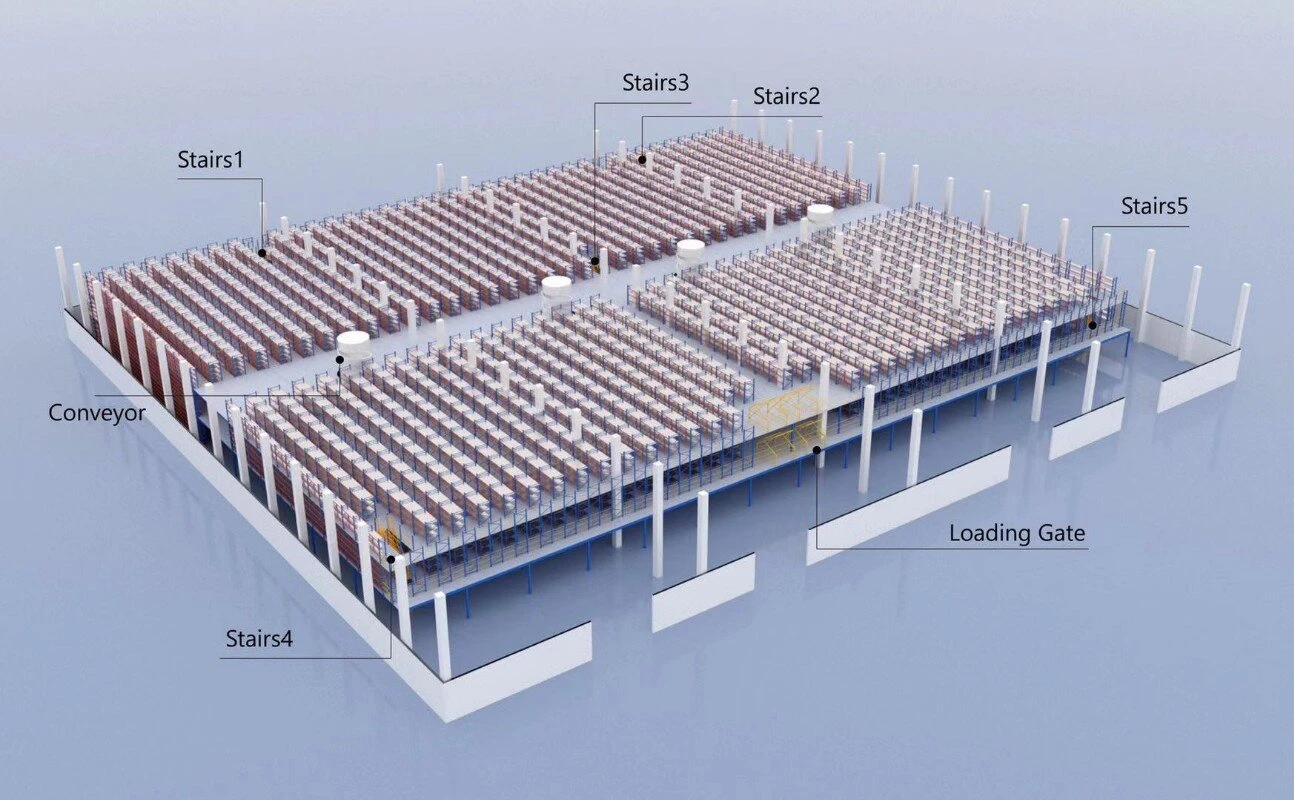
Exporting large load pallet racking requires more than simple steel fabrication; it requires end-to-end technical documentation. Top China exporters provide structural calculation books, stamped engineering approvals, step-by-step 3D assembly guides, and load-rating warning plaques compliant with OSHA and international safety standards.
Whether configuring a 15-meter VNA high-bay installation or a -30°C cold storage radio shuttle grid, our engineering department ensures zero structural ambiguity before steel hits the roll-forming lines.
Procurement & Technical FAQ for Importers
Direct technical clarity on structural ratings, certifications, container loading, and custom manufacturing parameters.