CE-Certified Heavy Duty FIFO Racking Systems
Engineered by PrimeBay Heavy Duty Racking Co., Ltd. for maximum pallet throughput, cold chain compliance, and structural integrity across global logistics hubs.
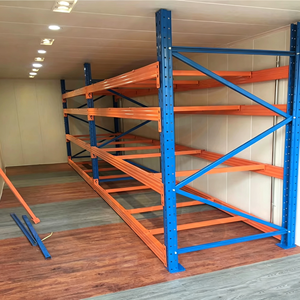
Heavy Duty Industrial Pallet Storage Racking 1000kg/2000kg/3000kg Capacity Per Layer Adjustable Steel Warehouse Rack
Get a Quote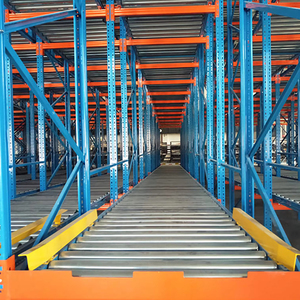
Mracking Warehouse Storage Steel Gravity Flow Rack Heavy Duty Live Pallet Racking System 1000kg/layer
Get a Quote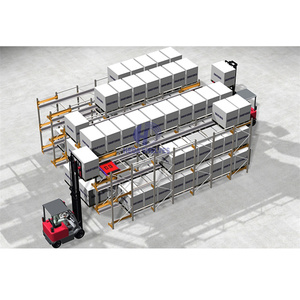
Shuttle Rack Radio Shuttle Rack Pallet Shuttle Rack Automated Storage System for High-Density Pallet Storage FIFO System
Get a Quote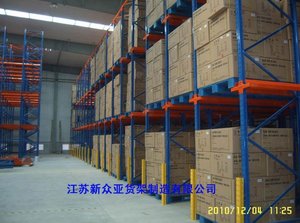
Customized Heavy Duty Drive In Pallet Rack Q235 Steel, High Capacity Warehouse Storage Racking Solution for FIFO FILO Inventory
Get a Quote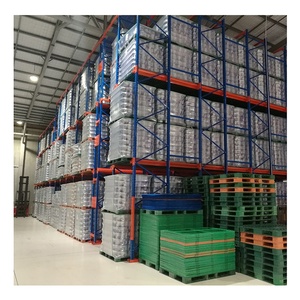
Warehouse Heavy Duty Storage FiFo Drive in Pallet Racking System
Get a Quote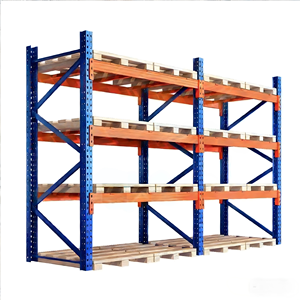
Heavy Duty Industrial Pallet Racking System 5 Layer Warehouse Storage Racks With Adjustable Steel Selective Pallet Racking
Get a Quote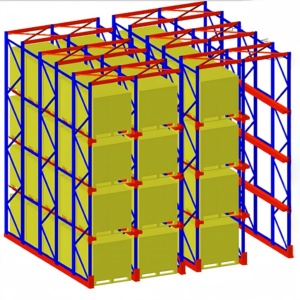
High-Density Heavy Duty Steel Pallet Rack Durable FIFO Drive-in Warehouse Storage ODM & OEM Supplier
Get a Quote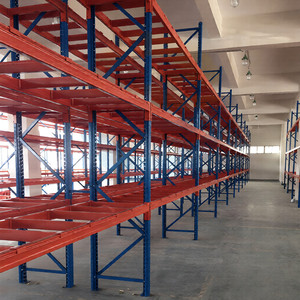
Heavy Duty Steel Pallet Storage Racks Complete Warehouse Pallet Racking Systems Solution Factory Wholesale
Get a Quote1. Executive Summary & The Strategic Imperative of FIFO Racking
In modern industrial logistics, supply chain efficiency relies heavily on optimized warehouse storage design. For fast-moving consumer goods (FMCG), pharmaceuticals, fresh agricultural produce, dairy processing, and cold-chain distribution centers, stock rotation is a matter of critical operational compliance. The First-In, First-Out (FIFO) inventory management strategy ensures that goods loaded into the racking matrix first are systematically retrieved first, preventing product obsolescence, minimizing spoilage, and maintaining strict batch tracking (FEFO—First Expired, First Out).
Choosing a reliable CE-certified FIFO pallet racking factory and global exporter is essential for supply chain directors, warehouse engineering managers, and 3PL contractors. Racking structures must carry precise static structural calculations under European Standards (EN 15512:2019 and FEM 10.2.02) to guarantee stability under dynamic load movement, seismic forces, and high-frequency forklift operations.
As an established tier-1 warehouse storage system manufacturer founded in 2006, PrimeBay Heavy Duty Racking Co., Ltd. operates a 40,000 m² state-of-the-art manufacturing plant in Nanjing, Jiangsu. By deploying automated cold-roll forming, robotic welding cells, and eco-friendly epoxy electrostatic powder coating lines, PrimeBay engineers custom FIFO pallet storage systems designed to maximize vertical cubic footprint while strictly complying with CE, ISO 9001, ISO 14001, and TUV quality benchmarks.
2. Structural Engineering Standards: CE Marking, EN 15512 & FEM Compliance
When sourcing industrial racking from overseas factories, regulatory compliance and structural safety are paramount. Racking failure can lead to catastrophic warehouse collapse, severe inventory destruction, and worker safety liabilities. A genuine CE Certification for pallet racking requires adherence to rigorous European testing protocols rather than simple visual inspection.
Key Structural Standards for Heavy-Duty FIFO Systems:
- EN 15512:2019 (Steel Static Storage Systems): Specifies the structural design requirements for adjustable pallet racking, defining elastic/plastic analysis methods, global stability factors, beam-to-upright connector stiffness tests, and floor anchor shear resistance calculations.
- FEM 10.2.02 (Fédération Européenne de la Manutention): The international design code governing static steel racking design, ensuring structural frame deflection under maximum rated pay-loads does not exceed L/200 (where L is beam length).
- Steel Grade Integrity (Q235B & Q355B Cold-Rolled Steel): PrimeBay utilizes certified high-tensile structural steel profiles. Uprights are cold-formed with multi-ribbed cross-sections to maximize section modulus, resisting torsional twisting and column buckling under axial forces up to 30,000 kg per frame.
- Seismic & Dynamic Load Tolerances: Engineering designs integrate site-specific seismic coefficients ($a_g$), calculating ground acceleration response spectra to reinforce baseplates with expansion anchors and heavy-duty floor tie-beams.
Information Gain Insight: The Risk of Non-Certified Steel Racking
Uncertified racking suppliers often save costs by thinning steel gauge (e.g., using 1.5mm uprights instead of calculated 2.0mm/2.5mm profiles) or skipping beam-to-column safety pin lock testing. Under continuous operational vibration or minor forklift impact, non-compliant uprights suffer localized buckling, reducing ultimate loading capacity by up to 60% and violating OSHA and EU health and safety mandates.
3. Comparative Matrix of Industrial FIFO Storage Technologies
Achieving true First-In, First-Out throughput can be accomplished through several engineering designs depending on SKU diversity, pallet weight, turnover speed, and budget constraints. The table below details the technical trade-offs between key industrial FIFO racking typologies:
| FIFO System Type | Storage Density | Pallet Selectivity | Max Lane Depth | Load Capacity | Best Application Profile |
|---|---|---|---|---|---|
| Gravity Live Flow Racking | High (75-85%) | 1 SKU per Lane | 20+ Pallets Deep | 1,500 kg / pallet | High-velocity FMCG, perishable food, cross-docking dispatch bays. |
| Radio Shuttle FIFO Racks | Ultra-High (85-95%) | 1 SKU per Channel | 40+ Pallets Deep | 2,000 kg / pallet | Cold storage facilities (-30°C), beverage bottling plants, bulk storage. |
| Drive-Through Pallet Racks | High (70-80%) | 1 SKU per Bay | 10-12 Pallets Deep | 1,200 kg / pallet | Homogeneous inventory, batch manufacturing, lower initial CapEx. |
| Automated AS/RS (FIFO) | Maximum (95%+) | 100% Automated | Flexible / Multi-Deep | 3,000 kg / pallet | Lights-out automated logistics hubs, high-rate manufacturing supply. |
Deep Dive into Gravity Flow & Radio Shuttle Mechanisms
Live Gravity Flow Racking: Operates on an inclined steel roller track (3–4% slope gradient). Pallets are loaded from the high charge side and glide down toward the lower discharge side under controlled gravity. Precision dynamic brake rollers limit acceleration speed to less than 0.3 m/s, while an automatic mechanical separator isolates the front pallet from trailing inventory, permitting safe forklift extraction without back-pressure friction.
Radio Shuttle Pallet Racking: Replaces gravity lanes with an autonomous battery-powered shuttle platform moving along specialized guidance rails inside high-density channels. Controlled via radio-frequency (RF) remote or direct WMS Wi-Fi integration, the shuttle lifts, transports, and deposits pallets with high positioning accuracy. In FIFO mode, loading occurs from the rear face while picking occurs from the front face, slashing forklift drive time by up to 50% compared to traditional selective racking.
4. Future Trends in FIFO Warehouse Procurement (2025–2030)
The global warehousing equipment sector is undergoing rapid technological convergence driven by labor constraints, rising industrial land costs, and net-zero sustainability mandates. Procurement teams evaluating long-term FIFO racking infrastructure must plan for the following emerging trends:
Trend 1: Autonomous 4-Way Shuttle Racking Systems
While traditional 2-way radio shuttles travel along a single horizontal axis, next-generation 4-way autonomous shuttles navigate both transverse and longitudinal rails while utilizing integrated lifts to change level elevations. This creates a fully dynamic 3D storage matrix capable of real-time FIFO stock re-sequencing without manual forklift intervention.
Trend 2: Energy-Efficient Cold Chain Thermal Mass Optimization
Operating cold storage facilities (-18°C to -30°C) consumes substantial electrical energy. Ultra-dense FIFO Radio Shuttle systems eliminate unnecessary access aisles, maximizing the mass density of frozen goods inside the refrigerated envelope. This thermal inertia cuts refrigeration compressor power consumption by up to 35% per pallet stored.
Trend 3: Smart Sensor Integration & Structural Health Monitoring (SHM)
To comply with predictive safety audits, industrial buyers are specifying racking systems embedded with IoT strain sensors and wireless impact detection nodes. These devices stream continuous real-time data regarding beam deflection, column tilt, and forklift impact strikes directly to facility operations dashboards, preventing unrecorded structural damage from degrading system integrity.
Trend 4: Green Steel Sourcing & CBAM Compliance
European buyers are increasingly subject to the Carbon Border Adjustment Mechanism (CBAM). Racking manufacturers that utilize electric arc furnace (EAF) steel production, recycled scrap input ratios exceeding 30%, and zero-VOC powder coating processes provide a measurable reduction in Scope 3 embodied carbon emissions, ensuring seamless customs clearance and environmental reporting.
5. Manufacturing Excellence & Enterprise Advantages of PrimeBay Racking
PrimeBay Heavy Duty Racking Co., Ltd. stands as a premier China-based factory and exporter specializing in heavy-duty warehouse racking solutions. With over two decades of engineering research, the enterprise delivers reliable, bespoke structural storage equipment to importers, warehouse project contractors, and enterprise clients across 85+ countries.
Integrated Manufacturing Capabilities:
- 40,000 m² Production Facility: Outfitted with 24 continuous cold-roll forming lines capable of shaping high-precision upright profiles up to 15 meters in continuous single length.
- Robotic Welding Cells: Automatic multi-axis robot welders execute uniform fillet welds across beam connectors and baseplates, ensuring consistent load distribution and fatigue resistance.
- Automated Pre-treatment & Powder Coating: 12-stage chemical cleaning, iron-phosphating, and dual-zone electrostatic powder coating deliver dynamic corrosion resistance exceeding 500 hours of salt spray testing (ASTM B117).
- Complete OEM/ODM Project Delivery: Custom beam profiles, specialized color matching (RAL spectrum), customized branding, and turnkey CAD/3D BIM layout design delivered within 48 hours.
End-to-End Quality Assurance
Every raw steel coil shipped to the PrimeBay production plant undergoes strict chemical spectro-analysis and mechanical tensile testing. Certified mill test certificates (MTCs under EN 10204 3.1) are supplied alongside comprehensive CE conformity documentation with every export shipment container.
B2B Procurement & Engineering FAQ
Direct technical guidance from our senior structural engineers regarding project design, load calculations, and global supply chain logistics.