[email protected] Exporting racking systems to 85+ countries
CE · ISO 9001 · ISO 14001 · TUV English
0%

Choosing the right Adjustable Pallet Rack begins with understanding your warehouse, not copying a competitor’s layout. A narrow aisle may look efficient, yet it can slow forklifts and complicate replenishment. A wider aisle may waste floor space, but it can improve access and reduce handling delays.

Warehouse logistics expert Dr. F. Edward Frazelle emphasizes a practical principle: “Warehouse space is a critical resource.” That idea matters when comparing selective pallet rack, double-deep rack, drive-in rack, push-back rack, and pallet flow rack. Each design solves a different storage problem. Selective rack offers direct access to every pallet. Drive-in rack increases density for similar products. Push-back rack supports multiple pallets per lane, while pallet flow rack helps organize first-in, first-out movement.

The details are physical and measurable. Picture a busy aisle, a loaded pallet, and a forklift turning beneath a beam. Clearance, pallet weight, beam height, and aisle width all affect daily performance. Rack frames also need suitable protection where forklifts operate. Load plaques should match the actual configuration.

No system is perfect.

That is easy to forget.

Some warehouses choose high density and later discover poor product access. Others prioritize access and leave valuable cubic space unused. A reliable decision should combine inventory rotation, pallet dimensions, building height, equipment type, and future growth. This guide examines the top types of Adjustable Pallet Rack and explains where each option works best. It also considers the compromises that glossy product brochures often overlook.
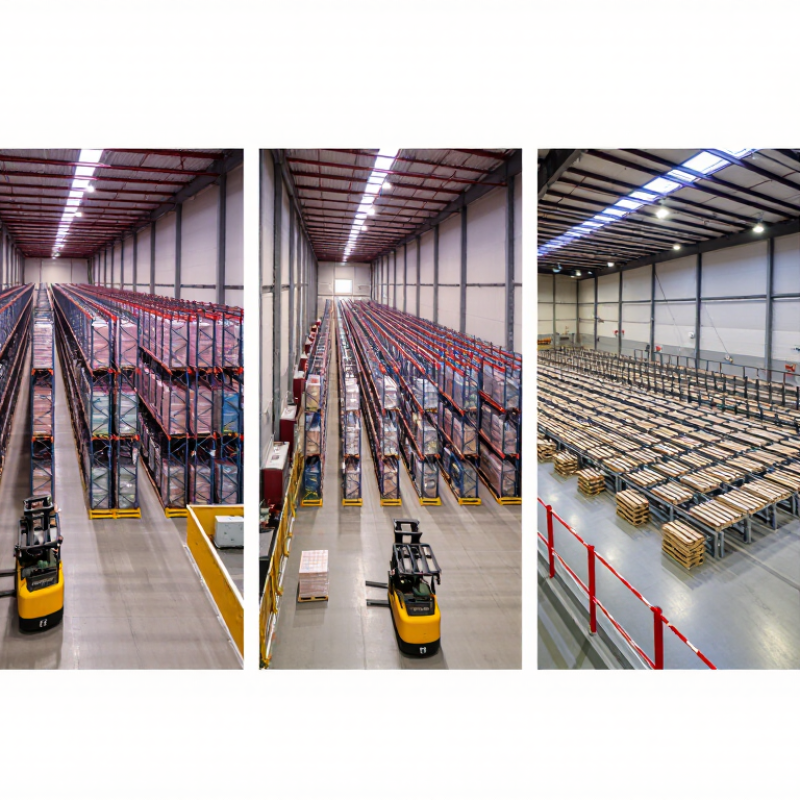
What Are the Top Types of Adjustable Pallet Rack?

What Adjustable Pallet Rack Is and How It Works

Adjustable pallet rack is a modular steel storage system built for changing inventory needs. Upright frames carry vertical loads, while horizontal beams lock into perforated columns at selected heights. This lets operators reposition each level without rebuilding the entire rack. A forklift places pallets on the beams, and the rack transfers weight through the frames, anchors, and warehouse floor.

The main layout is selective pallet rack. It gives direct access to every pallet, but it uses more aisle space. Double-deep rack stores pallets behind one another and improves density, although it requires reach equipment. Drive-in rack removes many aisles and supports high-volume, similar products. Each option changes travel paths, loading rules, and inspection needs.

RMI’s 2023 rack specification emphasizes that capacity depends on the complete rack configuration, not one beam alone. That detail is often missed. MHI’s 2024 Annual Industry Report also identifies labor pressure and operating efficiency as continuing warehouse concerns, making clear access increasingly valuable. In practice, installers should verify beam levels, frame plumb, floor condition, anchors, and visible damage. A bent upright is not cosmetic. It may reduce structural capacity.

Load plaques must match the actual bay arrangement. Pallet weight, height, forklift reach, and seismic conditions can change the rating. My practical concern is simple: adjustable does not mean unlimited. Poorly spaced beams can create unstable loads, even when the steel appears heavy. Regular inspections and disciplined loading matter more than a crowded aisle.

How Adjustable Pallet Rack Types Are Classified

Adjustable pallet rack types are best classified by access method, storage density, and operating conditions. Selective pallet rack gives every pallet a direct aisle position. It suits mixed products and frequent picking. Beam levels can be changed when pallet heights vary. Narrow-aisle rack uses tighter gaps and often requires specialized handling equipment. It increases floor utilization, but turning space and operator training become critical.

Access changes the classification further. Double-deep rack stores one pallet behind another, improving density while reducing immediate access. Push-back rack uses nested carts, allowing several pallets at each level. Drive-in rack removes many access aisles and supports high-density storage for similar goods. However, it follows a last-in, first-out pattern and needs careful pallet control. Environmental conditions also matter. Cold rooms, humid areas, and seismic zones may require different steel protection, anchoring, and load calculations. The boundary between types is not always neat. A hybrid layout may be practical, though it can complicate training and inspections. In real warehouses, the best classification starts with pallet dimensions, load weight, turnover rate, aisle width, and equipment reach. Guessing from floor space alone is a common design mistake.

What Are the Top Types of Adjustable Pallet Rack? – How Adjustable Pallet Rack Types Are Classified

Rack Type Primary Classification Pallet Access Storage Principle Inventory Rotation Selectivity Density Potential Typical Applications
Selective Pallet Rack Direct-access adjustable rack Front access to every pallet position Single-deep pallet storage on adjustable beams Suitable for FIFO or LIFO, depending on operating procedures Very high Low to medium General warehousing, mixed stock-keeping units, high product variety, and frequent picking operations
Double-Deep Pallet Rack Increased-depth adjustable rack Access to the front pallet; rear pallet requires double-reach equipment Two pallets deep in each storage lane Generally LIFO unless carefully managed Medium Medium to high Higher-volume inventories with several pallets per stock-keeping unit and moderate product variety
Drive-In Pallet Rack Forklift-entry, high-density rack Forklift enters the storage lane from one side Multiple pallets deep and high, with rails supporting pallets Primarily LIFO Low Very high Large quantities of similar products, low product variety, and non-perishable or batch-controlled inventory
Drive-Through Pallet Rack Forklift-entry, two-sided high-density rack Forklift enters from either side of the lane Multiple pallets deep with open access at both ends Can support FIFO when loading and unloading are controlled from opposite ends Low to medium Very high High-volume products where two-sided access and improved stock rotation are important
Push-Back Pallet Rack Cart-based, gravity-assisted adjustable rack Front loading and unloading; carts move pallets toward the rear Two to several pallets deep on inclined rails or carts Primarily LIFO Medium High Multiple pallets per stock-keeping unit where high density and fast front-side access are required
Pallet Flow Rack Gravity-flow dynamic rack Loading and picking occur from opposite sides Pallets move on roller lanes from the replenishment side to the picking side FIFO Medium High Perishable goods, date-sensitive inventory, batch rotation, and high-throughput order fulfillment
Carton-Flow-Compatible Pallet Rack Hybrid pallet-and-piece-picking configuration Pallet access at upper or rear levels with carton-flow lanes at picking levels Combines pallet storage with gravity-fed case or piece picking FIFO for flow lanes; pallet levels depend on the operating method High Medium Distribution centers requiring both full-pallet replenishment and high-frequency case or piece picking
Narrow-Aisle Pallet Rack Space-optimized selective rack layout Direct access using specialized narrow-aisle handling equipment Single-deep adjustable beams arranged with reduced aisle widths FIFO or LIFO, depending on warehouse control Very high Medium to high Facilities that need high SKU selectivity while maximizing the use of available floor and vertical space
Very-Narrow-Aisle Pallet Rack High-density, guided-truck rack layout Direct access using turret or other equipment designed for very narrow aisles Single-deep or specialized high-rise adjustable storage FIFO or LIFO, depending on the configuration Very high High High-bay warehouses where floor-space efficiency, vertical utilization, and individual pallet access are all required

Classification note: Adjustable pallet rack systems are commonly classified by pallet access method, storage depth, loading and unloading behavior, inventory rotation method, aisle requirement, and selectivity. Actual capacity and configuration must be verified against pallet dimensions, rack height, beam capacity, floor conditions, forklift specifications, and applicable safety standards.

Selective Pallet Rack for Direct Access to Every Load

Selective pallet rack remains the practical choice when every load needs direct access. Each pallet has its own storage position, so forklifts can retrieve stock without moving other pallets. Adjustable beam levels also suit mixed carton heights, changing inventory, and seasonal demand.

MHI’s 2024 Annual Industry Report projects 73% adoption of artificial intelligence in supply chains within five years. That trend increases the value of clear locations and reliable inventory data. Selective rack supports both. However, it uses more floor space than drive-in or double-deep systems. That trade-off is easy to underestimate. A dense layout may look efficient, but poor access can slow picking and create hidden labor costs.

Tips: Measure pallet height, weight, forklift reach, and aisle clearance before choosing beam levels. Use load plaques and schedule regular inspections based on recognized rack safety guidance, such as RMI MH16.1. WERC’s DC Measures research treats order-picking accuracy as a core warehouse benchmark; direct access can support accuracy, but only with disciplined labeling and scanning. Leave space for damaged pallets, column protection, and future growth. The perfect layout rarely exists. Test one aisle with real operators before expanding the design.

What Are the Top Types of Adjustable Pallet Rack?

Selective pallet rack provides direct access to every load

Direct-access percentages are calculated from representative lane depths: one accessible pallet position divided by the number of pallet positions stored in depth. Selective rack achieves 100% direct access because each pallet position faces an aisle, while deeper systems generally require moving another pallet or rely on a specific loading sequence.

Drive-In, Drive-Through, and Double-Deep Pallet Rack

Drive-in, drive-through, and double-deep pallet racks serve different storage patterns. Their value depends on inventory turnover, pallet variety, and forklift access. MHI’s 2024 Annual Industry Report found that 55% of surveyed supply-chain professionals expect increased technology investment. That pressure also encourages better use of existing warehouse space.

Drive-in racks place pallets on rails inside deep lanes. Forklifts enter the structure, so storage density is high. They suit large quantities of similar products with limited stock rotation. However, operators usually follow a last-in, first-out pattern. That can create aging inventory when product dates matter. Drive-through racks have openings on both sides. Loading can happen from one end, while unloading happens from the other. This supports first-in, first-out movement and clearer workflow separation. Still, both systems require careful driving. A small impact can damage rails or uprights.

Double-deep racks store one pallet behind another. They offer higher density than selective racks, but access is less direct. A reach truck with suitable fork extension is normally required. According to the 2024 CBRE North American Industrial and Logistics Market Outlook, warehouse users continue seeking space efficiency as logistics demand remains strong. Double-deep storage can help, but only when many pallets share the same product code. Otherwise, hidden pallets become inconvenient.

Rack selection should include aisle width, load weight, pallet condition, and fire protection. Real sites are rarely perfect. A layout that looks efficient on paper may slow picking during a busy shift. Engineers should verify clearances, rail capacity, and impact protection against recognized standards such as ANSI/RMI MH16.1.

Push-Back and Pallet Flow Rack for Higher Storage Density

Adjustable pallet rack systems help warehouses adapt to changing inventory and equipment needs. Push-back and pallet flow rack deserve special attention because they increase storage density without removing pallet access entirely. In practical warehouse assessments, the best choice depends on product rotation, pallet weight, aisle width, and handling equipment.

Push-back rack stores pallets on nested carts that move along inclined rails. Operators load and retrieve pallets from the same aisle. This design supports last-in, first-out inventory and can provide several pallet positions deep. It reduces unnecessary travel, but each channel needs accurate loading. Uneven pallets may stop carts or damage rails. Rack frames, wheel assemblies, and load ratings require scheduled inspections.

Pallet flow rack uses gravity rollers or wheels to move pallets toward the picking face. It supports first-in, first-out rotation, making it useful for dated goods and frequent order picking. Braking devices help control movement, while separators keep pallet lanes organized. The system can create dense storage with fewer forklift movements. However, it needs consistent pallet dimensions and careful maintenance.

The details matter.

A warehouse may combine both systems. Slow-moving reserve stock can use push-back rack, while high-turnover items use pallet flow rack. One overlooked issue is replenishment timing. A dense layout can still perform poorly when operators wait for empty lanes or blocked access. Before installation, measure real pallet conditions, not only ideal specifications. That extra check often reveals the better design.

FAQS

What is adjustable pallet rack?

It is a modular steel storage system with movable horizontal beams. Operators can change beam heights without rebuilding the rack. Forklifts place pallets onto the beams. The frames transfer weight to anchors and the warehouse floor.

Why is selective pallet rack widely used?

Selective rack gives forklifts direct access to every pallet. It suits mixed products, seasonal stock, and changing pallet heights. However, it uses more aisle space than denser systems. Clear access can reduce travel delays and picking errors.

Does adjustable mean unlimited capacity?

No. Capacity depends on the complete rack arrangement. Beam spacing, pallet weight, frame height, anchors, and floor conditions all matter. A heavy-looking rack can still carry an unstable load. Not always obvious.

What should operators check before changing beam levels?

Measure pallet height, pallet weight, forklift reach, and aisle clearance. Confirm that beams lock correctly into the perforated columns. Check frame alignment and visible damage. Leave room for future inventory changes.

When might double-deep or drive-in storage be useful?

Double-deep storage places pallets behind one another and increases density. It needs suitable reach equipment. Drive-in storage removes many aisles and suits large quantities of similar products. Both systems reduce direct access.

How do push-back racks operate?

Push-back racks use nested carts on inclined rails. New pallets push earlier pallets deeper into the channel. Operators load and retrieve from one aisle. The design supports last-in, first-out rotation. Uneven pallets can stop carts or damage rails.

What makes pallet flow rack different?

Pallet flow rack uses gravity rollers or wheels. Pallets move toward the picking face automatically. It supports first-in, first-out rotation for dated goods. Brakes control movement, while separators organize each lane. Pallet sizes must remain consistent.

How often should pallet racks be inspected?

Inspect racks regularly and after impacts or unusual loading. Look for bent uprights, damaged beams, loose anchors, and misaligned frames. A bent upright is not merely cosmetic. It may reduce structural capacity. I would not trust appearance alone.

What information should appear on a load plaque?

The plaque should match the actual bay arrangement. It should reflect pallet weight, beam levels, frame configuration, and relevant site conditions. Recheck the plaque after modifications. A copied rating may be wrong.

How can a warehouse choose between different rack systems?

Compare product rotation, pallet dimensions, handling equipment, aisle width, and replenishment timing. Test one aisle with real operators before expanding the layout. Dense storage may still perform poorly when lanes remain blocked. Measure twice.

Conclusion

Adjustable Pallet Rack is a flexible warehouse storage system designed to hold palletized goods on horizontal beams supported by vertical frames. Its beam levels can be repositioned to accommodate different pallet sizes and load heights, making it suitable for changing inventory needs. These systems are commonly classified by how pallets are accessed, moved, and arranged within the rack structure. Factors such as selectivity, storage density, aisle space, loading methods, and inventory rotation help determine the most appropriate configuration.

Selective pallet rack provides direct access to every pallet and is ideal when product variety and frequent picking are priorities. Drive-in and drive-through rack increase density by allowing forklifts to enter storage lanes, while double-deep rack places pallets two positions deep for a balance between capacity and accessibility. Push-back rack uses inclined rails to store pallets behind one another, whereas pallet flow rack uses gravity rollers to move goods through lanes. Each type offers distinct advantages for organizing space, improving handling efficiency, and matching operational requirements.

Charlotte

Charlotte

Charlotte is a professional marketing specialist dedicated to helping customers better understand the company’s products, solutions, and service capabilities. With a strong background in market research, content strategy, and customer communication, she combines industry insight with clear,......