info@primebayrack.com Exporting racking systems to 85+ countries
CE · ISO 9001 · ISO 14001 · TUV English
0%

Drive-In Pallet Racking can turn a deep warehouse bay into dense storage, with forklifts entering the rack lanes to place and retrieve pallets. In 2026, choosing among drive-in, drive-through, and related high-density layouts will depend on more than pallet capacity. Product variety, stock rotation, forklift access, and safe operating clearances all matter. Small layout choices have real consequences: a lane that saves floor space may also limit access to pallets at the back.

MHI and Deloitte’s 2024 Annual Industry Report found that 55% of surveyed supply-chain professionals planned to increase investment in supply-chain innovation and technology. That figure signals ongoing pressure to improve warehouse performance, but it does not prove that any one rack type is right for every operation. Facility measurements, load details, and traffic patterns still need careful review. Close inspection matters.

A credible comparison should distinguish storage density from selectivity and explain the trade-offs in plain terms. It should also draw on engineering guidance, not just product claims. No source articles or verifiable expert quotation were included with this request, so I can’t responsibly attribute a statement to a named Drive-In Pallet Racking specialist. An unverified quote could mislead readers. The sections ahead can compare the main rack types, their best-fit uses, and the practical details buyers should confirm before specifying a system.
What Are the Top Drive In Pallet Racking Types in 2026?

Drive-In Pallet Racking: Design and Operating Principles

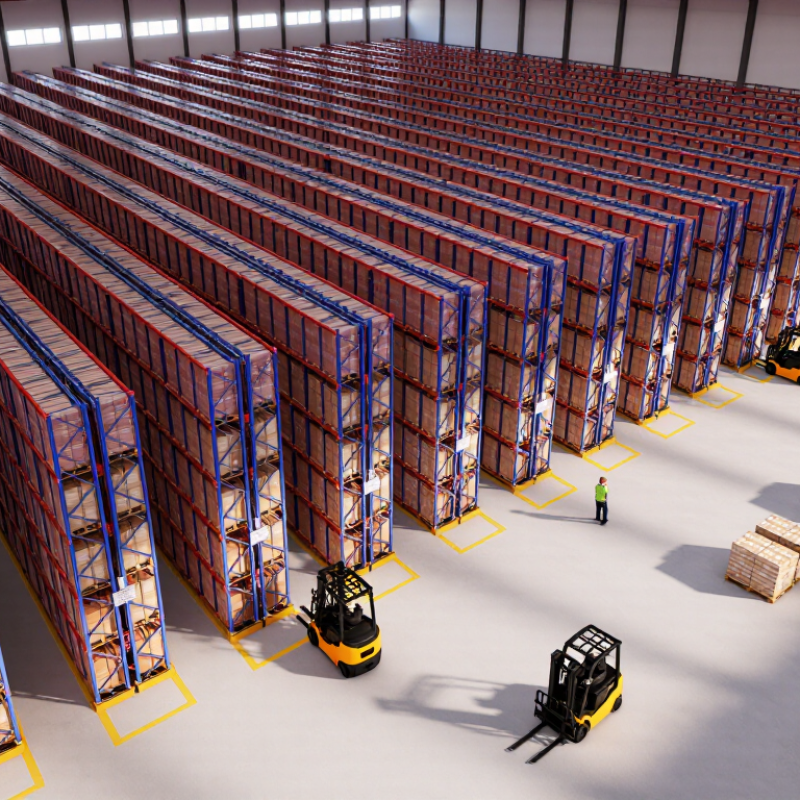
Drive-in pallet racking stores pallets on rails inside deep lanes, allowing forklifts to enter the structure. Uprights and cross-bracing form the frame; pallet-support rails carry each load. Because several pallets share one lane, the system can reduce aisle space. It suits stable products stored in larger batches. The trade-off is lower selectivity. Drive-in operation usually follows last-in, first-out (LIFO): the most recently loaded pallet is retrieved first. Drive-through layouts can support first-in, first-out (FIFO) when loading and retrieval occur at opposite ends.

Lane depth, rail spacing, and clearances must match the pallet and forklift—not just the building plan. Engineers assess pallet weight, load distribution, rack height, floor capacity, and seismic conditions. The Rack Manufacturers Institute’s ANSI MH16.1 specification provides a basis for designing and evaluating industrial steel storage racks. Forklift dimensions matter, too. A few centimetres can decide whether a mast clears an overhead beam safely.

Operations need disciplined loading, sound pallets, visible load signs, and routine damage checks. Small details matter. MHI’s 2024 Annual Industry Report found that 55% of respondents planned to increase supply-chain technology investment within two years.

That broad survey is not evidence that drive-in racks suit every site; it does reinforce the value of better inventory visibility. In practice, deep lanes can complicate stock checks, and that weakness deserves honest attention during design.

Single-Entry Drive-In Racking for High-Density Storage

Single-entry drive-in racking suits warehouses that store many pallets of a few product types. Forklifts enter each lane from the front, placing pallets on side rails. This removes aisles between rack rows and can create more storage positions within the same floor area. The trade-off is limited access: the last pallet placed is usually the first one retrieved.

Picture a lane loaded with identical cartons, with a clear aisle at its entrance. This arrangement works best when stock can move in last-in, first-out order and pallet sizes stay consistent. It is less convenient when workers need to select individual pallets from deep inside the lane. That matters. Before choosing a lane depth, assess daily pallet movement, forklift turning space, and the condition of pallets. Damaged or uneven pallets can catch on rails, delaying retrieval and creating avoidable risk.

Rack capacity should be based on the actual pallet loads and the building’s floor conditions, not a rough estimate. Keep entry points visible and protect rack uprights where forklifts turn. Regular inspections can reveal bent rails, loose connections, or impact damage early. High density is useful, but it can make stock rotation and access less forgiving. A little more aisle space may sometimes be the better choice.

Double-Entry Drive-In and Drive-Through Racking Configurations

What Are the Top Drive In Pallet Racking Types in 2026?
Double-Entry Drive-In and Drive-Through Racking Configurations

Drive-in and drive-through racks both create deep storage lanes where forklifts enter the structure. The difference is access. Double-entry drive-in racks are loaded and picked from one aisle, usually following last-in, first-out (LIFO). Drive-through racks have access at both ends, supporting first-in, first-out (FIFO) when stock rotation matters.

That extra access has a cost. Drive-through layouts need working aisles on both sides, while drive-in layouts can use one aisle and devote more floor area to storage. The Rack Manufacturers Institute’s guidance on industrial steel storage racks stresses designing around actual loads and operating conditions, not just the rack’s footprint. Check pallet dimensions, forklift clearance, and lane depth before committing. Small mismatches cause daily friction.

Automation adds another consideration. MHI’s 2024 Annual Industry Report found that 55% of surveyed companies planned to increase investment in robotics and automation. That is not a rack-design benchmark, but it underlines the value of matching storage to handling methods. A deep lane can suit uniform, high-volume stock; it can frustrate teams picking mixed pallets. A caveat worth remembering: maximum density looks good on a drawing. It may not feel good on a busy shift.

What Are the Top Drive-In Pallet Racking Types in 2026? - Double-Entry Drive-In and Drive-Through Racking Configurations

Drive-in and drive-through racks store pallets in deep lanes, reducing the number of access aisles. The configurations below describe common layouts; lane depth, capacity, and clearances must be specified for the actual pallet, forklift, and building.

Configuration Access and lane layout Typical stock rotation Best suited to Key considerations
Single-entry drive-in Each lane is open at one end. The forklift enters the lane to deposit or retrieve pallets. Usually LIFO: the last pallet stored is the first retrieved. High-density storage of a limited number of SKUs, such as reserve or seasonal stock. The deepest pallets are retrieved last. Plan for compatible pallet sizes, careful forklift operation, and suitable aisle clearances.
Double-entry drive-in block Two single-entry rack banks are arranged back-to-back, with access aisles on the outer faces. Each lane remains a one-ended lane; the two banks do not form a through-lane. Usually LIFO within each lane. Facilities seeking dense storage in a block arrangement while serving lanes from aisles on both sides of the block. Confirm the rack layout and loading direction in the design drawings. “Double-entry” terminology can vary between suppliers.
Drive-through racking Each lane is open at both ends, allowing pallets to be loaded from one side and retrieved from the other. Can support FIFO when loading and retrieval are managed from opposite ends. High-volume products where stock rotation and access from two aisles are priorities. FIFO depends on operating procedures and lane use. Both ends need suitable aisle access, and the system requires careful traffic planning.

Planning note: Storage capacity and safe operating clearances vary with rack design, pallet dimensions and condition, forklift type, load weight, and applicable local requirements. Have the system designed and reviewed for the specific site and loads.

Specialized Drive-In Racking for Cold Storage and Heavy Loads

Specialized drive-in racking can make better use of floor space in cold stores, where every cubic metre may be costly to cool. Forklifts enter the rack lanes and place pallets on supporting rails. This creates dense storage, but it also leaves less room for turning and correcting a pallet. That matters in a freezer. Operators may wear bulky gear, and visibility can be reduced by frost or condensation. Keep it practical.

Heavy loads need more than stronger-looking uprights. Rack capacity depends on pallet weight, beam and rail design, lane depth, floor condition, and how loads are distributed. A qualified designer should verify these details against the actual operating conditions. Do not assume that every pallet fits the same rails. Check pallet dimensions, bottom-board strength, and load stability before specifying the system. Small errors matter.

For cold storage, specify finishes and components suited to low temperatures and the site’s moisture conditions. Ask how rails, uprights, and floor anchors will be inspected, since damage can be harder to notice in a busy, cold aisle. Drive-in systems commonly use last-in, first-out access, so they may not suit every product rotation. One point deserves a second look: deeper lanes save space, but can make stock access and damage checks less convenient.

How to Choose the Right Drive-In Racking Type in 2026

What Are the Top Drive In Pallet Racking Types in 2026?

How to Choose the Right Drive-In Racking Type in 2026

Choosing a drive-in racking type starts with the way your inventory moves, not just the number of pallet positions. Start with the pallet. Check whether loads share the same dimensions, weight, and product type. Measure forklifts, aisle space, ceiling height, and the clearances needed to enter each lane. A small mismatch can cause contact with rails or slow down loading.

Single-entry drive-in lanes suit products stored and retrieved from the same aisle, typically using last-in, first-out access. Double-entry systems allow access from both ends, but need space behind the rack and careful traffic planning. For stock that needs first-in, first-out rotation, drive-through racking may be a better fit. That sounds obvious, but teams sometimes choose based on storage density alone. Space is not free.

Map daily pallet movements before settling on a layout. Note how often each SKU arrives, how quickly it ships, and whether entire lanes can hold one product. Then test the proposed arrangement with the actual forklift and representative loads. Test it live. Include rack protection, floor condition, and inspection access in the review; these details are easy to overlook on a drawing. If product variety or rotation changes often, a denser system may create more handling work than it saves.

FAQS

How does drive-in racking save space in cold storage?

Forklifts enter storage lanes and place pallets on rails. Dense storage uses floor space efficiently. Turning room becomes limited.

What should be checked before selecting a system?

Measure pallet dimensions, weight, and bottom-board strength. Check forklift size, aisle width, ceiling height, and lane clearances. Small errors matter.

Is drive-in racking suitable for every product?

No. It commonly uses last-in, first-out access, which may not suit every stock rotation. Product variety matters too.

When might double-entry racking be useful?

It allows access from both ends of a lane. You’ll need space behind the rack and a clear traffic plan.

What if products need first-in, first-out rotation?

Drive-through racking may fit better. Check whether its layout works with your available space and daily pallet movements.

Why should the actual forklift be tested with the layout?

A real test can reveal tight turns or rail contact that drawings may miss. Use representative loads. Test it live.

What affects the capacity of heavy-load racking?

Capacity depends on pallet weight, rails, lane depth, floor condition, and load distribution. A qualified designer should verify the details.

What extra checks matter in a freezer?

Specify components suited to low temperatures and site moisture. Plan inspections for rails, uprights, and floor anchors. Frost can hide damage.

Can deeper lanes create drawbacks?

Yes. They save space but may make stock access and damage checks harder. We should look at that trade-off again.

Conclusion

Drive-In Pallet Racking is a high-density storage system that allows forklifts to enter storage lanes and place pallets on rails supported by upright frames. Its design reduces the number of access aisles, making it useful when warehouse space is limited and many pallets of the same product need to be stored. Because forklifts travel within the rack structure, safe operation depends on suitable equipment, clear procedures, and careful attention to load placement and rack capacity.

Different configurations serve different needs. Single-entry systems are accessed from one end and typically follow a last-in, first-out flow, while double-entry drive-in racks can be accessed from both ends and drive-through racks support movement through a lane. Specialized designs can accommodate cold-storage environments or heavier loads with appropriate materials and structural specifications. In 2026, choosing the right type means weighing inventory turnover, pallet consistency, available space, temperature conditions, load requirements, and the desired balance between storage density and accessibility.

Oliver

Oliver

Oliver is a professional marketing specialist who combines a deep understanding of the company’s products with a clear, customer-focused approach to communication. Through regular articles on the company website, he explains product features, practical applications, and industry developments in an......