Deep Lane Pallet Racking can turn a wide warehouse aisle into a compact storage channel. That change is practical, but not automatic. Pallet dimensions, product variety, forklift access, and stock rotation all affect which system fits. A drive-in layout may suit batches of similar goods. A push-back system can offer more selectivity, while pallet-flow lanes can support first-in, first-out movement. The details matter. A tight turning area, an uneven pallet, or a poorly planned loading sequence can disrupt the flow.
For an authoritative view, MHI CEO John Paxton is a relevant voice on supply-chain technology and warehouse investment. However, no source text or verified, topic-specific quotation was provided, so I won’t invent a sentence and attribute it to him. That caution matters: rack selection affects daily operating decisions, not just floor-space calculations. Before comparing the top Deep Lane Pallet Racking types in 2026, this guide looks at how each design handles access, throughput, and inventory rotation. It also considers the trade-offs that a product brochure can leave in the background. A system that saves space may require stricter operating routines. That may be the part worth questioning first.
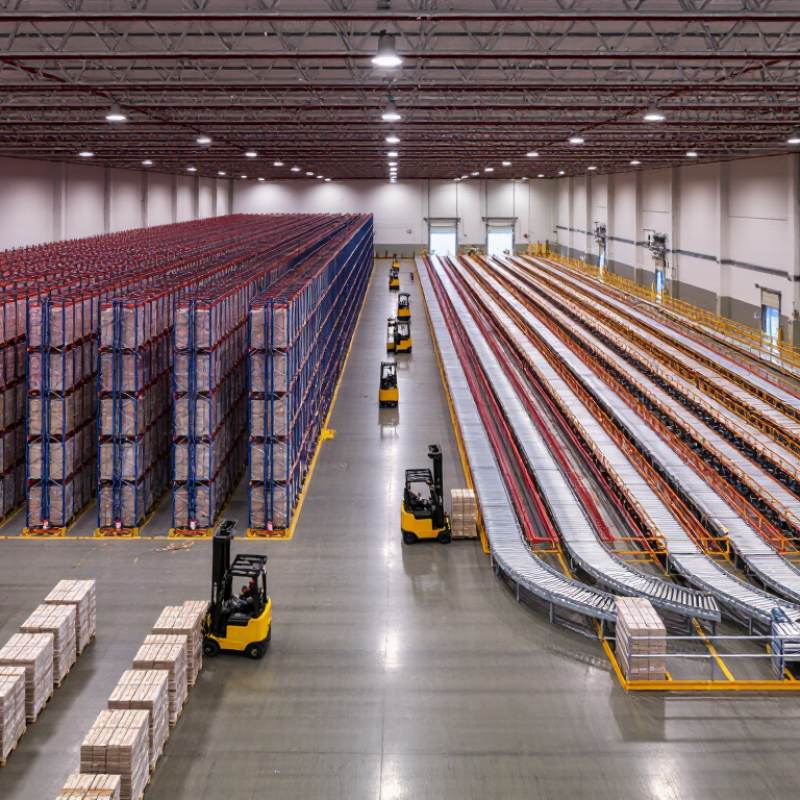
Deep lane pallet racking stores pallets several positions deep within each lane, rather than in single-deep rows. This reduces the number of aisles and uses more floor space for storage. It suits operations holding many pallets of the same product, such as reserve stock beside a picking area. Access matters. In drive-in systems, forklifts enter the rack and typically load and retrieve pallets from the same side, making last-in, first-out handling common. Drive-through layouts allow access at both ends and can support first-in, first-out rotation.
The trade-off is selectivity: a pallet behind others may be harder to reach. That can complicate picking when product codes or turnover rates vary. Deep lanes are not automatically the best choice. MHI and Deloitte’s 2024 Annual Industry Report found that 88% of surveyed respondents expected to increase supply-chain technology investment over five years; it does not measure demand for deep lane racks, but highlights the value of planning storage alongside warehouse technology. For rack design and use, the Rack Manufacturers Institute’s ANSI MH16.1 specification provides an industry reference. In practice, teams should verify pallet dimensions, load weights, forklift clearances, and rotation needs before choosing a configuration. A small mismatch can leave usable space stranded.
Deep-lane pallet racking stores several pallets deep in shared lanes, making better use of floor space than single-selective racks. In drive-in systems, a forklift enters the lane and places pallets on side rails. Loading and retrieval usually happen from the same end, so the last pallet in is often the first out. That suits products with fewer stock-keeping units and predictable turnover. Drive-through layouts allow access at both ends and can support first-in, first-out rotation when lanes are managed consistently.
For faster retrieval, a pallet shuttle carries loads along the rails while the forklift stays near the aisle. The operator places a pallet on the shuttle; it moves the load to an open position or brings it back. Fewer forklift trips inside the rack can reduce contact with uprights, but shuttle systems need charging, controls, and trained operators. Small operational details matter.
Tips: Group matching products by lane. Check pallet dimensions and load condition before installation. Keep a clear record of lane occupancy; errors can hide older stock.
The MHI 2024 Annual Industry Report found that 55% of respondents planned to increase supply-chain technology investment over the following year. That broader trend does not prove every warehouse needs automation. It does show why operators are assessing shuttle-assisted storage alongside simpler drive-in racks. One trade-off is easy to underestimate: dense storage can make the wrong pallet harder to reach. Start with real order and rotation data, not just a space-saving target.
What Are the Main Types of Deep Lane Pallet Racking?
Deep-lane racking reduces aisle space by storing several pallets behind one another. Drive-in and drive-through systems let forklifts enter the storage lanes. Drive-in racks typically use last-in, first-out access; drive-through racks can support first-in, first-out handling when loaded and unloaded from opposite ends. They suit uniform products with many pallets per SKU. But a forklift inside a lane needs careful operation.
Push-back racks store pallets on nested carts. Each new pallet pushes the previous one deeper, so operators retrieve stock from the front in last-in, first-out order. Pallet-flow racks use inclined rollers or wheels to move pallets toward the picking face. They generally support first-in, first-out rotation and suit goods with dated inventory. Double-deep racks place two pallets deep on each side of an aisle. They can improve storage density, though access to rear pallets requires suitable equipment and planning.
MHI’s 2024 Annual Industry Report says 55% of surveyed supply-chain leaders planned to invest more than $1 million in supply-chain innovation over the following two years. That figure signals investment interest, not proof that one rack type fits every warehouse. Check pallet dimensions, load weights, turnover, forklift clearances, and fire-protection requirements before choosing. Real sites are messier than diagrams. Mixed pallet sizes can reduce usable lane capacity, and a high-density layout may make slow-moving stock harder to reach.
The bars show indicative planning ranges for pallet positions deep per lane; actual capacity depends on pallet dimensions, equipment, and system design. Drive-in and push-back systems typically operate LIFO (last in, first out), while drive-through and pallet-flow systems can support FIFO (first in, first out).
Drive-in racks usually store about 4–10 pallets deep per lane, maximizing density but limiting access to individual loads. They operate LIFO: the last pallet in is first out. Drive-through racks allow access from both ends, supporting FIFO rotation, though the extra access aisle uses floor space. Push-back systems commonly provide 2–6 pallet positions deep. They offer better selectivity than drive-in, but still handle each lane as a LIFO group. Pallet-flow racks can extend deeper, often around 5–20 positions, while gravity rollers support FIFO access. These are typical planning ranges, not guaranteed capacities; pallet size, load weight, and rack design change the result.
The Rack Manufacturers Institute’s ANSI MH16.1 standard treats rack capacity as dependent on the engineered system and its loading—not a universal figure. MHI’s 2024 Annual Industry Report surveyed more than 1,000 supply-chain professionals and found 55% planned to increase technology investment. That signals interest in warehouse efficiency, but it does not prove one rack type suits every operation. A dense layout can still disappoint when order lines require frequent access to mixed SKUs. That matters.
Tips: Match flow to stock rotation: choose pallet flow for FIFO, drive-in for dense, uniform stock, and push-back for moderate selectivity. Verify load ratings with a qualified rack designer. Leave room for forklifts. A small aisle mistake can erase the density gain.
| Racking Type | Typical Lane Depth | Storage Density | Selectivity | Typical Stock Rotation | Best Fit | Key Trade-Off |
|---|---|---|---|---|---|---|
| Drive-In | About 4–10+ pallet positions deep per lane | Very high; forklifts enter the storage lanes, reducing aisle space | Low; access is concentrated by lane, and pallets behind the front position are less directly accessible | Usually LIFO (last in, first out) | Large quantities of the same SKU, with relatively few pallet varieties and predictable replenishment | Lower selectivity and more demanding forklift operation inside the rack structure |
| Drive-Through | About 4–10+ pallet positions deep per lane | Very high; similar space efficiency to drive-in systems | Low to moderate; both ends are accessible, but each lane still generally serves a specific SKU | Can support FIFO when loading and retrieval take place at opposite ends | High-volume, uniform products that benefit from stock rotation through the lane | Requires access aisles at both ends, which can reduce the space saved compared with drive-in |
| Push-Back | Commonly about 2–6 pallet positions deep per lane | High; multiple pallets are stored behind the aisle-facing position | Moderate; each lane can be accessed from the aisle, but pallets within that lane are retrieved in sequence | LIFO | Multiple pallet loads per SKU where faster aisle-side access is desired than with drive-in storage | Not suitable where strict FIFO is required; lane depth and load compatibility affect performance |
| Pallet Flow (Gravity Flow) | Commonly about 5–20+ pallet positions deep per lane | Very high; pallets move along inclined roller or wheel tracks | Moderate at the SKU-lane level; individual pallets are not independently selectable within a lane | FIFO | High-volume products requiring stock rotation, such as date-sensitive or batch-controlled goods | Requires compatible, consistent pallets and careful design, maintenance, and lane replenishment |
| Pallet Shuttle | Often about 10–30+ pallet positions deep per lane, depending on system design | Very high; a shuttle moves pallets within deep lanes, reducing the need for forklifts to enter them | Moderate; access is organized by lane, while shuttle control can improve handling within deep storage | LIFO or FIFO, depending on whether the system is configured for one-end or two-end access | High-volume, deep-lane storage where reducing forklift travel into rack lanes is valuable | Higher system complexity and equipment requirements than static deep-lane racking |
Planning note: Lane depths are indicative examples, not fixed limits or load ratings. Actual pallet capacity and suitability depend on the building layout, pallet dimensions and condition, load weight, rack design, handling equipment, and applicable safety requirements. A qualified rack designer should verify the final configuration.
Choosing a deep lane system in 2026 starts with the stock, not the rack. Count pallets per SKU, note daily movement, and check whether loads arrive in consistent sizes. Deep lanes suit businesses storing many pallets of a few products. They can waste space when every pallet needs immediate, independent access.
That trade-off is easy to miss.
Drive-in racking can work for stable, high-volume stock where last-in, first-out rotation is acceptable. Drive-through layouts allow access from both ends and can support first-in, first-out handling when lanes are managed carefully.
Push-back systems offer denser storage with access from the aisle, while pallet-flow systems use gravity rollers for orderly rotation.
Compare them against real picking patterns. A busy aisle at shift change tells you more than a neat diagram.
Before committing, verify pallet dimensions, maximum load, forklift type, aisle clearance, and building height. Ask a qualified rack designer to assess floor capacity, impact protection, sprinkler clearance, and local safety requirements.
Confirm how damaged pallets will be handled; one poor load can disrupt a lane. Pilot a few lanes if possible.
The first layout may look right on paper, but daily replenishment can expose awkward turns or slow retrievals.
It stores several pallets deep in shared lanes. This saves floor space compared with racks that provide direct access to every pallet.
A forklift enters the lane and places pallets on side rails. Loading and retrieval usually happen from the same end. The last pallet in may be the first out.
It allows access from both ends of a lane. Consistent lane management helps staff retrieve older pallets first. Records still need attention.
The forklift places a pallet on the shuttle, which carries it along the rails. The forklift can stay near the aisle. Fewer trips inside the rack may reduce contact with uprights.
They need charging, working controls, and trained operators. Small details matter. A flat battery can slow retrieval.
They often suit businesses storing many pallets of a few products. Stable, high-volume stock can work well when rotation needs are predictable.
Review pallets per SKU, daily movement, load sizes, forklift type, aisle clearance, and building height. A busy aisle at shift change can reveal issues a drawing misses.
Group matching products by lane and record lane occupancy. Check pallet dimensions and load condition. One damaged pallet can disrupt a whole lane. Pilot lanes may expose awkward turns.
Deep Lane Pallet Racking is a high-density storage approach that places pallets several positions deep within each lane, reducing the number of aisles needed and making better use of warehouse space. Depending on the system, forklifts may enter a lane to store or retrieve pallets, or pallets may move along rails or rollers. Common options include drive-in and drive-through racks, push-back systems, and pallet-flow systems. Each handles access differently: some favor compact storage and last-in, first-out retrieval, while others support first-in, first-out movement and more consistent stock rotation.
The best choice in 2026 depends on how much capacity and selectivity a business needs. Drive-in racks can suit large quantities of similar products, while drive-through and flow-based designs can help with stock rotation. Push-back systems balance density with access from the aisle. Businesses should compare inventory turnover, pallet sizes and loads, handling equipment, throughput, available floor space, and safety requirements before choosing a system that fits daily operations.