[email protected] Exporting racking systems to 85+ countries
CE · ISO 9001 · ISO 14001 · TUV English
0%

Standard Pallet Racking is one of the most familiar storage systems in warehouses. It uses upright frames, horizontal beams, and pallet supports to create adjustable storage levels. Forklifts place pallets into these open bays, while workers access individual loads from the aisle.

Simple structure. Practical purpose.

“Good warehouse design begins with understanding the product, the process, and the people,” says Gwynne Richards, author of Warehouse Management. His observation explains why Standard Pallet Racking cannot be selected by appearance alone. A rack may look suitable on a showroom floor, yet fail to support real operating conditions. Pallet weight, dimensions, turnover rate, forklift clearance, and floor quality all matter.

In daily use, operators position pallets on beams supported by steel frames. The lowest level may sit near the floor, while upper levels use vertical space more efficiently. Beam heights can be changed when inventory profiles shift. This flexibility is valuable, but it can also invite careless adjustments.

A damaged upright is not a minor cosmetic issue. A leaning frame, bent beam, or missing safety pin can change the entire load path. Regular inspections, clear load labels, and trained forklift operators reduce these risks. Still, no system is automatically safe.

That point deserves attention.

This guide explains how Standard Pallet Racking works, where it performs well, and what its limitations may be. It also considers installation, loading practices, maintenance, and warehouse planning. The aim is not to present racking as a perfect solution. It is to show how informed decisions create safer, more usable storage space.
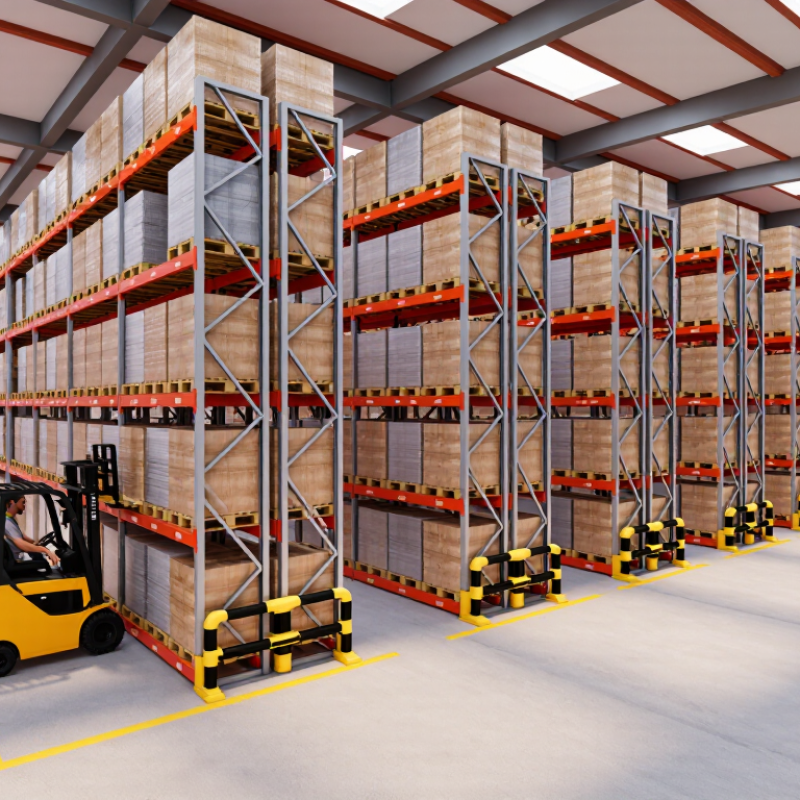
What Is Standard Pallet Racking and How Does It Work?

What Is Standard Pallet Racking?

Standard pallet racking is a modular storage system designed for palletized goods. It uses vertical upright frames, horizontal beams, and decking or pallet supports. Each bay creates a clear storage location for one or more pallets. Forklifts load pallets from the aisle side and remove them when needed. The system uses warehouse height efficiently.

Simple structure. Practical results.

A standard layout usually provides direct access to every pallet position. This arrangement supports stock rotation, counting, and order picking with fewer handling steps. Beam levels can be adjusted to suit different pallet heights. Safe load capacity depends on frame size, beam length, pallet weight, and installation quality. These details require proper engineering checks, not guesswork.

In warehouse planning, aisle width deserves close attention. A narrow aisle may increase storage density but restrict forklift movement. A wider aisle improves access but consumes valuable floor space. Floor condition, ceiling height, sprinkler clearance, and pedestrian routes also affect the final design. Operators should inspect beams, uprights, anchors, and visible damage regularly. Small bends can become serious problems under repeated loading.

Standard racking is not automatically suitable for every operation. Fast-moving goods may need a different picking arrangement. Uneven pallets can create unstable contact points. That assumption can fail. A qualified storage specialist should verify the layout and rated capacity before use. Clear labels and disciplined loading practices help workers make safer decisions every day.

What Are the Main Components of a Pallet Racking System?

Standard pallet racking is a modular steel structure designed to store palletized goods vertically.

Its main components work together, not separately. The upright frames carry vertical loads through columns, footplates, and diagonal braces. Horizontal beams connect the frames and support each pallet level. Beam connectors lock into the frame, while safety pins help prevent accidental release.

Wire decking or steel panels fill the level beneath pallets. They improve load distribution and reduce the risk of items falling through open spaces. The floor anchors secure the frames against movement. In busy aisles, column guards and end-of-row barriers absorb impact from handling equipment.

Small parts matter.

Load plaques display bay capacity, beam levels, and operating limits. These details should match the actual configuration. The Rack Manufacturers Institute standard ANSI MH16.1 provides design guidance for industrial steel storage racks. OSHA 29 CFR 1910.176(b) also requires stored materials to remain stable and protected from collapse.

The U.S. Bureau of Labor Statistics reported a 2023 recordable injury rate of about 4.8 cases per 100 full-time workers for warehousing and storage. That figure makes inspection more than paperwork.

Bent uprights, loose anchors, missing pins, or overloaded beams can change the system’s behavior quickly. A tidy rack can still be unsafe. That assumption deserves challenge.

EN 15635 recommends regular inspections, including expert review at least every 12 months. However, annual checks cannot replace daily observations. Operators notice damage first, but they may overlook slow frame distortion. Clear training, accurate load data, and documented repairs remain essential.

How Does Standard Pallet Racking Work?

Standard pallet racking uses vertical frames, horizontal beams, and wire decking to create accessible storage levels. Each pallet occupies one location, usually from the warehouse aisle. Forklifts place loads onto beams and retrieve them directly, so operators can reach every pallet without moving others. Simple, but not foolproof.

The rack’s capacity depends on upright height, beam length, pallet weight, and load distribution. A qualified designer checks these details against ANSI/RMI MH16.1 guidance. Floor anchoring and visible load plaques matter too. OSHA 29 CFR 1910.176(b) requires stored materials to remain secure and stable.

The system supports selective access rather than maximum density. That trade-off helps facilities manage many stock-keeping units with different demand patterns. The 2023 MHI Annual Industry Report found that 83% of supply-chain professionals viewed innovation as important or very important, yet standard racks still solve many daily storage problems. They need disciplined operation.

Forklift clearance should account for mast movement, pallet overhang, and uneven floors. Damaged frames require isolation, not a quick repaint. In practice, some warehouses underestimate aisle width and overestimate usable capacity. That mistake reduces safety and slows picking. A quarterly inspection, documented by trained personnel, can reveal bent uprights, loose anchors, and overloaded beams before they become expensive failures.

What Is Standard Pallet Racking and How Does It Work? - How Does Standard Pallet Racking Work?

Data Dimension Typical Information How It Works or Why It Matters
System Type Adjustable selective pallet racking The most common standard configuration uses upright frames and adjustable horizontal beams to create individual pallet locations.
Primary Storage Method Single- or double-deep pallet storage Single-deep layouts provide direct access to every pallet. Double-deep layouts improve storage density but require compatible handling equipment and reduce immediate accessibility.
Main Structural Parts Upright frames, horizontal beams, bracing, footplates, anchors, and safety accessories Uprights transfer loads to the floor, beams support pallets, and bracing stabilizes the frame. Anchors and protectors help secure the installation and reduce impact damage.
Common Pallet Size 48 × 40 inches (1,219 × 1,016 mm) is widely used in North America Rack depth, beam length, and aisle design must match the pallet dimensions, load overhang, and handling equipment used at the facility.
Typical Rack Depth Approximately 36–48 inches (900–1,200 mm) for many standard pallet layouts The selected depth should provide adequate pallet support while allowing safe placement and retrieval without excessive overhang.
Typical Beam Length Approximately 8–12 feet (2.4–3.7 m) in many warehouse applications Beam length is selected according to pallet width, the number of pallets per level, required clearance, and the rated load capacity.
Typical Load Capacity Often about 2,000–5,000 pounds (900–2,270 kg) per pallet position, depending on design Actual capacity depends on beam size, upright height, spacing, steel properties, pallet condition, floor quality, and the complete engineered configuration.
Storage Height Common warehouse installations range from approximately 8–40 feet (2.4–12.2 m) The available building height, fire-protection requirements, sprinkler clearance, forklift reach, and local regulations determine the usable rack height.
Pallet Access Direct access to each pallet in a single-deep arrangement An operator can select or retrieve a specific pallet without moving other pallets, which supports high selectivity and mixed-SKU storage.
Inventory Rotation Primarily supports FIFO when warehouse procedures are followed Because each pallet is accessible, older stock can be selected first. The rack itself does not automatically enforce FIFO; location control and operating procedures are required.
Material-Handling Equipment Counterbalance forklifts, reach trucks, or other appropriately rated lift equipment The equipment must match the rack height, aisle width, pallet dimensions, turning requirements, and rated load.
Typical Aisle Width Approximately 10–12 feet (3.0–3.7 m) for many conventional forklift layouts Required aisle width varies by truck type, load size, turning radius, operating method, and applicable safety requirements.
Loading Sequence Pallets are placed on beams from the front of each rack bay The operator positions the pallet evenly on the beams, confirms stability and clearance, and then records or updates its storage location.
Space Utilization Moderate storage density with high selectivity Standard racking uses more aisle space than high-density systems, but it provides flexible access to many different products and pallet types.
Adjustability Beam levels can usually be repositioned vertically Adjustable levels allow the system to accommodate different pallet heights, although changes must remain within the rack manufacturer's approved configuration.
Safety Requirements Load plaques, frame protection, beam locking devices, inspections, and proper anchoring Safe operation requires visible capacity information, undamaged components, trained operators, controlled impacts, and regular inspections in accordance with applicable local standards.
Best-Suited Applications Warehouses with many SKUs, frequent pallet access, and varied inventory The combination of selectivity, flexibility, and relatively simple installation makes standard pallet racking suitable for distribution, manufacturing, wholesale, and general storage operations.

Note: Dimensions and capacities are typical planning ranges, not universal specifications. A qualified rack designer or engineer should verify the final configuration for the building, pallets, equipment, seismic conditions, floor capacity, and applicable regulations.

What Types of Goods Suit Standard Pallet Racking?

Standard pallet racking suits goods stored on stable, standard-sized pallets. Typical examples include boxed food, packaged clothing, household appliances, spare parts, and sealed cartons. These products have predictable dimensions and can tolerate vertical storage without crushing. Each pallet occupies a defined beam level, while forklifts load and retrieve units from the aisle.

The ANSI MH16.1-2023 standard requires rack design to consider load weight, beam capacity, frame strength, and seismic conditions. This matters when one pallet weighs 800 kilograms and the next weighs only 300. Uneven loading can create practical risks. The MHI 2024 Annual Industry Report identifies labor availability and warehouse efficiency as continuing operational concerns. Standardized pallets help reduce handling variation and support faster inventory checks.

Goods with regular turnover are especially suitable. Retail cartons, automotive components, and durable consumer products usually work well because workers can identify stock visually. Full-pallet storage is efficient for bulk inventory, while partial-pallet picking needs additional controls. Loose bags, unstable bundles, very long materials, and crush-sensitive products may require different systems. We sometimes assume every pallet is rack-ready. That assumption is wrong. A damaged pallet, overhanging carton, or poorly wrapped load can reduce stability, even when the rack itself meets design requirements. Clear load labels and routine inspections remain essential.

What Is Standard Pallet Racking and How Does It Work?

Which Palletized Goods Suit Standard Pallet Racking?

Standard pallet racking stores palletized loads on horizontal beams, with forklifts placing and retrieving pallets from individual rack bays. The chart compares common standardized pallet footprints. Goods that are stable, stackable, and loaded on compatible pallets—such as packaged food, beverages, cartons, spare parts, and general warehouse stock—are typically suitable for this system.

Pallet dimensions shown are standardized footprint measurements: ISO 1 is 1,200 × 1,000 mm, ISO 2 is 1,200 × 800 mm, the North American GMA pallet is 1,219 × 1,016 mm, and the Australian standard pallet is 1,165 × 1,165 mm. Actual rack capacity depends on pallet weight, load height, beam length, upright spacing, and local safety requirements.

What Are the Benefits and Limitations of Standard Pallet Racking?

Standard pallet racking uses upright frames, horizontal beams, and decking to store palletized goods in vertical levels. Forklifts place pallets into each open bay. Workers can usually reach every pallet without moving another load.

Its biggest benefit is direct access. This supports faster picking, clearer stock visibility, and easier inventory checks. Adjustable beams also allow different pallet heights. Standard racking can grow with a warehouse’s needs. It often suits mixed products and regular replenishment.

However, it needs wide forklift aisles. That reduces storage density compared with compact systems. Poorly planned aisles can waste valuable floor space. The structure also requires a strong, level floor and accurate load calculations. Damaged uprights or overloaded beams create serious risks. In practice, layouts are rarely perfect. A few centimeters can matter. Installation should follow local safety requirements and qualified engineering advice.

Tips: Measure pallets, forklifts, aisle widths, and ceiling clearance before planning. Label every bay clearly. Inspect frames, beams, anchors, and protectors regularly. Train operators to approach slowly and keep loads stable. Do not assume unused space means extra capacity. Real warehouse teams should review seasonal stock changes, because today’s efficient layout may become tomorrow’s bottleneck.

FAQS

What are the main parts of a pallet racking system?

Upright frames carry vertical loads. Beams support pallets between the frames. Wire decking fills open spaces beneath stored goods. Anchors, safety pins, guards, and load plaques add protection and control.

How do upright frames support stored loads?

Upright frames use columns, footplates, and diagonal braces. Together, they transfer weight toward the warehouse floor. A bent column can change the whole rack’s behavior.

What is the purpose of horizontal beams?

Horizontal beams connect upright frames and support pallet levels. Their capacity depends on length, pallet weight, and load distribution. Overloaded beams may deflect or fail.

Why are wire decks or steel panels important?

They distribute pallet weight across the storage level. They also reduce the chance of items falling through open spaces. Small gaps can create large problems.

How does selective pallet racking work?

Forklifts place pallets directly onto beam levels from the aisle. Operators can reach each pallet without moving other loads. This improves access for facilities storing many different products.

What information should appear on a load plaque?

A load plaque should show bay capacity, beam levels, and operating limits. Its information must match the installed rack configuration. A plaque is useful only when the data is accurate.

Which damage requires immediate attention?

Bent uprights, loose anchors, missing safety pins, and overloaded beams require prompt action. The damaged area should be isolated. Do not simply repaint it.

How often should pallet racking be inspected?

Operators should observe racks during daily work. Trained personnel should document regular inspections, including quarterly checks where appropriate. An expert review should occur at least every twelve months. Annual checks are not enough.

How can forklift operation affect rack safety?

Forklift clearance must allow for mast movement, pallet overhang, and uneven floors. Column guards and end barriers can absorb some impacts. They cannot correct careless driving. A tidy aisle may still hide damage.

Conclusion

Standard Pallet Racking is a practical warehouse storage system designed to organize goods on pallets within vertical rack levels. Its main components typically include upright frames, horizontal beams, pallet supports, base plates, and safety accessories. The structure creates accessible storage locations, allowing forklifts or other handling equipment to place and retrieve pallets efficiently. By arranging loads in clearly defined rows and levels, warehouses can improve space utilization, inventory visibility, and daily handling operations.

This system is well suited to warehouses storing palletized products with regular shapes, moderate turnover, and frequent access requirements. It offers flexibility because each pallet position can usually be reached directly, making stock management and order picking more convenient. However, Standard Pallet Racking also has limitations: it may require wider aisles, provide less storage density than specialized systems, and depend on suitable warehouse equipment and careful load planning. Proper installation, inspection, and safe operating procedures are essential for reliable performance.

Amelia

Amelia

Amelia is a dedicated marketing professional with extensive knowledge of the company’s products, services, and industry landscape. Through clear communication and thoughtful storytelling, she helps customers understand how the company’s solutions can support their goals, improve efficiency, and......