[email protected] Exporting racking systems to 85+ countries
CE · ISO 9001 · ISO 14001 · TUV English
0%

Choosing Pallet Racking for a warehouse in 2026 starts with a practical question: what must the system hold, and how will people access it? MHI and Deloitte’s 2024 Annual Industry Report found that 55% of surveyed supply chain professionals planned to increase investment in supply chain innovation. That wider shift toward automation makes rack compatibility important, even for businesses not ready to automate today. A layout that works with current forklifts may constrain future equipment.

Start with the inventory. Record pallet dimensions, loaded weights, daily movement, and seasonal peaks. Then measure clear ceiling height, aisle widths, columns, doors, and sprinkler locations. Small details matter. A few inches can affect beam levels, clearances, and safe forklift turns. The best design is not always the one with the most pallet positions. It must also support reliable picking and replenishment.

Compare selective, double-deep, drive-in, and other systems against your stock profile and operating routine. Ask suppliers for documented load capacities, installation requirements, and inspection guidance. Have a qualified rack professional review the proposed configuration and site conditions. Do not assume an existing slab, beam, or upright suits a new load. That sounds tidy on paper; real warehouses have uneven floors, changing stock, and awkward corners. Those details are easy to miss. This guide explains how to evaluate capacity, access, safety, flexibility, and total cost before choosing Pallet Racking for 2026 and beyond.
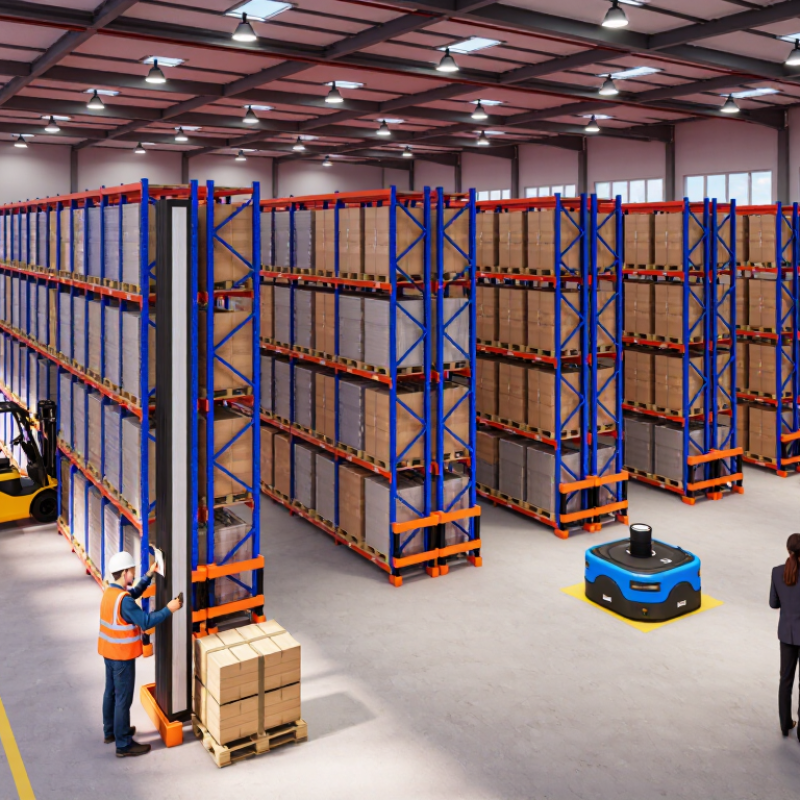
How to Choose Pallet Racking for Your Warehouse in 2026?

Assess Your Warehouse Space, Inventory, and Handling Needs

Before choosing pallet racking, measure the usable warehouse floor, not just the building’s advertised area. Note column positions, doorways, sprinkler clearance, floor condition, and the height of lighting fixtures. A rack that fits on paper may block a turning aisle in practice. Leave room for safe movement.

Then map your inventory. Record pallet dimensions, loaded weights, and how often each product moves. Fast-moving cartons near dispatch may need easy access, while slower stock can sit in deeper locations. Check whether pallet sizes vary; they often do, even in a tidy operation. That small inconsistency matters when selecting beam lengths and storage levels. Verify load ratings with a qualified racking professional, using actual product and pallet weights rather than estimates.

Handling equipment shapes the layout. Measure forklift turning radius and mast height, then test aisle widths against real travel paths. If operators must reverse repeatedly or pallets scrape uprights, the plan needs adjustment. A simple floor-marking trial can expose problems before installation. It is not perfect, but it may reveal more than a polished drawing. Reassess after seasonal stock changes, since a layout that works in March may feel crowded by November.

Compare Pallet Racking Types for Your Storage Requirements

Selective pallet racking gives each pallet a direct aisle-facing position, making it a practical choice for warehouses handling many product lines. Forklift access is straightforward, and stock rotation is easier to monitor. The trade-off is space: aisles reduce the room available for storage. Measure your largest load, including any overhang, before setting beam lengths. A rack that looks efficient on a plan can feel cramped once forklifts turn between rows.

Drive-in and drive-through systems use fewer aisles and suit operations storing many pallets of the same product. They increase density, but forklifts enter the rack structure, so loading procedures and pallet consistency matter. Push-back racking offers several pallet positions per lane while keeping loading and retrieval near the aisle. It can speed up handling, though lane depth may limit access to older stock. Small details matter.

For high-volume operations with stable product groups, pallet flow racking can support first-in, first-out movement using gravity rollers. It requires suitable pallets and careful maintenance. Before choosing, compare daily pallet movements, SKU variety, rotation needs, ceiling height, and equipment clearances. A mixed layout may work better than one system across the whole building. Still, forecasts are imperfect. Review the choice against real picking data after operations begin, rather than assuming the original plan will fit forever.

Calculate Load Capacity and Plan an Efficient Rack Layout

How to Choose Pallet Racking for Your Warehouse in 2026?

Load capacity must guide every rack decision. Start with the heaviest pallet, not the average one.

Record pallet weight, dimensions, beam levels, forklift type, and expected growth. Then verify the beam, upright, and floor capacities with a qualified rack engineer.

Never estimate from appearance. A small overload can deform beams and create costly safety risks. OSHA 29 CFR 1910.176 requires stored materials to remain stable and secure.

WERC’s DC Measures report places median order-picking accuracy near 99.5%. Your layout should protect that performance.

Put fast-moving products near dispatch doors. Keep slow movers higher or farther away. Maintain clear forklift aisles, pedestrian separation, and visible load plaques.

MHI’s 2024 Annual Industry Report also shows continuing investment in digital supply-chain tools. A warehouse management system can reveal travel patterns and slotting mistakes.

Still, software cannot fix poor measurements. Measure twice. Leave room for seasonal stock and future equipment.

Tips: Map the floor before buying racks. Mark columns, sprinklers, exits, charging areas, and turning radii.

Keep damaged pallets out of storage. Review rack inspections after impacts, layout changes, or unusual loading.

A perfect plan rarely survives daily operations. I have seen efficient layouts fail because one aisle became a temporary staging zone.

That detail seems minor, but it quietly reduces capacity and increases traffic risk. Recheck the design with real operators before installation.

Check Safety Standards, Equipment Access, and Building Constraints

How to Choose Pallet Racking for Your Warehouse in 2026?

Choosing pallet racking in 2026 starts with the building, not the catalog. Safety standards should guide every layout decision. Confirm local requirements for rack design, fire protection, seismic resistance, and pedestrian separation. Ask a qualified structural engineer to review calculations and anchorage. Load signs must match actual pallet weights, beam levels, and lift heights. A wrong sign can create serious operational risks. Keep inspection records, too. Small cracks, bent uprights, or missing anchors deserve immediate attention.

Equipment access changes the usable capacity. Measure each forklift’s turning path with its real load. A 3.2-meter aisle may look generous on paper, yet feel tight near end frames. Protect corners with barriers, and keep routes clear to emergency equipment. Check mast height against sprinkler clearance and roof obstructions. Operators need visibility, stable floors, and enough room to place pallets safely. Trial-marking one aisle with tape can reveal expensive design mistakes before installation.

Building constraints often decide whether a rack system works. Inspect slab thickness, levelness, column positions, door widths, lighting, drainage, and ceiling height. Uneven floors can cause alignment problems across long runs. Old buildings may hide weak concrete or undocumented repairs. That is easy to miss. Revisit the layout after equipment testing and staff feedback. A perfect plan on screen can fail beside a loading door. Leave space for maintenance, future load changes, and human hesitation. That allowance is often forgotten.

How to Choose Pallet Racking for Your Warehouse in 2026?

Typical aisle-width planning requirements by material-handling equipment. Use these values as an early layout reference, then confirm the final aisle width with the truck manufacturer, pallet dimensions, rack load data, and applicable safety requirements.

Counterbalance forklifts generally require the widest aisles, while reach and very-narrow-aisle trucks can increase storage density. Rack design must also account for building clear height, floor capacity, sprinkler clearance, load protection, inspections, and local standards such as EN 15635 or OSHA requirements where applicable.

Evaluate Costs, Installation, and Future Expansion Options

How to Choose Pallet Racking for Your Warehouse in 2026?

When comparing pallet racking, calculate the installed cost, not only the equipment price. Include delivery, floor anchors, protection barriers, lift access, labor, and possible downtime. A low quote can become expensive after these items appear. Request a detailed breakdown from each supplier. Confirm the rack’s load rating with a qualified structural professional. Pallet weight, beam spacing, and forklift impact all affect safety and cost. Small errors matter.

Installation planning needs practical attention. Measure aisle widths, ceiling height, slab condition, sprinkler clearance, and emergency routes before ordering. A rack that fits on paper may restrict turning space on the warehouse floor. I have seen layouts change after a forklift test. That revision was inconvenient, but cheaper than rebuilding completed rows.

Think beyond today’s inventory. Choose a configuration that allows extra beam levels, removable sections, and sensible aisle adjustments. Leave access for future expansion, even if unused space feels wasteful now. It may not stay empty. Ask whether the structure can support planned load increases, new handling equipment, or different pallet sizes. Also compare relocation costs, replacement parts, and inspection services over several years. The cheapest system is not always the most reliable. Sometimes, paying more for flexibility is reasonable; sometimes, it only hides poor planning. Review the assumptions carefully. A written expansion plan can protect both budget and workflow.

How to Choose Pallet Racking for Your Warehouse in 2026? — Evaluate Costs, Installation, and Future Expansion Options

Racking System Pallet Access Storage Density Relative Upfront Cost Installation Considerations Future Expansion Best Suited To
Selective pallet racking Direct access to every pallet Low to medium; requires operating aisles between rows Low Generally the simplest system to configure and install. Aisle width and lift-truck turning space must be planned. High: additional bays or rows can often be added if floor space, clearances, and load capacity allow. Warehouses with many SKUs, frequent picking, or a need for high selectivity.
Double-deep racking Access from the aisle to the front pallet; rear pallets require a compatible reach truck Medium to high; fewer aisles than a selective layout Medium Requires suitable reach equipment and careful aisle, rack-depth, and pallet-overhang planning. Medium: can be extended in modules, but equipment needs and layout constraints should be checked first. Operations seeking more storage density while retaining access to a reasonable range of SKUs.
Drive-in / drive-through racking Limited selectivity; trucks enter the storage lane to load or retrieve pallets High; reduces the number of access aisles Medium to high Needs clear operating procedures, compatible truck dimensions, and protection against impact at lane entrances. Medium: lanes can be added, but changes to SKU allocation or lane depth may be less flexible. Large quantities of the same SKU, with relatively low turnover or predictable replenishment.
Push-back racking Multiple pallets stored deep from each aisle face; typically last-in, first-out within a lane High; stores several pallets deep while keeping aisles accessible High Requires installation and alignment of moving carts or tracks, plus operator training and routine inspection. Medium: additional lanes are possible, though system components and lane dimensions need to match. Products managed in batches where several pallets per SKU can be stored in each lane.
Pallet flow racking Typically first-in, first-out, with loading and picking at opposite ends High; gravity lanes reduce the need for access aisles within the block High Needs accurate floor levels, suitable pallets, and commissioning of rollers, brakes, and flow controls. Medium: modular lanes can be added, subject to space, slope, and replenishment/picking access. High-throughput operations needing stock rotation, such as dated or perishable inventory.
Mobile pallet racking Direct access to a row when its mobile base opens an aisle Very high; reduces the number of permanently open aisles Very high Requires powered mobile bases, compatible floor conditions, safety controls, and specialist installation and testing. Low to medium: expansion can be complex because it may involve floor, power, controls, and system integration work. Space-constrained sites with many SKUs and moderate retrieval frequency.

Planning note: Cost levels are relative screening estimates, not supplier quotations. Actual project cost depends on rack height and capacity, seismic and fire-protection requirements, site conditions, handling equipment, labor, and local codes. Confirm pallet dimensions and weights, floor capacity, sprinkler clearances, aisle requirements, and applicable regulations before selecting a system.

FAQS

What should I measure before choosing pallet racking?

Measure usable floor space, column positions, doorways, ceiling height, and lighting fixtures. Include sprinkler clearance and floor condition. Building area alone can mislead.

What inventory details affect the rack layout?

Record pallet dimensions, loaded weights, and product movement rates. Fast-moving cartons often need easy access near dispatch. Pallets may vary slightly, and that detail matters.

How does forklift equipment influence aisle width?

Measure the forklift’s turning radius and mast height. Test aisle widths using real travel paths. Scraping uprights is a warning.

How should rack load ratings be checked?

Use actual pallet and product weights, beam spacing, and expected handling conditions. Ask a qualified professional to verify the ratings. Estimates can be wrong.

What costs should a racking budget include?

Include delivery, anchors, barriers, lift access, labor, and possible downtime. A low equipment quote may not stay low.

Why test a layout before installation?

Mark the proposed aisles on the floor and test forklift turns. A drawing can still mislead. The test may feel inconvenient, but changes are cheaper before installation.

How can a racking system support future changes?

Consider extra beam levels, removable sections, and adjustable aisles. Leave access for expansion, even if some space feels unused now.

When should a warehouse reassess its layout?

Review it when inventory, pallet sizes, or handling equipment changes. Seasonal stock can crowd aisles. A layout that works in March may feel tight by November.

Conclusion

Choosing the right Pallet Racking system in 2026 begins with a clear understanding of your warehouse space, inventory characteristics, workflow, and material-handling equipment. Review ceiling height, aisle requirements, pallet dimensions, product turnover, and access frequency before comparing options such as selective, drive-in, double-deep, or dynamic configurations. The best choice should balance storage density with fast, safe access to goods.

Next, calculate the required load capacity for each rack level and design a layout that supports efficient movement, visibility, and future operational needs. Confirm that the system suits building conditions, floor strength, emergency access, and applicable safety standards. Finally, compare total costs, including materials, installation, inspections, maintenance, and potential adjustments. A flexible design with room for expansion can reduce future disruption and help your warehouse remain productive as inventory volumes and handling requirements change.

Charlotte

Charlotte

Charlotte is a professional marketing specialist dedicated to helping customers better understand the company’s products, solutions, and service capabilities. With a strong background in market research, content strategy, and customer communication, she combines industry insight with clear,......