Choosing the right Heavy Duty Pallet Racking system can reshape how a warehouse uses every square meter. A well-planned layout improves access, storage density, and daily handling safety. Poor choices create blocked aisles, damaged pallets, and unnecessary forklift movements.
This guide examines seven reliable pallet racking systems used in demanding warehouse environments. It considers load capacity, beam adjustment, aisle width, forklift access, and installation requirements. Selective racking offers direct access to each pallet. Drive-in systems increase density but reduce stock rotation flexibility. Push-back and pallet flow designs may improve throughput when inventory patterns support them.
Real warehouse conditions matter.
A rack rated for 2,000 kilograms per level still requires correct loading and floor assessment. Uneven concrete, inconsistent pallet sizes, or careless impact protection can weaken an otherwise sound design. I have seen efficient layouts lose performance because operators could not turn forklifts comfortably at aisle ends. That detail is easy to overlook.
The best system depends on product movement, ceiling height, pallet dimensions, and future growth. It also depends on disciplined inspections and trained operators. Manufacturer specifications should guide final selection, while qualified professionals should verify structural requirements and local safety expectations. No rack is perfect for every operation. A high-density solution may slow picking, while an accessible system may consume more floor space.
The following comparison highlights practical strengths, limitations, and suitable warehouse applications. It aims to support a safer, more informed investment rather than promote one universal answer.
How Heavy-Duty Pallet Racking Systems Work
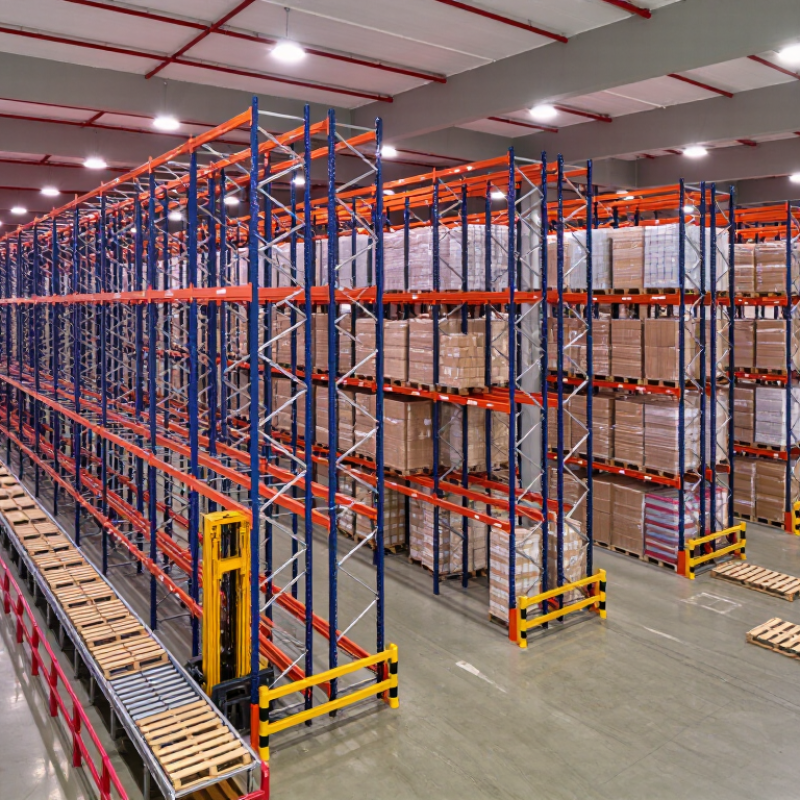
Heavy-duty pallet racking works as a framed storage structure for palletized goods. Vertical uprights carry the main load, while horizontal beams support each pallet level. Diagonal braces keep the frame stable during loading and forklift movement. Steel connectors lock beams into the uprights, allowing adjustable storage heights. Anchors secure the frames to the concrete floor. This detail matters.
A well-designed system transfers weight from the pallet to the beams, then through the uprights and anchors into the floor. Load capacity depends on beam length, frame height, pallet weight, and spacing. It is not safe to estimate capacity by appearance alone. A qualified engineer or supplier should verify the design for local building and seismic requirements. Forklift drivers also need clear aisles and protected rack ends. Small impacts can bend uprights without immediate collapse, which makes regular inspections essential. Look for dents, loose connectors, leaning frames, and damaged beams. Replace or isolate unsafe components quickly. In practice, warehouse teams sometimes add heavier pallets to existing levels without recalculating the structure. That shortcut is easy to make. It is also one I would question every time. Storage plans should match real pallet dimensions, not ideal drawings. Labels showing maximum loads help, although labels alone cannot correct poor loading habits. Shelves may look strong, yet uneven pallet placement can create concentrated pressure and reduce stability.
| Racking System | How It Works | Typical Load Capacity per Beam Level | Typical Storage Density | Pallet Selectivity | Typical Aisle Requirement | Best Use and Important Considerations |
|---|---|---|---|---|---|---|
| Selective Pallet Racking | Each pallet is stored in an individual location and accessed directly from the warehouse aisle using a forklift. | Approximately 1,800–5,500 lb (820–2,495 kg) |
Medium | 100% | Approximately 10–12 ft (3.0–3.7 m), depending on the forklift |
Best all-purpose option for mixed stock-keeping units and frequent pallet access. It offers simple inventory control but uses more floor space than high-density systems. |
| Double-Deep Pallet Racking | Two rows of pallets are positioned one behind the other. A reach truck or specialized forklift places and retrieves the rear pallet through the front position. | Approximately 1,800–5,000 lb (820–2,270 kg) |
Medium to high | About 50% | Approximately 11–13 ft (3.4–4.0 m) |
Suitable for warehouses holding several pallets of the same product. It improves storage density, but the rear pallet is less accessible and requires careful load sequencing. |
| Drive-In Pallet Racking | Forklifts enter the storage lanes and place pallets on structural support rails. The system normally follows a last-in, first-out inventory pattern. | Approximately 2,000–5,500 lb (910–2,495 kg) |
High | Low; typically one SKU per lane | Very narrow operating aisles, but the rack lanes must be deep enough for forklift entry | Effective for large quantities of similar, non-perishable products. It maximizes cube utilization but has limited selectivity and requires trained forklift operation inside the rack. |
| Push-Back Pallet Racking | Each pallet is loaded from the front onto nested carts or rollers. Loading a new pallet pushes existing pallets farther back into the lane. | Approximately 1,800–5,000 lb (820–2,270 kg) |
High | Medium; typically 2–6 pallets deep | Approximately 10–12 ft (3.0–3.7 m) |
Good for multiple pallets per SKU and faster access than drive-in storage. It generally operates on a last-in, first-out basis and requires compatible pallet dimensions and weights. |
| Pallet Flow Racking | Pallets are loaded at the replenishment side and move by gravity on rollers toward the picking side, creating a first-in, first-out flow. | Approximately 1,800–4,500 lb (820–2,040 kg) |
High | High by SKU; not every pallet is directly accessible | Separate loading and unloading aisles are normally required | Well suited to perishable goods, date-sensitive inventory, and high-throughput operations. The system needs accurate pallet dimensions, controlled loading, and regular roller maintenance. |
| Very Narrow Aisle (VNA) Racking | High racking is installed in very narrow aisles. Specialized turret or articulated forklifts retrieve pallets while guided by rails, wires, or navigation systems. | Approximately 1,800–4,000 lb (820–1,815 kg) |
Very high | High; direct access to most locations | Approximately 5–7 ft (1.5–2.1 m) |
Best when ceiling height is available but floor space is limited. It increases storage capacity but requires specialized equipment, precise floor tolerances, and stronger operator training. |
| Pallet Shuttle Racking | A battery-powered shuttle travels on rails inside deep storage lanes to position pallets. Forklifts load and unload the shuttle at the lane entrance rather than driving into the rack. | Approximately 2,000–5,500 lb (910–2,495 kg) |
Very high | Medium to high, depending on lane layout | Reduced forklift aisle space; deep lanes require dedicated loading faces | Suitable for high-volume, high-density storage with many pallets of the same or similar products. It reduces forklift travel inside lanes but requires batteries, controls, sensors, and planned maintenance. |
Note: Load capacities and dimensions are representative planning ranges, not design limits. Actual capacity depends on beam span, frame height, upright profile, pallet type, seismic conditions, floor capacity, forklift specifications, and local warehouse safety requirements. A qualified rack designer or structural engineer should verify every installation.
FAQS
Pallets rest on horizontal beams. Vertical uprights transfer the load downward. Diagonal braces improve stability during loading and forklift movement. Anchors transfer forces into the concrete floor.
No. Not by appearance. Capacity depends on beam length, frame height, pallet weight, and spacing. A qualified professional should verify the design before use.
Record each pallet’s weight, dimensions, height, and entry direction. Check beam capacity using the planned spacing. A small spacing change can significantly alter the rating.
Forklifts need enough turning space beside loaded racks. Measure with the largest vehicle in use. Leave room for damaged pallets and unexpected movements. Tight aisles create avoidable risks.
Look for bent uprights, loose connectors, missing braces, damaged beams, and leaning frames. Check anchors too. Small impacts may weaken steel without causing immediate collapse.
Isolate unsafe components quickly. Replace damaged parts through a suitable repair process. Do not continue loading a visibly bent frame while waiting for convenience.
Load plaques show maximum ratings for each rack row. They help during busy shifts. However, labels cannot correct uneven loading, overloaded pallets, or poor handling habits.
Rack loads eventually reach the concrete slab through anchors. Confirm slab capacity and anchor requirements with a qualified professional. Local structural and seismic conditions may change the design.
No. Beam levels can support changing inventory, but poor adjustments may create uneven loading. Record installation details and recheck the rack after the first month.
Teams sometimes add heavier pallets without recalculating capacity. That shortcut is easy to make. I would question it every time, especially when storage plans differ from real pallet sizes.
Conclusion
Heavy Duty Pallet Racking systems are designed to store large, heavy loads safely while making the best use of warehouse space. They typically use upright frames, horizontal beams, and adjustable levels that support palletized goods and allow access through forklifts or other handling equipment. When evaluating a system, warehouse managers should consider load capacity, rack dimensions, aisle width, adjustability, durability, and compatibility with existing operations.
This guide reviews seven leading types of Heavy Duty Pallet Racking, comparing their accessibility, storage density, and suitability for different warehouse layouts. It also explains how selective, drive-in, double-deep, push-back, pallet flow, cantilever, and mobile designs differ in practical use. Proper installation, clear load ratings, protective equipment, routine inspections, and regular maintenance are essential for long-term performance and workplace safety. Choosing the right system can improve organization, reduce handling time, and support efficient inventory management.